Somewhere right now, a new player opens a blockchain game for the first time. Before they can even start playing, they’re asked to create a wallet. Then they see the phrase “seed phrase.” Confused and unsure, they close the page and never return. This moment happens thousands of times every single day. What’s surprising is how little the industry has done to remove this barrier. VanarChain noticed the problem—and chose to fix it.
Most Layer 1 blockchains promote themselves in the same way: faster transactions, cheaper fees, stronger cryptography. VanarChain avoided that approach entirely. Instead of targeting users who already understand gas fees and transaction mechanics, they designed their network so these concepts never reach the end user. Their account abstraction system doesn’t just simplify wallets—it removes the need for them altogether. Using a VanarChain app feels no different than signing into a regular website. No browser extensions, no seed phrases, no confusing approval pop-ups.
I tested this firsthand by running their SDK on a testnet. From a developer’s perspective, the experience is just as smooth. Gas fees are handled invisibly in the background, allowing developers to sponsor transactions or bundle costs without exposing users to any complexity. Blockchain becomes backend infrastructure—something users benefit from without ever realizing it’s there.
This philosophy clearly separates VanarChain from projects like Starknet or zkSync. Those platforms focus on advanced cryptography and scalability, which is essential for the future of decentralization. However, they primarily serve people who are already interested in blockchain. VanarChain is building for the much larger group: everyday users who don’t care about how blockchains work—and shouldn’t need to.
Another major advantage is VanarChain’s partnership with Google Cloud. This gives the network enterprise-grade reliability and uptime. When game studios or global brands like Nike evaluate blockchain infrastructure, they aren’t focused on technical benchmarks. They want to know whether the system will remain stable under heavy usage. With Google Cloud backing it, VanarChain can confidently answer yes.
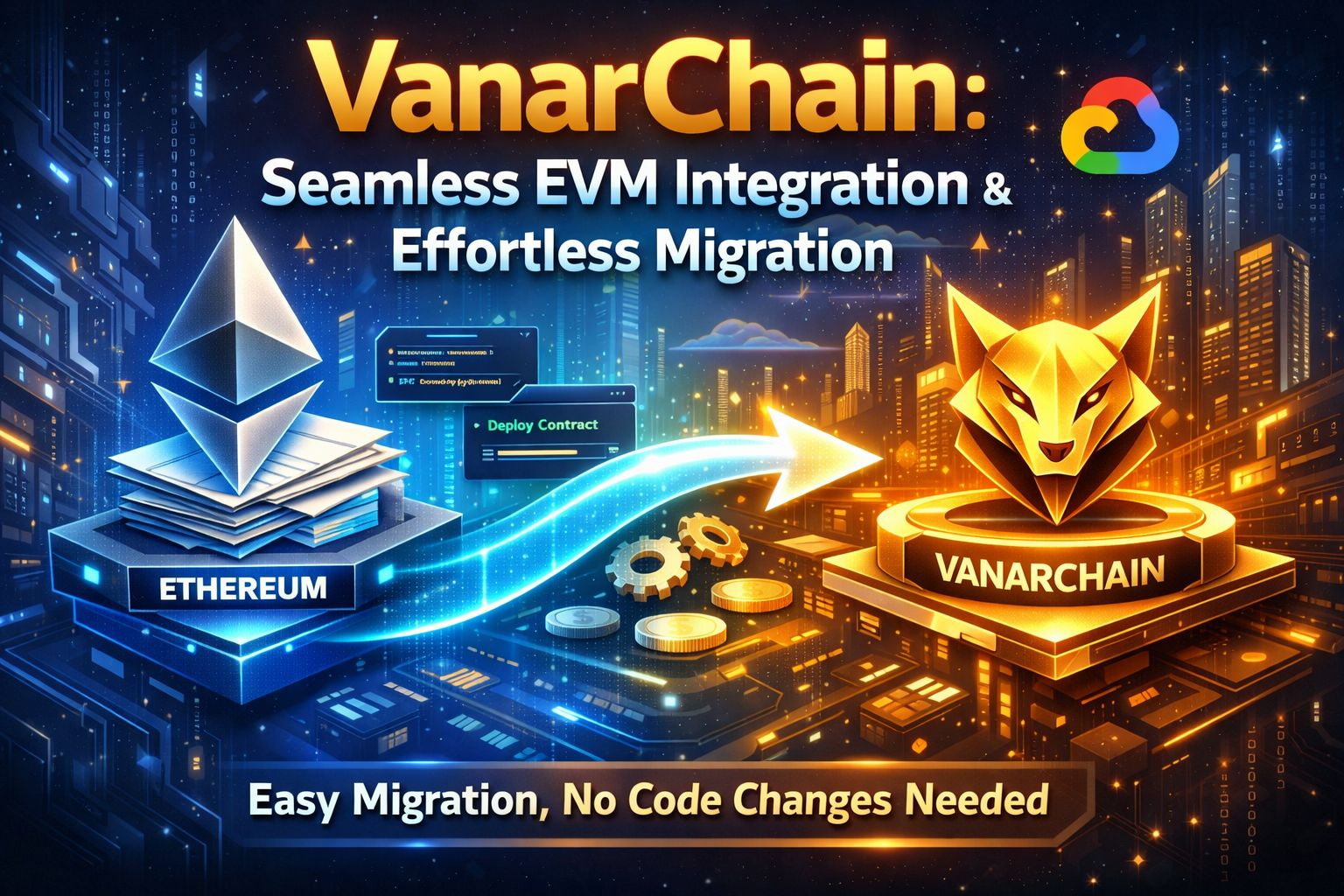
VanarChain’s compatibility with the Ethereum Virtual Machine adds even more value. Developers familiar with Ethereum or Arbitrum can migrate their smart contracts with minimal effort—often just by switching the RPC endpoint. There’s no need to learn new programming languages or frameworks. Better cost control, predictable fees, and frictionless onboarding do the convincing.
That said, the VanarChain ecosystem is still early. The core infrastructure is solid, but adoption hasn’t fully caught up yet. Explorer activity is limited, and developer documentation could be more detailed. Some API parameters lack clarity, which can be frustrating for engineers accustomed to highly polished platforms like Stripe.
This is a familiar pattern. Infrastructure usually comes before the applications that depend on it. Many successful blockchains began quietly, building foundations before developers arrived in large numbers. VanarChain has done exactly that—with a clear mission. The next hundred million users should never need to know what a blockchain is. The technology should be invisible, dependable, and inexpensive—something people use without ever thinking about it.
Every blockchain claims it will onboard millions of users. VanarChain is one of the few actually designing its platform so users never have to learn blockchain at all.