
You know, I've been trading in DeFi for years now, and if there's one thing I've learned, it's that most blockchains weren't built with traders in mind. They're general-purpose platforms trying to be everything to everyone smart contracts, NFT marketplaces, gaming platforms, you name it. But when it comes to the core needs of a trader speed, execution, reliability most fall short. Ethereum is too slow during congestion. Solana has its moments but has faced stability issues. Avalanche is fast but still feels like it's designed for general use. That's why FOGO Network has caught my attention lately. From what I've seen, @Fogo Official isn't trying to do everything. Instead, it seems laser-focused on one thing: creating an environment where on-chain trading can actually work the way it's supposed to. No delays, no congestion, no watching your trades hang while the network catches up. Just fast, smooth execution. It's a refreshing approach, and honestly, it's got me thinking that maybe this is the chain serious traders have been waiting for. Let's dive into why FOGO's trader-first philosophy matters, how it delivers on speed and performance, and whether it can really become the go-to platform for on-chain trading.
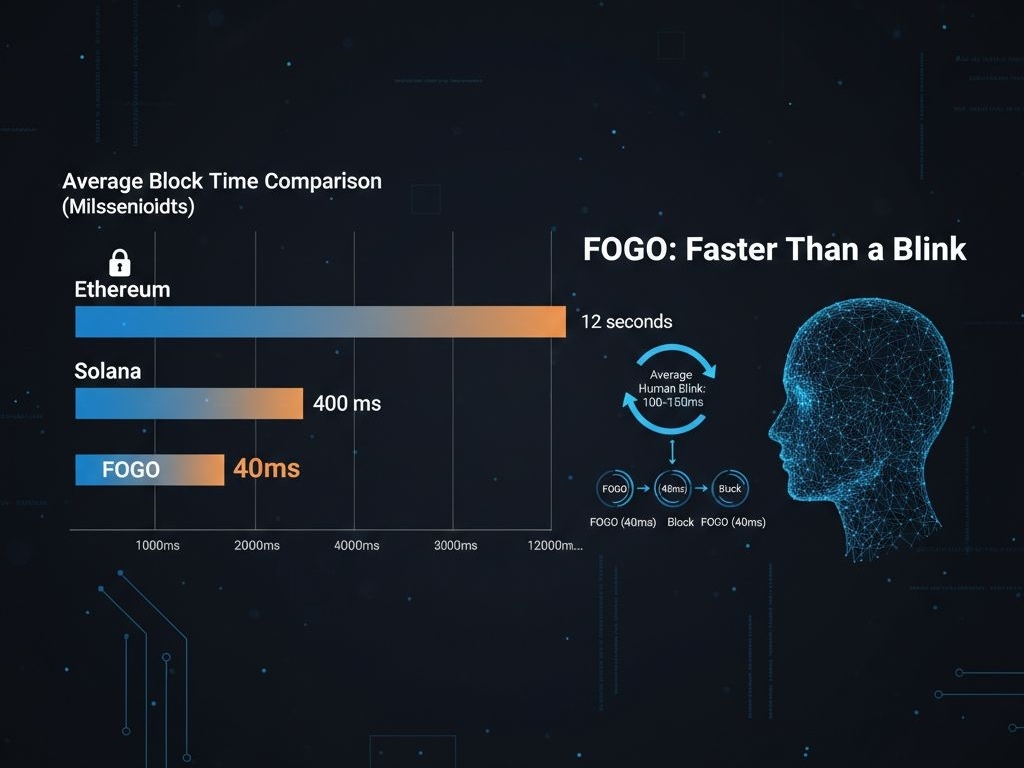
First, let's talk about the problem with most blockchains from a trader's perspective. I've lost count of how many times I've been in a trade where timing was everything, only to watch my transaction sit in the mempool for seconds or even minutes while the price moved against me. On Ethereum during peak congestion, it's not uncommon to wait 30 seconds or more for confirmation. By the time your trade executes, the opportunity is gone, and you're left with either a worse price or a missed trade entirely. It's infuriating, and it's one of the main reasons many traders still prefer centralized exchanges despite DeFi's advantages. Centralized platforms can execute trades in milliseconds, but decentralized ones? Not so much. The irony is that DeFi offers so much trustlessness, self-custody, permissionless access but the execution speed often lets traders down. I've talked to countless traders who want to move to on-chain perps and DEXs but hesitate because of latency concerns. They don't want to sacrifice speed for decentralization; they want both. And that's exactly the gap FOGO is trying to fill.
What sets $FOGO apart is its unapologetic focus on trading performance. From the start, it seems like the team asked themselves a simple question: what do traders actually need? The answer was clear: speed, execution, and real-time performance. Everything else is secondary. This is evident in FOGO's architecture, which is built around the Solana Virtual Machine (SVM) but optimized specifically for trading. Their 40ms block times aren't just a marketing number; they're a fundamental design choice that shapes every decision. When you have block times measured in milliseconds rather than seconds, everything changes. Arbitrage opportunities that would vanish on slower chains can be captured. Liquidations can be executed before prices slip further. Complex multi-step strategies can be executed without the risk of one leg failing while another succeeds. I've been following FOGO's development closely, and it's clear that speed isn't an afterthought it's the foundation. The entire network is tuned for low latency, from validator infrastructure to smart contract execution. For traders, this is a game-changer because it means the blockchain isn't the bottleneck anymore.
The implications of this trader-first approach go beyond just raw speed. FOGO's focus on execution quality means that trades don't just happen fast; they happen reliably. No dropped transactions, no failed confirmations, no unexpected reverts during volatile moments. When you're trading with leverage or managing complex positions, reliability is just as important as speed. A fast chain that crashes under load is worse than a slower but stable one. FOGO seems to understand this, which is why they've invested in robust infrastructure, including their Firedancer validator client and congestion control mechanisms. It's not just about being fast; it's about being consistently fast, even when the network is under stress. I've seen too many chains promise speed only to crumble during peak usage. FOGO's architecture suggests they've learned from those failures and built for resilience. For traders who've been burned before, this reliability is a huge selling point. It's the difference between a chain that's fast in theory and one that's fast in practice.
Another thing that stands out about FOGO is how they've avoided the trap of trying to be everything to everyone. Many L1s launch with grand visions of supporting every possible use case DeFi, NFTs, gaming, social, storage only to end up being mediocre at all of them. FOGO seems to have a narrower but deeper focus. They're not claiming to be the ultimate Web3 platform. Instead, they're positioning themselves as the best chain for trading and DeFi. This focus allows them to optimize for specific use cases without compromise. For example, their enshrined DEX is designed specifically for trading, with low fees, instant settlements, and deep liquidity integration. It's not a general-purpose DEX that tries to do everything; it's a trading-native platform that prioritizes execution quality. I've seen this approach work in other markets specialized platforms often outperform generalists in their niche. By focusing on traders, FOGO can deliver a better experience than chains that split their attention across multiple use cases. It's a smart strategic choice, even if it means FOGO won't appeal to everyone.
Of course, being trader-focused has its challenges. The biggest one is liquidity. Traders need liquidity to execute trades at good prices, and new chains often struggle to attract market makers and liquidity providers. FOGO seems to be addressing this through their Flames flywheel and partnerships with Wormhole and Pyth, which I've discussed before. But liquidity takes time to build, and FOGO will need to prove that their speed and execution advantages can attract and retain serious traders. Another challenge is competition. Solana, with its massive ecosystem and established user base, is a formidable competitor. Even if FOGO is faster, convincing traders to switch requires more than just technical superiority. There needs to be a compelling reason to move better yields, unique protocols, or a superior trading experience. FOGO's focus on speed could be that reason, but execution will be key. I've seen chains with great technology fail because they couldn't build a thriving ecosystem. FOGO needs to avoid that trap by continuing to attract developers and protocols that leverage their trading-native infrastructure.
Looking ahead, I think FOGO's trader-first philosophy could resonate with a significant portion of the DeFi community. Not everyone cares about speed some users prioritize other things like privacy, governance, or ecosystem size. But for traders, especially those who've been frustrated by slow chains, FOGO offers something compelling. The vision is clear: create an environment where on-chain trading works smoothly without the usual delays. If FOGO keeps building around this idea, it could grow into a chain that serious traders actually prefer. It won't happen overnight, and there will be bumps along the road, but the direction is promising. I've been in this space long enough to know that focus matters. Chains that try to do everything often end up doing nothing well. FOGO's narrow but deep approach feels like the right move for capturing the trading market.
In the end, FOGO represents a shift in how we think about blockchain design. Instead of building general-purpose platforms, they're building specialized tools for specific use cases. For traders, this is exciting because it means a chain that's actually designed with their needs in mind. Speed matters. Execution matters. Reliability matters. And FOGO seems to get that. If you're a trader who's been waiting for a chain that prioritizes performance, FOGO is worth watching. It's not just another L1 competing for attention; it's a platform built for the people who need it most. What do you think can FOGO become the go-to chain for serious traders, or will the competition catch up? Let's discuss; the future of on-chain trading is being shaped right now, and FOGO is making a strong case for itself.