
Saya telah memantau Walrus selama beberapa bulan terakhir, dan yang menarik perhatian saya bukanlah hype di sekitarnya, melainkan cara ia memandang masalah lama secara berbeda. Di kantor-kantor dan saluran Discord tempat para pengembang berbicara tentang infrastruktur, Anda bisa mendengar perbandingan: bagaimana Walrus menangani integritas data, pembaruan status, dan interaksi lintas rantai dibandingkan dengan cara protokol-established seperti Ethereum, Polkadot, atau Cosmos menanganinya. Percakapan ini tidak berisik, tetapi terus berlangsung.
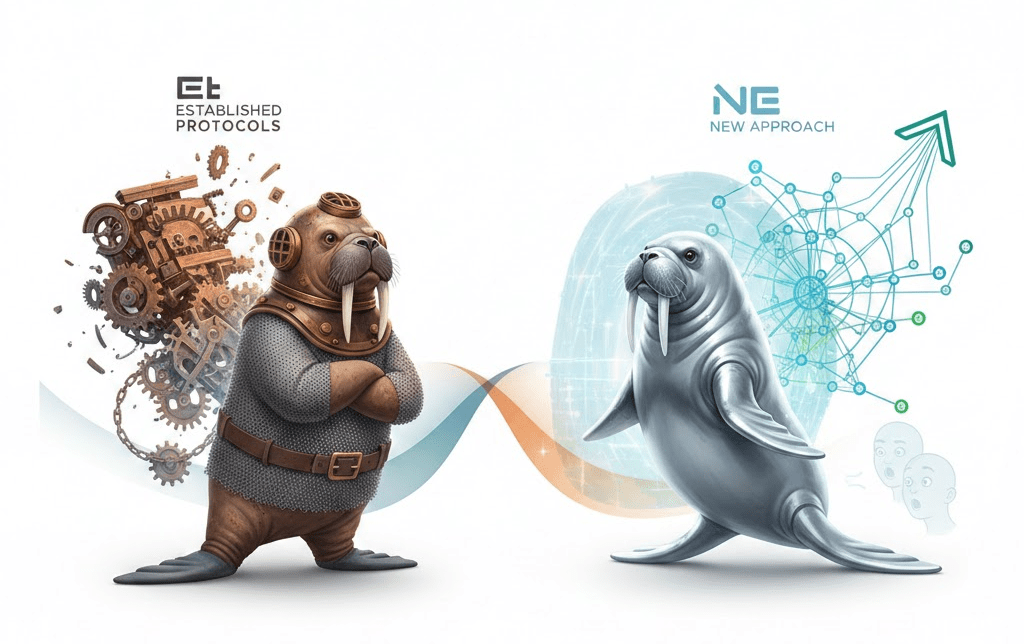
Walrus dimulai sebagai protokol eksperimental yang bertujuan membuat pencatatan transaksi dan replikasi status lebih modular. Pengguna awalnya adalah para pengembang yang frustasi dengan kekakuan dan kompleksitas sistem lama. Protokol tradisional kuat, tetapi sering kali memaksa proyek masuk ke dalam pola yang telah ditentukan sebelumnya yang bisa merepotkan jika Anda ingin berinovasi dengan rantai baru atau sidechain. Walrus, sebaliknya, mengandalkan model yang lebih sederhana dan dapat dikomposisi: ia memisahkan penyimpanan perubahan status dari logika eksekusi transaksi. Artinya, aplikasi dapat memasang aturan mereka sendiri tanpa harus menulis ulang infrastruktur dasar.
Perbedaan ini mungkin terasa halus, tetapi sangat berarti dalam praktik. Protokol yang mapan memiliki catatan yang terbukti, ekosistem pengembang yang besar, dan audit keamanan yang berlangsung bertahun-tahun. Walrus lebih baru dan kurang teruji dalam medan pertempuran. Namun pendekatannya memungkinkan tim-tim kecil untuk bereksperimen dengan modularitas dan interoperabilitas dengan cara yang sistem lama kesulitan. Ini seperti membandingkan jalan raya tua yang sudah berusia puluhan tahun dan hanya dirancang untuk mobil saja dengan pusat transportasi baru yang fleksibel dan dirancang untuk mobil, sepeda, dan bus secara bersamaan. Jalan raya lama berfungsi dengan baik jika Anda mengikuti aturannya, tetapi pusat transportasi lebih mudah beradaptasi terhadap jenis lalu lintas baru.
Poin lain di mana Walrus berbeda adalah pada konsensus dan verifikasi. Banyak protokol yang mapan bergantung pada mekanisme konsensus yang kompleks dan aturan finalitas state yang kaku. Walrus menawarkan log ringan yang dapat diverifikasi dan dapat terintegrasi dengan berbagai backend konsensus. Ini mengurangi hambatan bagi tim yang berusaha mengoordinasikan state di antara jaringan yang heterogen. Dalam dunia nyata, ini seperti mempertahankan buku catatan bersama di mana semua orang bisa memeriksa entri satu sama lain tanpa perlu wasit ketat, alih-alih memindahkan satu buku catatan di seluruh kantor besar di mana satu kesalahan bisa menghambat semua orang.
Tentu saja ada pertukaran praktis. Walrus belum diuji secara ketat pada skala Ethereum atau Solana. Keamanan dan stabilitasnya masih berkembang, yang membatasi adopsi untuk aplikasi yang kritis. Integrasi membutuhkan upaya yang disengaja, dan tim harus menimbang manfaat modularitas terhadap risiko bergantung pada sistem yang lebih baru dan kurang terbukti. Protokol yang mapan lebih lambat beradaptasi tetapi menawarkan kepercayaan yang berasal dari bertahun-tahun penggunaan dunia nyata.
Menatap ke depan, Walrus bukan tentang menggantikan generasi lama. Ini tentang menawarkan pendekatan alternatif yang mengutamakan fleksibilitas dan modularitas di tengah lingkungan yang semakin didominasi oleh pengembangan multi-chain dan hibrida. Jika adopsi meningkat, kita mungkin melihatnya sebagai lapisan pendukung—cara bagi para pengembang untuk bereksperimen dan berinovasi tanpa mengganggu fondasi sistem lama yang lebih kaku. Ini bisa menjadi bagian penting namun sunyi dari infrastruktur bagi proyek-proyek yang menghargai kemampuan beradaptasi dibandingkan stabilitas konvensional.
Pada akhirnya, perbandingan antara Walrus dan protokol yang mapan adalah pengingat bahwa dalam Web3, evolusi sering kali terjadi secara diam-diam. Alat-alat yang mengubah cara pengembang memikirkan masalah jarang menjadi berita utama, tetapi mereka meninggalkan jejak yang abadi pada bagaimana sistem dibangun.