
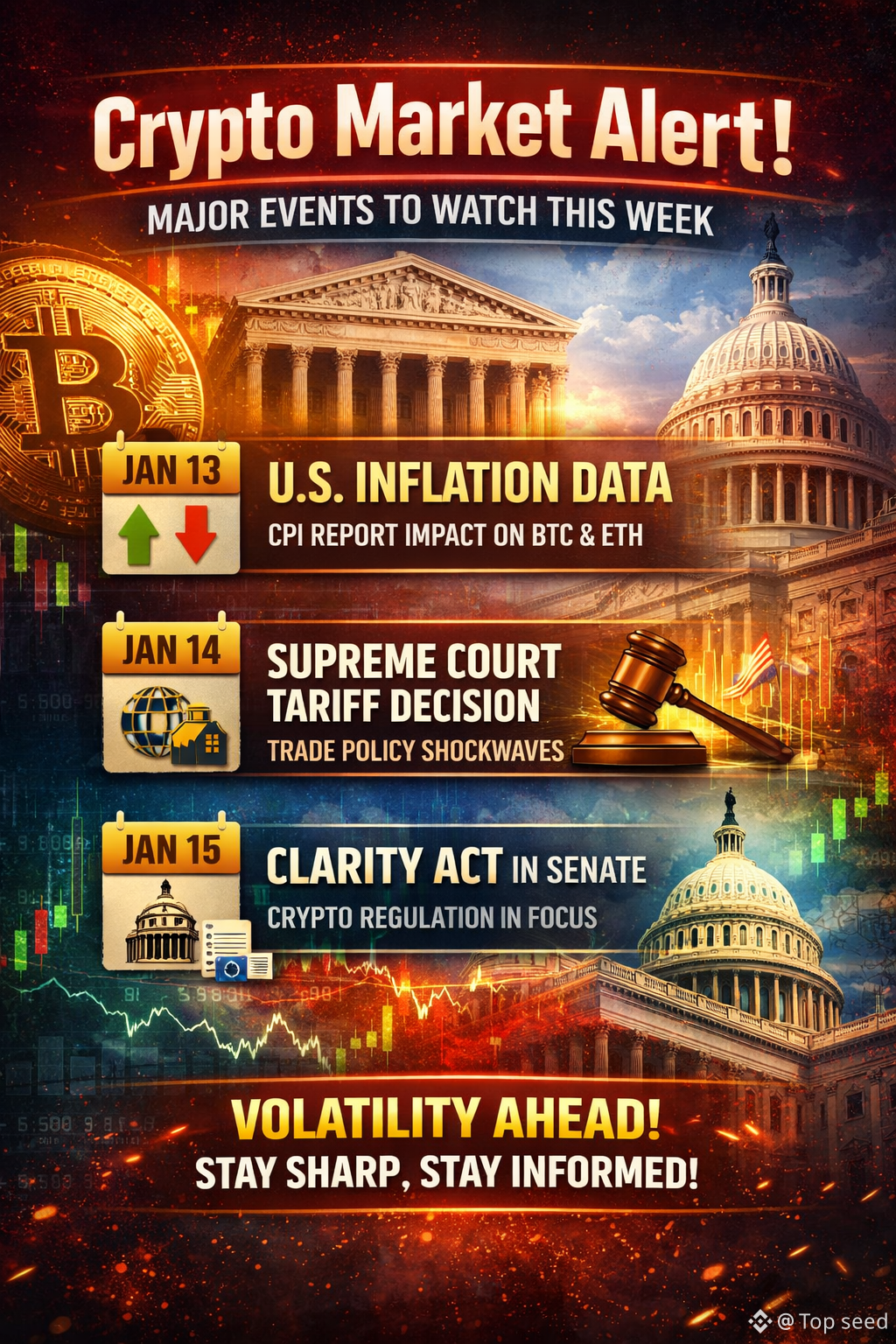
Crypto markets don’t move in isolation. Macro data, legal decisions, and regulation all shape liquidity, sentiment, and long-term adoption. This week brings three events that every crypto trader should understand.
📊 January 13 — U.S. Inflation #cpi
Inflation data is one of the most important indicators for crypto because it directly influences Federal Reserve policy.
Lower inflation → higher probability of rate cuts
Lower rates → more liquidity → historically positive for $BTC , $ETH , and altcoins
Higher inflation → tighter policy expectations → short-term pressure on risk assets
Bitcoin often reacts as a liquidity proxy, while altcoins tend to amplify the move.
⚖️ January 14 — Supreme Court Decision on Tariffs
While not crypto-specific, tariff decisions affect:
Global trade costs
Inflation expectations
Overall risk sentiment
Higher tariffs can be inflationary, potentially delaying rate cuts, a headwind for crypto. Conversely, reduced trade uncertainty may support broader risk-on behavior, indirectly benefiting digital assets.
🏛️ January 15 — CLARITY Act Considered in the Senate
This is the most structurally important event for crypto.
The CLARITY Act aims to define:
Which assets are securities vs. commodities
Which regulators oversee different parts of the crypto market
Why this matters:
Reduces regulatory uncertainty
Encourages institutional participation
Supports long-term ecosystem growth beyond speculation
Even early progress can positively influence market confidence.
📌 In conclusion
Short-term price action may be driven by inflation data, but long-term crypto adoption depends on regulatory clarity. This week combines both — making it especially important for traders and investors alike.#FOMCWatch #USNonFarmPayrollReport

