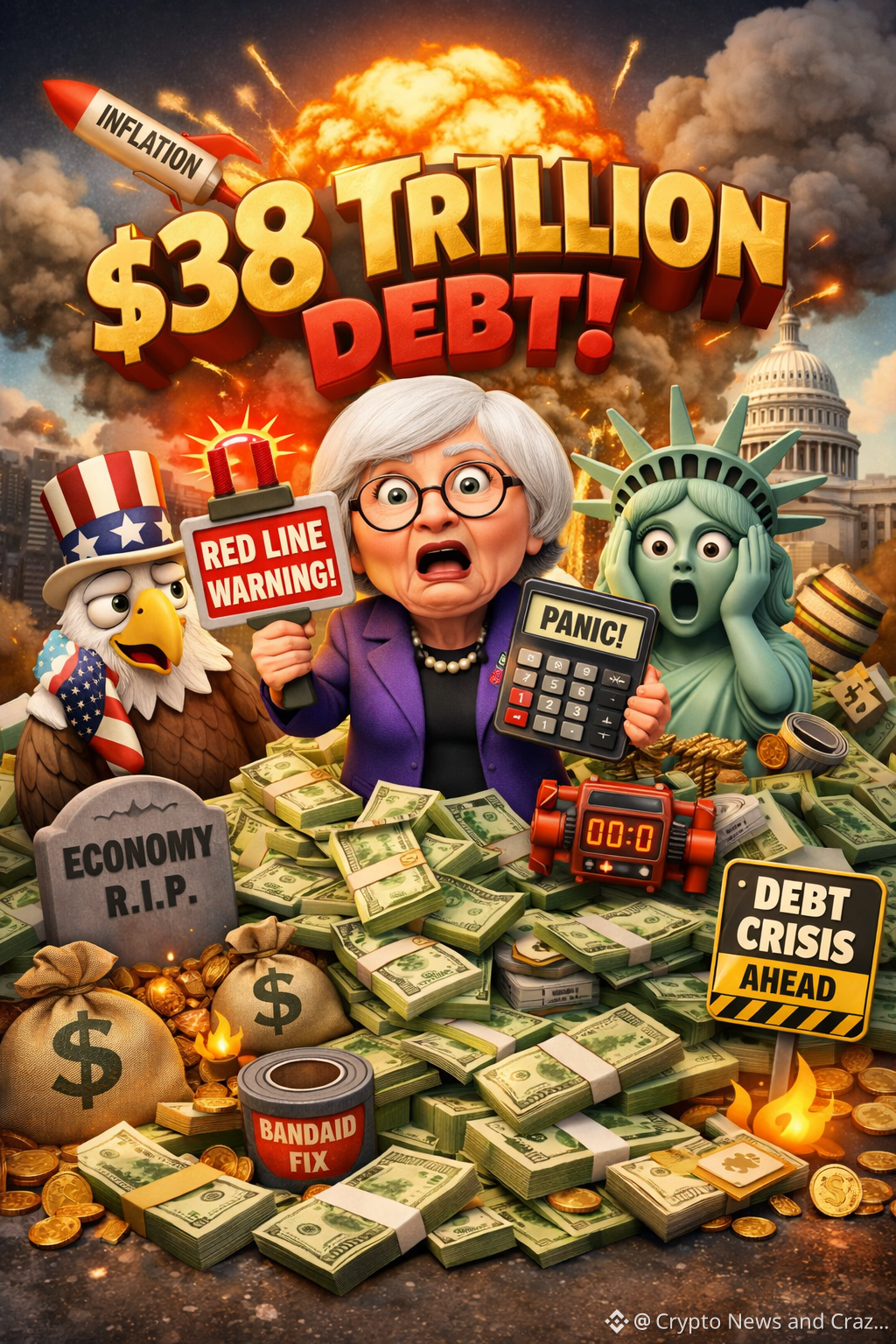
🇺🇸 U.S. National Debt Hits a Historic $38 Trillion — Yellen Sounds the Alarm 🚨
January 2026 — The United States has officially crossed a historic milestone with its national debt topping $38 trillion — a level that has many economists and policymakers deeply concerned. And now, one of the nation’s top economic voices is warning this debt burden is testing a “🚩 red line” that experts have feared for decades. �
Fortune
📈 A Record That Raises Eyebrows
Treasury Secretary Janet Yellen, who once served as Chair of the Federal Reserve, has publicly stated that America’s rapidly growing debt could start to limit the Federal Reserve’s ability to manage the economy — especially when it comes to controlling inflation and ensuring full employment. �
Newsweek
She noted that the preconditions for a scenario known as fiscal dominance — where fiscal pressures (like debt) influence monetary policy — are strengthening, meaning the Fed might feel forced to keep interest rates lower than economic conditions would otherwise warrant to ease the government’s borrowing costs. �
Newsweek#usa
📌 What’s Driving the Climb to $38 Trillion?
Several factors have pushed the national debt to these unprecedented heights:
💸 Large federal budget deficits — the government has been spending more than it collects in revenue.
🏛️ Persistent political gridlock in Washington — lawmakers have struggled to agree on long-term spending plans, especially amid recent government shutdowns. �
inkl#Write2Earn
🪙 Interest costs on the debt now exceed $1 trillion annually, surpassing spending on major domestic priorities like defense — money that must be paid before most other budget items. �
AInvest
As a result, economists warn the debt burden is crowding out investment in areas like infrastructure, education, and innovation that could help grow the economy’s productive capacity. �
AInvest
📉 Why Economists Call It a “Red Line” 🚩
The concern isn’t merely about the size of the debt number — it’s about how it affects economic flexibility over time:
✅ High debt relative to GDP (now over 120 %) means more of the federal budget goes just to service interest, not productive policy. �
✅ Rising interest costs make future borrowing more expensive. �
✅ If fiscal pressures grow worse, monetary policy might increasingly focus on helping the government finance its obligations — potentially at the expense of inflation control. �
AInvest
AInvest
Newsweek
That’s precisely the kind of situation Yellen warns has long been feared, because it can erode the independence of the central bank and reduce its effectiveness in stabilizing the economy. �
Newsweek
🤔 Is This a “Default” Warning?
📌 Yellen is not saying the U.S. will immediately default on its debt — and historically the United States has never defaulted on its obligations. �
A default would require failure to pay in full on Treasury obligations — something that typically arises not from a lack of money, but from political impasses over raising the legal debt limit. �
Times of Malta
Money Times
However, Yellen’s concern is more structural: that high debt could distort economic policy and reduce long-term growth prospects. This is a different concern than an actual failure to make payments. �
Newsweek
💡 Why This Matters to Everyday Americans
Here’s how the debt situation can affect real people:
📊 Higher interest costs: More federal spending on interest can mean less for schools, healthcare, and infrastructure. �
💸 Potential inflation pressure: If monetary policy gets tied to debt concerns, inflation control could take a back seat. �
📉 Economic uncertainty: Markets tend to dislike unpredictability — and rising debt adds another layer of risk. �
AInvest
Newsweek
inkl
🔍 Looking Ahead
Economists agree that debate over national debt will continue, and many call for fiscal reforms that could include spending reductions, tax reforms, or economic growth strategies to help curb the debt’s growth. �
inkl
While crossing $38 trillion may not mean an immediate crisis, it certainly marks a milestone in the nation’s fiscal story — one policymakers say deserves serious attention before it becomes even harder to manage.