

In an era where centralized streaming giants like Netflix dominate the entertainment landscape, questions about censorship, creator royalties, data privacy, and skyrocketing subscription costs are growing louder. What if the next major streaming platform wasn't controlled by a single corporation but powered by a decentralized network? Enter Walrus, the innovative decentralized blob storage protocol developed by Mysten Labs (the team behind the high-performance Sui blockchain). With its mainnet live since March 2025, Walrus is emerging as a strong foundation for building a truly decentralized "Netflix" alternative.
What is Walrus?
Walrus is a decentralized storage and data availability protocol built on the Sui blockchain, specifically designed for handling large unstructured files--or "blobs"--such as videos, images, audio files, and more. Unlike traditional decentralized storage solutions (e.g., Filecoin or Arweave), which often suffer from high costs, slow retrieval, or excessive replication overhead, Walrus stands out with several key innovations:
Advanced erasure coding via its proprietary Red Stuff algorithm -- This splits data into efficient "slivers" distributed across hundreds or thousands of independent storage nodes, achieving high resilience with a minimal 4x-5x replication factor (comparable to centralized cloud services).
Byzantine fault tolerance -- Data remains accessible and recoverable even if up to two-thirds of nodes fail or act maliciously.
Programmable storage -- Blobs and storage capacity are treated as objects on Sui, allowing smart contracts to interact directly with data for dynamic applications.
Cost efficiency -- Up to 100x cheaper than competitors for large-scale storage, making it viable for media-heavy use cases.
Fast encoding/decoding and retrieval -- Optimized for performance, with compatibility for CDNs to accelerate delivery while preserving decentralization.
These features make Walrus ideal for storing massive video libraries--the backbone of any streaming service.
Why Decentralized Streaming Matters in 2026
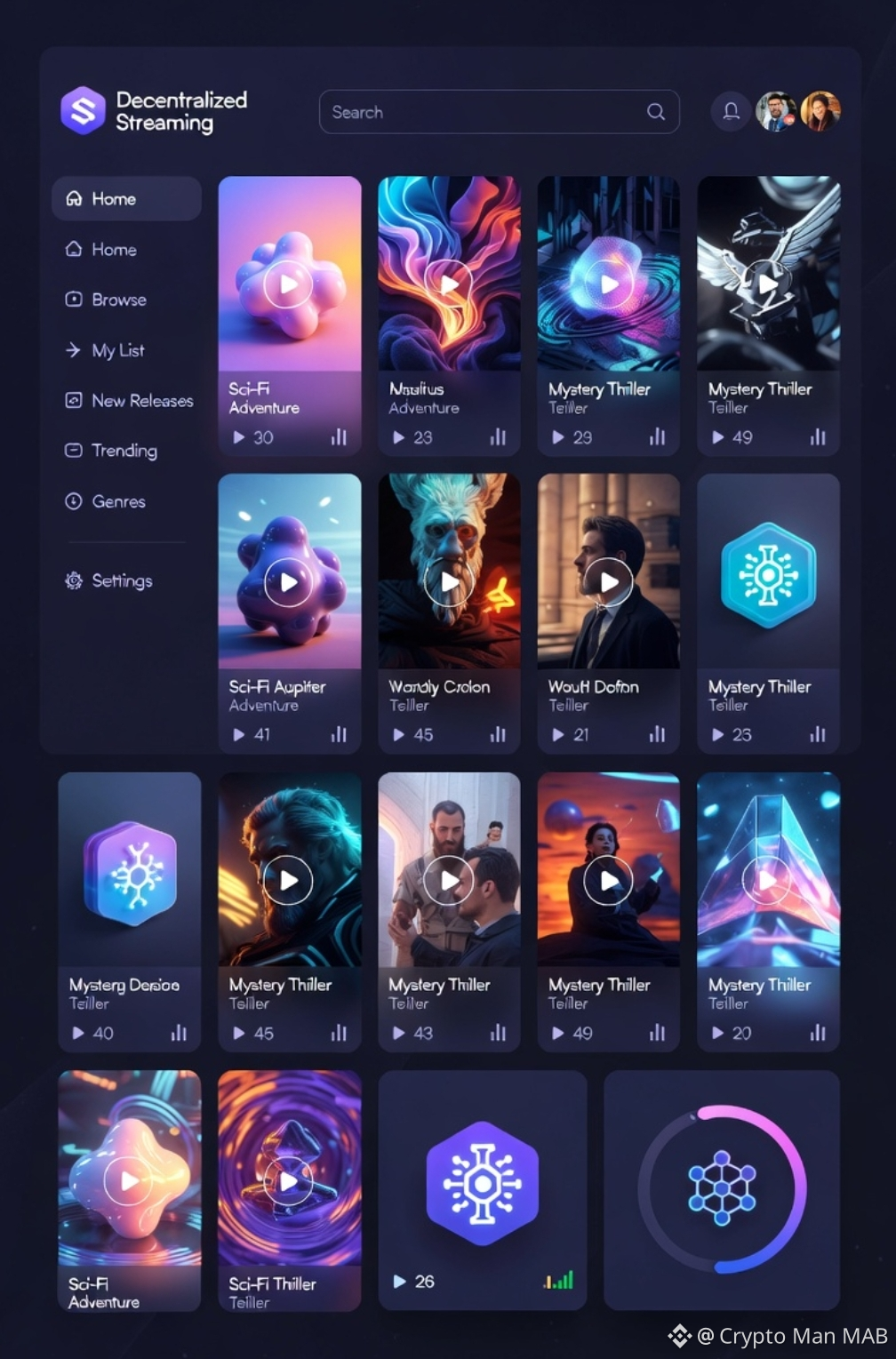
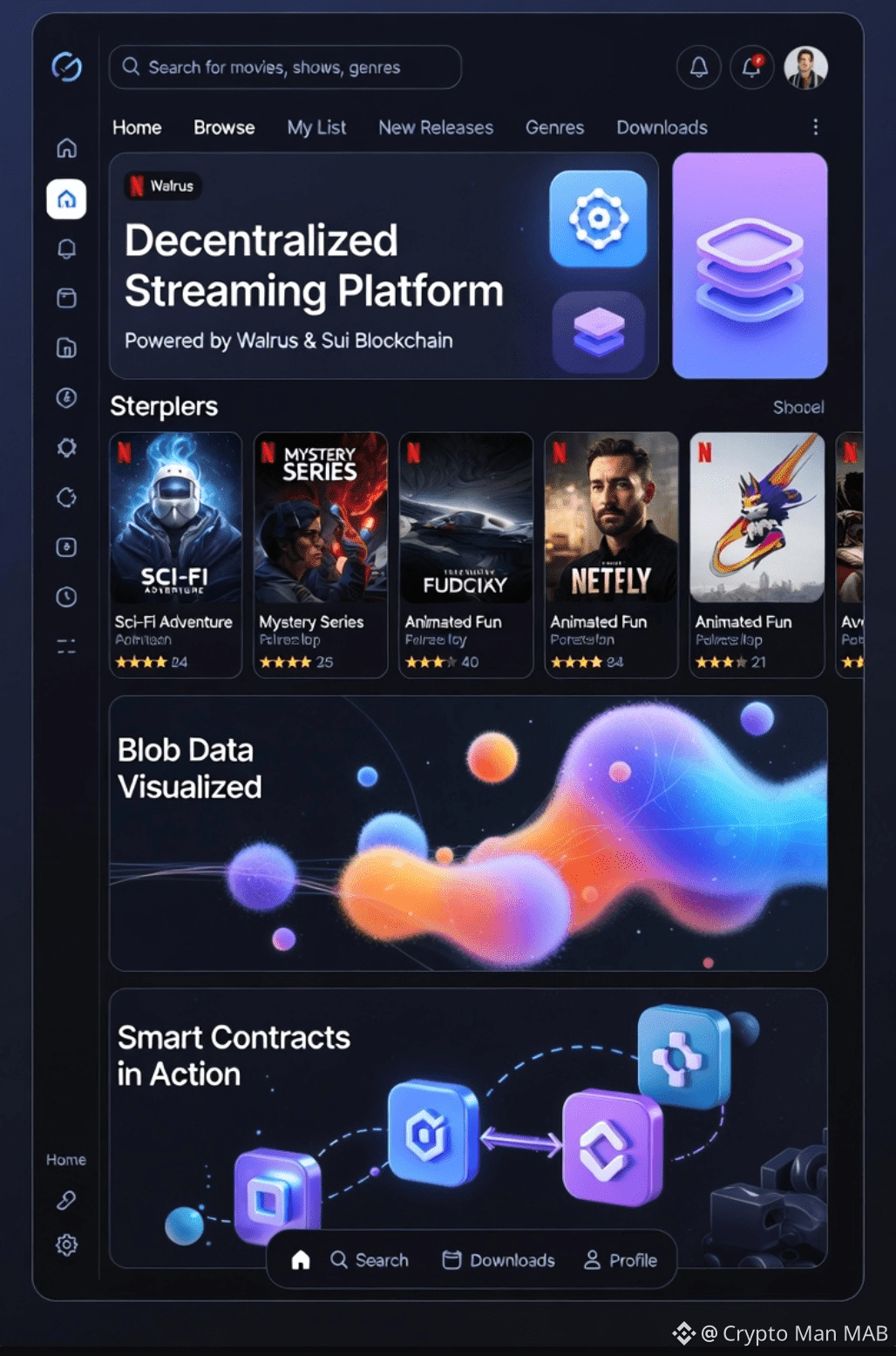
Centralized platforms like Netflix offer convenience but come with trade-offs: content can be geo-blocked, removed due to licensing disputes, or censored; creators often receive a small share of revenue; and user data is harvested for profit.
A decentralized alternative promises:
Censorship resistance -- No single entity can pull content.
True ownership -- Creators upload directly and earn via tokens, NFTs, or pay-per-view smart contracts.
Global accessibility -- Content available worldwide without regional restrictions.
Lower costs -- Reduced reliance on expensive centralized servers and bandwidth deals.
Community governance -- Token holders (e.g., WAL) influence platform decisions.
Walrus addresses the storage layer--the hardest part of decentralized video streaming--where files must be highly available, quickly retrievable, and economically sustainable.
How to Build a Netflix-Like Platform on Walrus
Imagine a dApp called "DecentralFlix" built on Walrus:
Content Upload -- Creators encode and upload videos as blobs to Walrus via the CLI, SDK, or integrated frontends. Sui smart contracts handle payments (in WAL or other tokens) and metadata registration.
Content Discovery & Metadata -- A frontend (potentially hosted as a Walrus Site for full decentralization) indexes blobs with searchable metadata, recommendations via on-chain algorithms, or AI agents.
Streaming Delivery -- Use aggregators and publishers for efficient retrieval. Integrate with CDNs for low-latency streaming while falling back to direct node access for true decentralization. Adaptive bitrate streaming becomes feasible with Walrus's fast reconstruction.
Monetization -- Implement subscription models via Sui smart contracts, micropayments per episode, or NFT-based access passes. Revenue flows directly to creators with minimal intermediaries.
Access Control -- Leverage Walrus with Seal for encrypted, gated content (paywall-protected blobs).
Scalability -- As the user base grows, Walrus scales horizontally with more nodes, and Sui's high throughput handles transaction volume.
Early projects already use Walrus for media-heavy apps, like decentralized social platforms and content archives. Building a full streaming service is a natural extension--Walrus provides the reliable, affordable backbone for terabytes of video.
Challenges to Overcome
While promising, decentralized streaming on Walrus isn't plug-and-play yet:
Latency -- Pure P2P retrieval can be slower than centralized CDNs for high-quality 4K streaming. Hybrid solutions (Walrus + traditional CDNs) help, but full decentralization requires further optimization.
Bandwidth Costs -- Streaming high-bitrate video demands massive bandwidth; incentives for nodes serving data need refinement.
User Experience -- Wallets, gas fees, and crypto onboarding remain barriers for mainstream audiences.
Content Moderation -- Without central control, handling illegal or harmful content becomes tricky.
Competition -- Existing alternatives (e.g., Theta Network for video streaming) already target this space.
Despite these hurdles, Walrus's low replication overhead, Sui integration, and growing ecosystem position it well to solve many of these issues faster than older protocols.
The Future: A Truly Decentralized Netflix?
In 2026, with Walrus's mainnet mature, massive funding (including a $140M raise), and backing from top investors, the pieces are aligning for the first serious decentralized streaming platforms.
Creators could finally own their catalogs, viewers could access uncensored global libraries, and the industry could shift toward fairer economics.
Walrus isn't building Netflix itself it's providing the infrastructure for anyone to do so. The next Netflix might not come from Hollywood studios but from a community of developers, creators, and users on Sui and Walrus.
The decentralized streaming revolution is no longer a dream it's actively being built, blob by blob. Whether you're a developer, creator, or viewer tired of the status quo, now is the time to explore Walrus and help shape the future of entertainment.


