For a long time, I thought regulation and crypto were on opposite sides of the same battlefield. One stood for control, the other for freedom. One moved slowly, the other tried to break everything open. It felt like a natural conflict, almost a necessary one.
But as I learned more, and as I watched projects rise and disappear, that view started to feel incomplete.
If blockchain is really meant to become part of everyday life — not just something we talk about in online communities, but something that carries real savings, real businesses, real pensions, real markets — then it has to meet the world where it actually is. And the world, whether we like it or not, runs on rules.
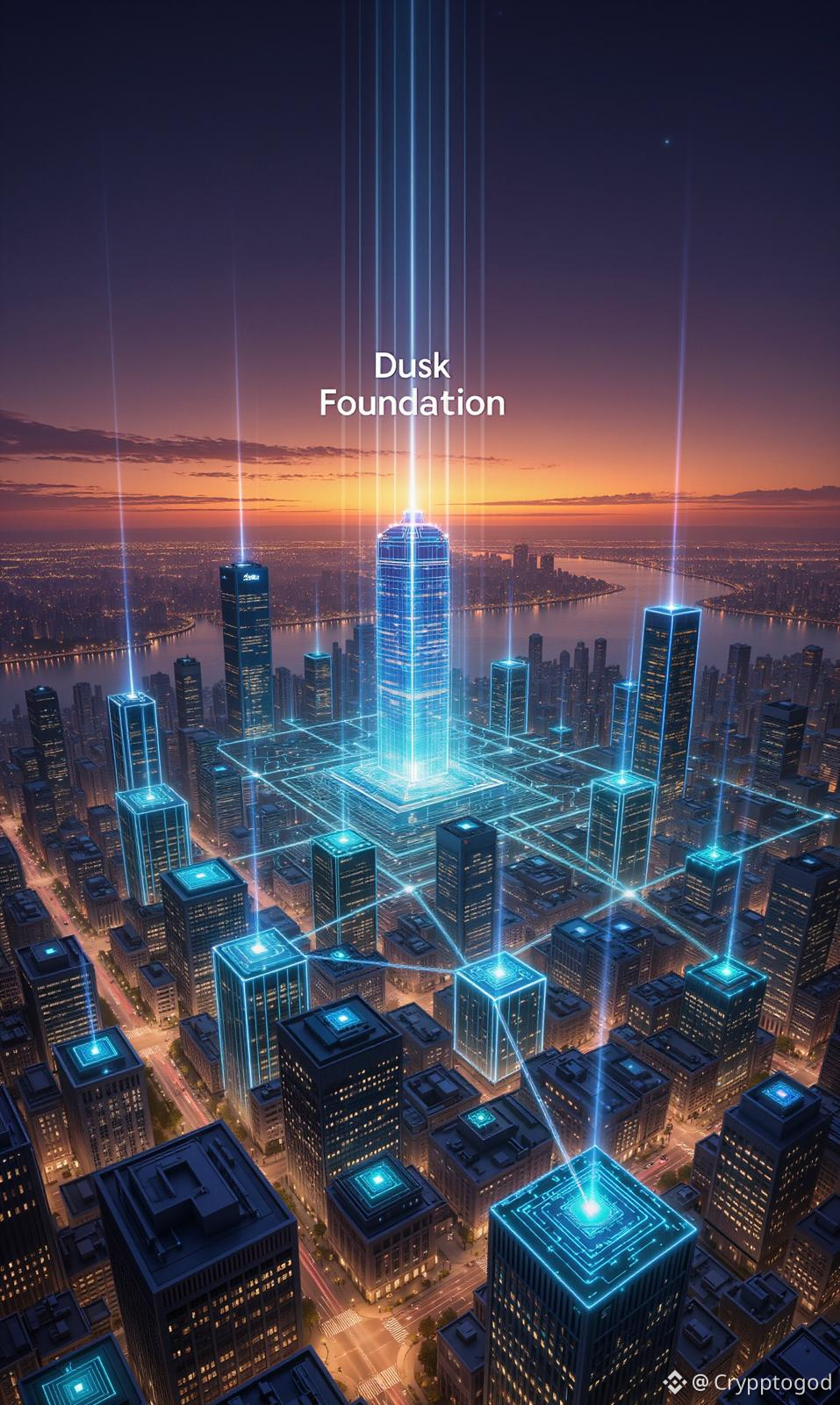
What changed my perspective was seeing a project like Dusk not treat regulation as an obstacle to dodge, but as a reality to design for.
They didn’t build a chain and then ask, “How do we avoid oversight?”
They asked, “How do we protect privacy while still allowing proof when it truly matters?”
That’s a much harder question. And a much more honest one.
Through things like zero-knowledge technology, Dusk is trying to make it possible for information to remain confidential, yet verifiable. Not everything needs to be public. Not everything needs to be hidden. There’s a middle ground where trust can exist without exposure, and accountability can exist without surveillance.
And then I saw their work with regulated partners, with European markets, with infrastructure like Chainlink. Not as a marketing badge, but as a signal: they are building for a future where blockchain doesn’t live outside the system, but slowly becomes part of its backbone.
That’s when I stopped seeing institutions as “the enemy” of crypto. I started seeing them as the next step. Not the masters of it — but its proving ground.
Dusk feels like it understands that. It’s not trying to replace the world overnight. It’s trying to offer it a better set of tools.
And maybe that’s how real change actually happens.