

For decades, the internet has been built on centralized hosting models. Websites live on servers owned by cloud providers, content delivery networks decide what gets cached or blocked, and access is ultimately controlled by intermediaries. While this model enabled the rapid growth of Web2, it also introduced systemic weaknesses — single points of failure, censorship risks, rising costs, and a lack of user ownership. Walrus Sites represent a fundamental shift away from this paradigm, offering a decentralized alternative designed for resilience, efficiency, and trust at internet scale.
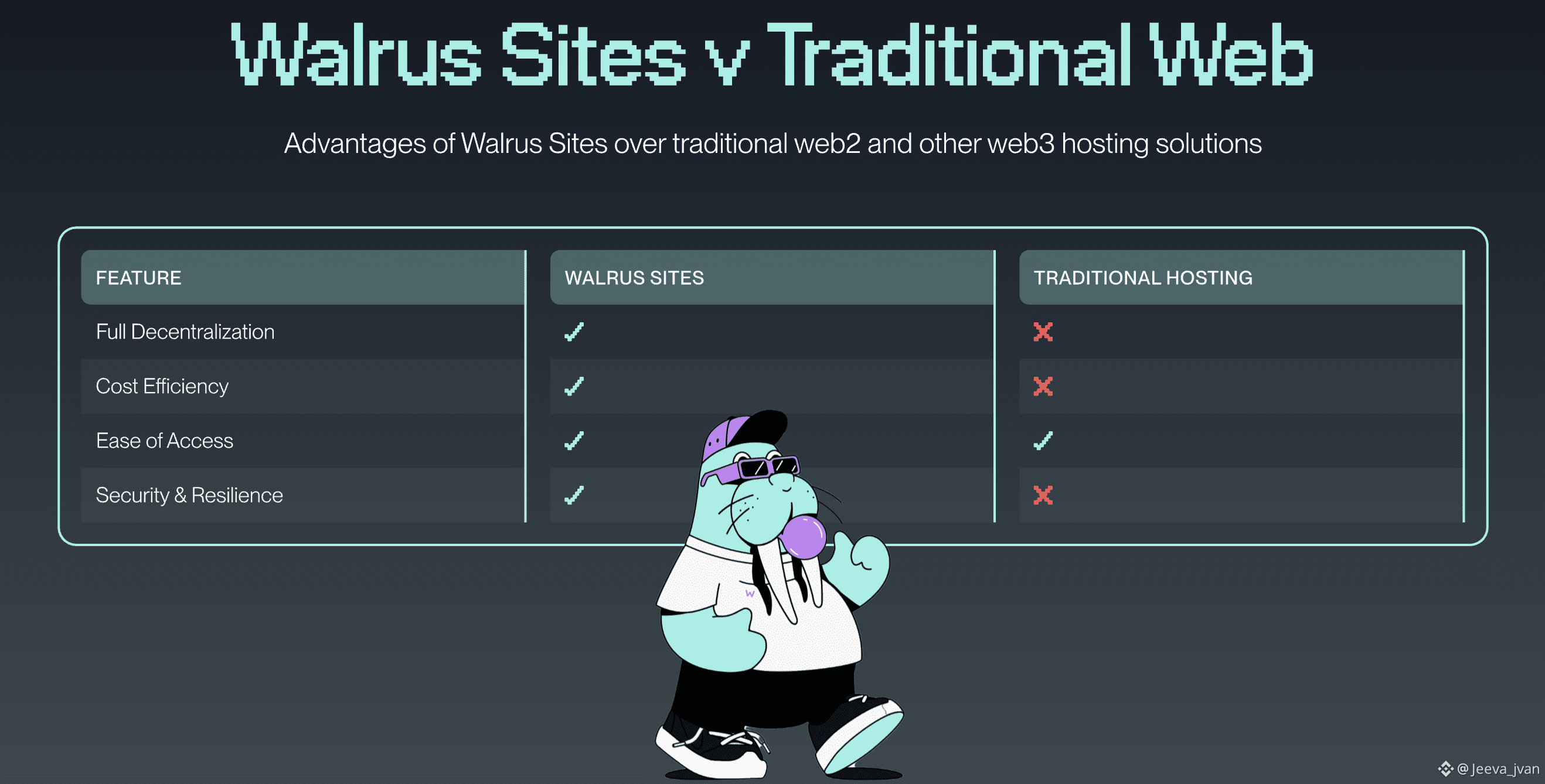
Walrus Sites are built on top of the Walrus Protocol, a decentralized data storage and availability network. Unlike traditional hosting, where files reside on specific servers, Walrus Sites distribute website data across independent storage nodes using erasure coding. This ensures that no single node ever holds full control over the content, while the network can still reconstruct data even if multiple nodes go offline. As a result, Walrus Sites achieve full decentralization by design — something traditional hosting simply cannot offer.
Decentralization vs Central Control
Traditional web hosting relies on centralized infrastructure providers. Whether it’s shared hosting, VPS, or large cloud platforms, access to websites can be restricted, modified, or taken offline by service providers, regulators, or attackers. This creates an inherent trust requirement: users must believe that hosts will act fairly, securely, and continuously.
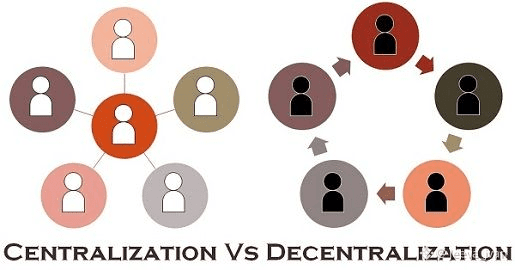
Walrus Sites eliminate this trust dependency. Content is stored across a decentralized network where no single operator can censor, modify, or remove data unilaterally. Ownership shifts back to developers and users, making websites resistant to takedowns, outages, and infrastructure failures. This is especially critical for Web3 applications, open knowledge platforms, and communities that depend on long-term data persistence.
Cost Efficiency and Economic Sustainability
One of the most overlooked problems of traditional hosting is cost unpredictability. As traffic grows, hosting fees increase rapidly — bandwidth, storage, backups, redundancy, and scaling all add layers of expense. Over time, this makes popular applications increasingly dependent on large cloud providers with complex pricing models.
Walrus Sites introduce a more efficient economic structure. By leveraging erasure coding instead of full replication, Walrus significantly reduces storage overhead while maintaining high availability. Developers pay only for the data they store, without needing to manage servers, backups, or scaling logic. This makes Walrus Sites particularly attractive for long-term projects, static sites, documentation portals, and decentralized frontends that need predictable costs.
Ease of Access Without Servers
Traditional hosting requires operational overhead: server configuration, security updates, uptime monitoring, scaling strategies, and disaster recovery. Even modern platforms abstract some of this complexity, but developers remain dependent on centralized service reliability.

Walrus Sites remove this burden entirely. Websites can be deployed without servers, without infrastructure maintenance, and without centralized dependencies. Once published, content becomes accessible globally through the Walrus network, making deployment simpler while increasing reliability. For developers, this means faster iteration, lower operational risk, and fewer points of failure.
Security and Resilience by Architecture
Security in traditional hosting is reactive. Firewalls, DDoS protection, backups, and monitoring tools are layered on top of centralized systems in response to threats. Despite these measures, outages and data breaches remain common because attackers only need to exploit one weak point.

Walrus Sites are resilient by architecture. There is no central server to attack, no database to corrupt, and no single location to overwhelm. Data integrity is cryptographically verifiable, meaning users can confirm that what they retrieve is exactly what was published. This dramatically improves trust, especially for applications handling sensitive data, governance interfaces, or financial tools.
Analysis: Why Walrus Sites Matter for the Next Web
The comparison between Walrus Sites and traditional web hosting highlights a deeper shift happening across the internet. As applications become more decentralized, composable, and global, infrastructure must evolve accordingly. Hosting models designed for centralized control struggle to support systems that prioritize censorship resistance, transparency, and user ownership.
Walrus Sites align infrastructure with Web3 values. They provide full decentralization, strong security, predictable costs, and global accessibility without relying on centralized intermediaries. While traditional hosting may still serve simple use cases, it is fundamentally incompatible with the trustless, permissionless future the internet is moving toward.

In this context, Walrus Sites are not just an alternative hosting option — they represent a new standard for how websites and applications should exist in a decentralized world. As Web3 adoption grows, infrastructure that combines usability with decentralization will define which platforms endure. Walrus is positioning itself at the center of that future.

