

In Web3, decentralization is often promised but rarely delivered end-to-end. While blockchains themselves may be decentralized, the data they rely on—websites, images, datasets, AI models, application state—still lives on centralized servers, cloud providers, or fragile hosting solutions. This hidden dependency creates a single point of failure and undermines the very ethos of decentralization.
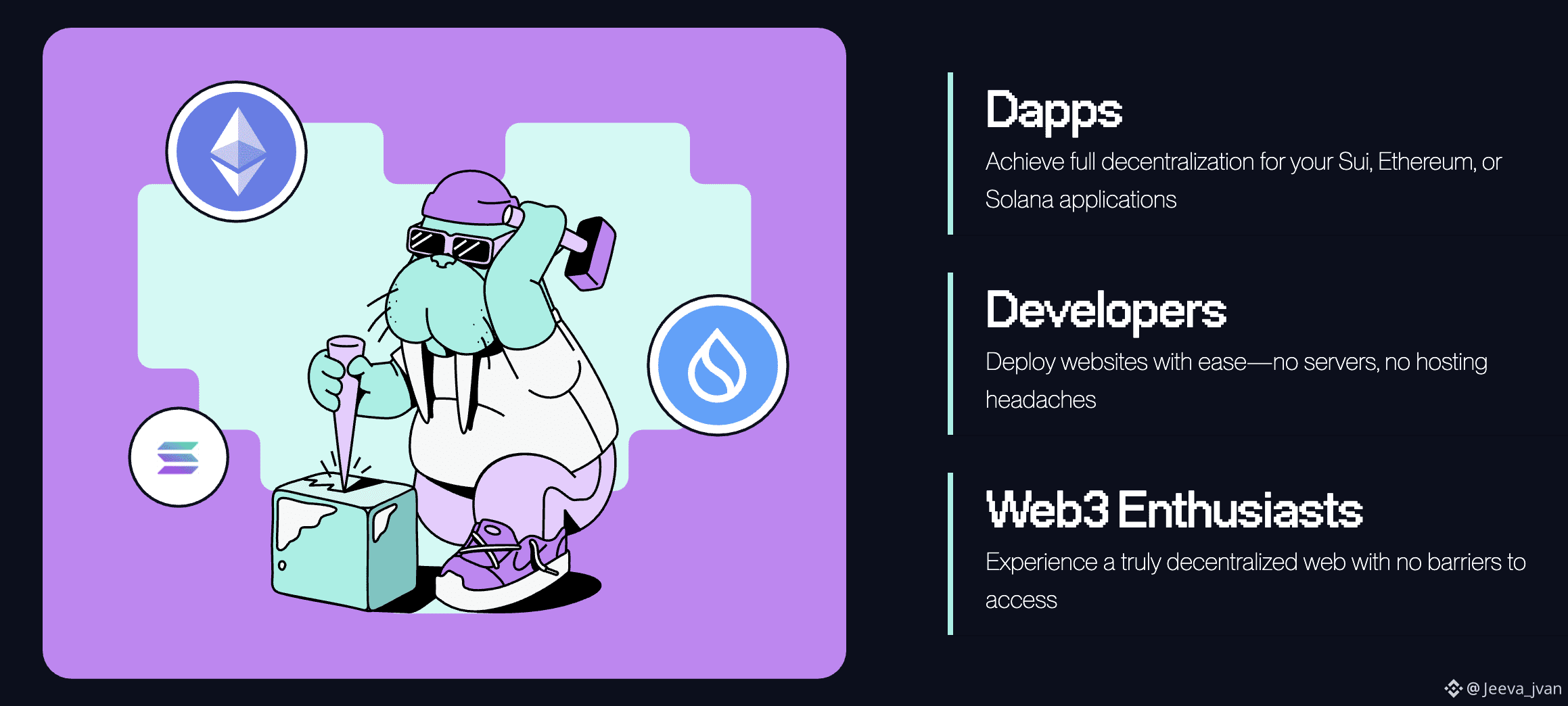
Walrus was built to solve this exact problem.
As a decentralized data storage and availability protocol, Walrus enables applications to store, retrieve, and verify data in a trustless, censorship-resistant, and scalable way. Instead of relying on centralized infrastructure, Walrus distributes encrypted data across independent nodes, ensuring availability, integrity, and performance at scale. This architecture unlocks powerful real-world use cases across dApps, developers, and the broader Web3 ecosystem.
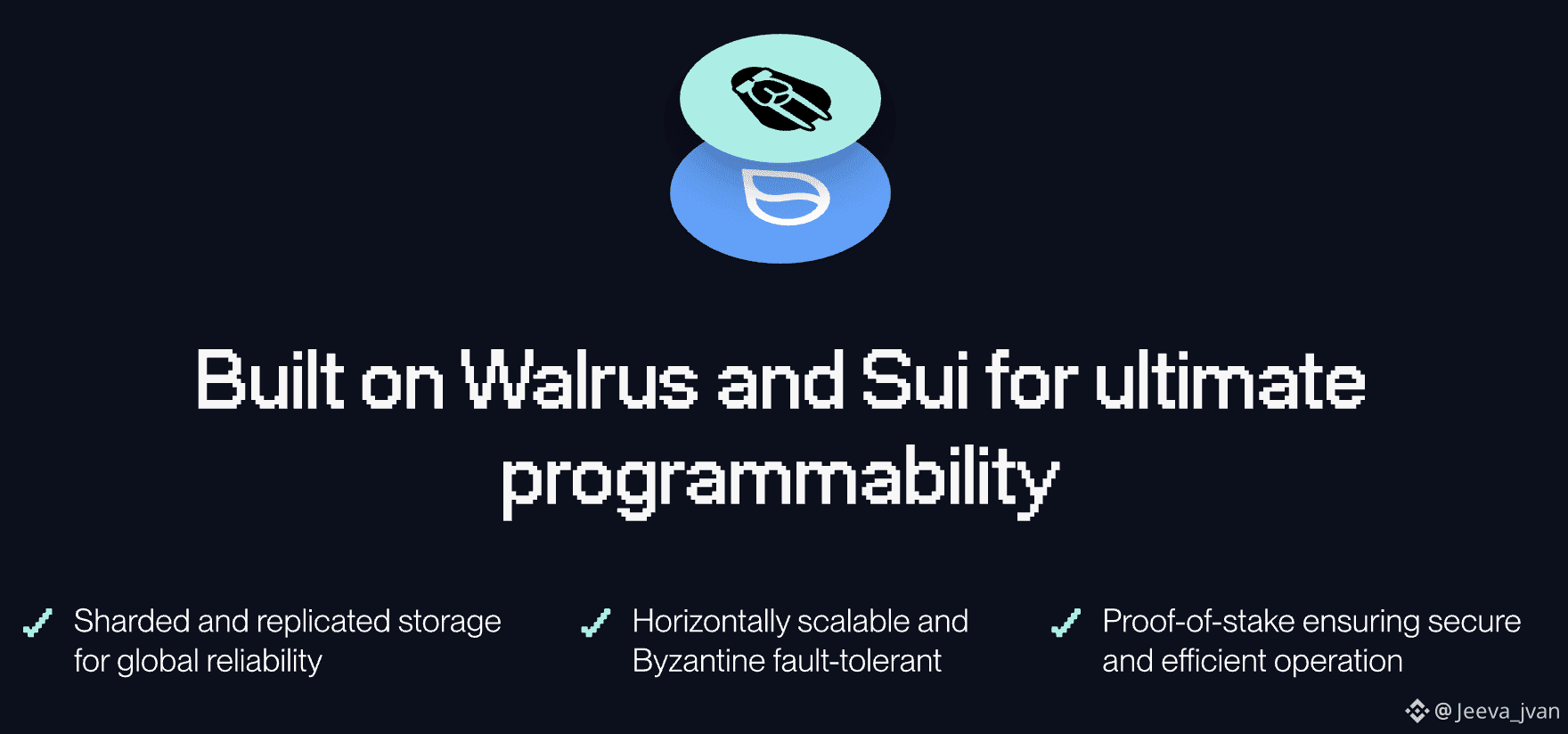
1. DApps: Achieving True End-to-End Decentralization
Most decentralized applications today still rely on centralized components for critical functions such as hosting frontends, storing media, or managing application data. This creates risks ranging from downtime and censorship to silent data manipulation.
Walrus allows dApps to move these components fully on-chain or into decentralized storage without compromising performance. Applications built on Ethereum, Sui, Solana, or other ecosystems can use Walrus as their data layer, ensuring that both logic and data are decentralized.
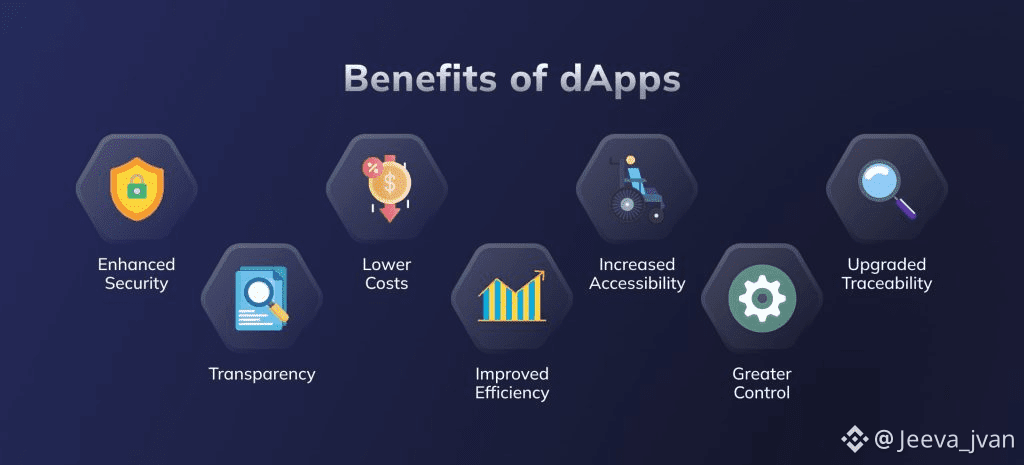
For DeFi platforms, Walrus can store historical trade data, governance records, or audit logs in a verifiable way. For NFT and gaming projects, metadata, assets, and user-generated content remain accessible even if the original developer disappears. Social applications can preserve posts, media, and interactions without relying on centralized moderation or storage providers.
By removing centralized storage dependencies, Walrus helps dApps reach the level of decentralization users expect—but rarely experience.
2. Developers: Building Without Servers, Hosting, or Hidden Costs
For developers, infrastructure complexity is often the biggest barrier to innovation. Traditional hosting requires server management, scaling strategies, DevOps overhead, and ongoing costs that grow unpredictably with usage.
Walrus changes this model entirely.
Developers can deploy websites, applications, dashboards, and backend services directly on Walrus, without running servers or managing hosting environments. Data is stored once and made globally accessible through the network, reducing operational friction and simplifying architecture.

This is especially powerful for startups, open-source projects, and solo builders. Instead of worrying about uptime, storage limits, or cloud vendor lock-in, developers can focus purely on building products. Walrus offers predictable pricing, high availability, and seamless integration with Web3 tooling, making decentralized development practical rather than theoretical.
3. Web3 Enthusiasts: A Truly Open and Uncensorable Web
For users, decentralization is about freedom of access. Traditional websites can be taken down, geo-blocked, altered, or removed entirely. Even Web3 interfaces often disappear when a project shuts down its frontend.
Walrus enables a new kind of web—one where content remains available as long as the network exists.
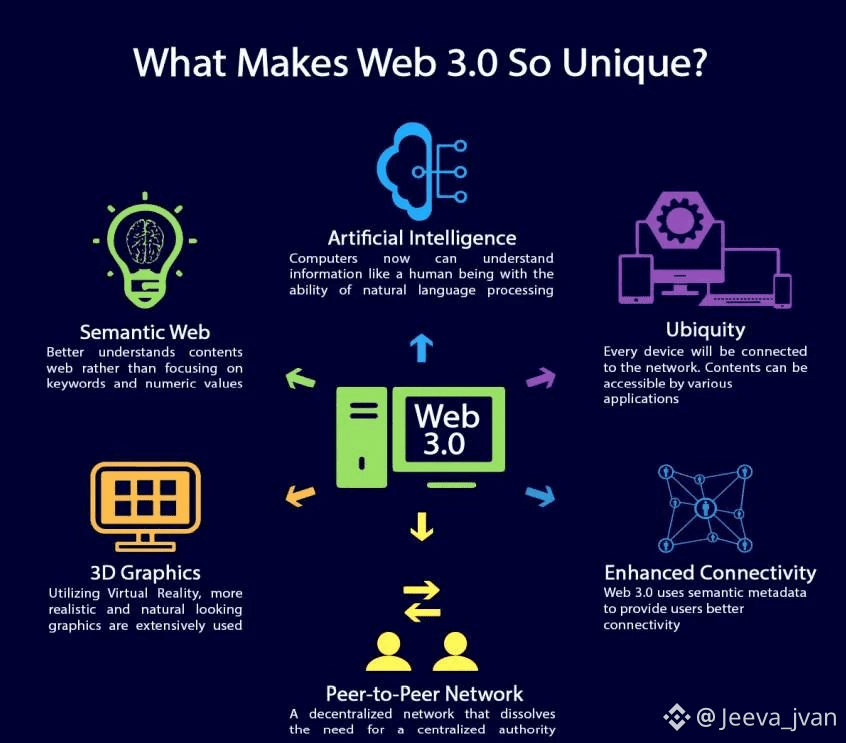
Websites hosted on Walrus cannot be arbitrarily censored or quietly modified. Users can access data directly from the network, verify its authenticity, and trust that what they see has not been tampered with. This is critical for governance platforms, research archives, educational resources, and community-owned media.
For Web3 enthusiasts, Walrus represents a shift from permissioned access to permanent availability—an internet where users are no longer dependent on centralized gatekeepers.
4. AI, Data Markets, and Verifiable Computation
Modern AI systems are only as reliable as the data they are trained on. Today, AI datasets are often opaque, unverifiable, and controlled by centralized entities. This creates trust issues around bias, manipulation, and ownership.
Walrus introduces verifiable, auditable data storage for AI pipelines. Datasets, training inputs, inference logs, and model artifacts can be stored on Walrus with cryptographic guarantees. Combined with programmable access controls, this allows developers to share data securely while maintaining ownership and accountability.
This unlocks decentralized AI training, on-chain data markets, and verifiable computation—where results can be audited, reproduced, and trusted by third parties.
5. Why Walrus Changes the Game
What makes Walrus different is not just decentralization—but decentralization at scale. Through careful incentive design, staking mechanisms, and performance-based rewards, Walrus prevents power concentration while maintaining high throughput and low latency.

By aligning economic incentives with honest performance, Walrus ensures that the network remains resilient, censorship-resistant, and open as it grows. This is not decentralization as a slogan—it is decentralization as a system property.
Conclusion: Infrastructure for the Decentralized Future
Walrus is more than a storage protocol. It is foundational infrastructure for a new generation of decentralized applications—ones that are resilient, transparent, and free from centralized dependencies.
From dApps and developers to AI systems and open web platforms, Walrus enables data to be accessible, protected, and verifiable at all times. As Web3 evolves beyond speculation and into real utility, protocols like Walrus will define what true decentralization looks like.
In a world increasingly shaped by data, Walrus ensures that control, ownership, and trust return to the network—and ultimately, to the users themselves.



