

or years, Web3 applications have promised decentralization, censorship resistance, and user ownership. Yet behind the scenes, many of these apps still rely on centralized servers to host websites, store data, and serve content. This hidden dependency creates a fragile foundation—if a server goes down, a frontend disappears, or a hosting provider intervenes, the “decentralized” app suddenly isn’t so decentralized after all.
Walrus changes this equation.
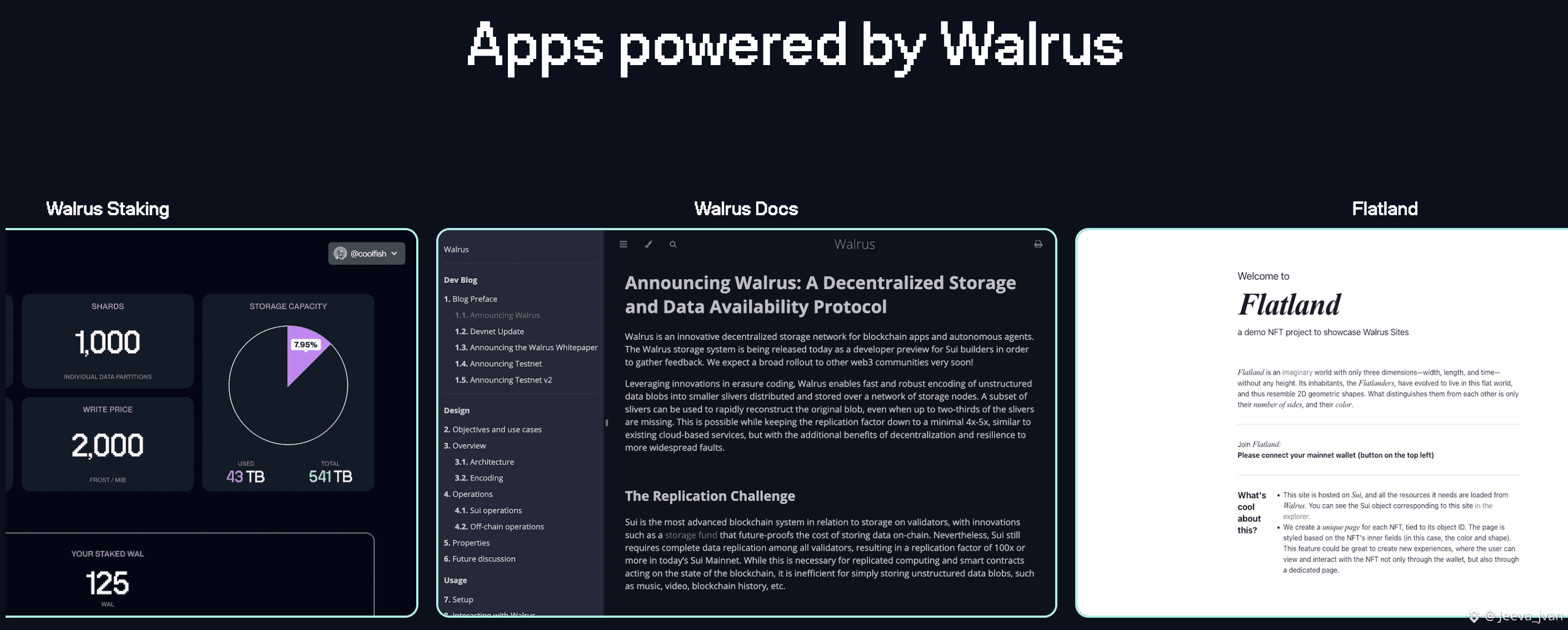
By acting as a decentralized data storage and availability layer, Walrus allows applications to move critical components—websites, media, datasets, and application state—into a trustless, verifiable network. The result is a new class of applications that remain accessible, auditable, and resilient by design. The growing ecosystem of apps powered by Walrus shows how decentralized storage is evolving from infrastructure into real-world utility.
From Infrastructure to Applications
Walrus was not built merely to store files. It was designed to support applications that require high availability, integrity guarantees, and predictable performance at scale. Data uploaded to Walrus is split, encoded, and distributed across independent storage nodes, removing single points of failure while maintaining efficient access.
This design makes Walrus especially suitable for applications that need permanence and reliability. Instead of trusting a single company or server cluster, apps powered by Walrus rely on cryptographic guarantees and economic incentives to ensure data remains available over time. As adoption grows, this model becomes increasingly powerful—not weaker.
Flatland: Decentralized Experiences Without Centralized Hosting
Flatland demonstrates how creative, user-facing applications can live entirely on decentralized infrastructure. As an experimental NFT-driven world hosted on Walrus Sites, Flatland shows that rich web experiences do not require traditional servers.
Everything—from visuals to interactive elements—is served through Walrus-backed storage. This means the experience persists independently of the original creators. Even if the development team steps away, the site remains accessible as long as the Walrus network exists.
Flatland highlights an important shift: decentralized storage is not just about archiving data, but about hosting living, interactive applications that users can rely on long term.
Snowreads: Knowledge Preservation on Decentralized Rails
Snowreads takes a different but equally important approach. By curating and publishing collections of scientific papers and long-form research content stored on Walrus, Snowreads addresses a major weakness of today’s internet: the fragility of knowledge.
Research platforms, journals, and archives can change access policies, remove content, or disappear altogether. Snowreads leverages Walrus to ensure that valuable intellectual work remains accessible, verifiable, and resistant to censorship. Each dataset stored on Walrus becomes a durable asset rather than a temporary link.
In an era where AI, research, and education depend heavily on data integrity, Snowreads demonstrates how decentralized storage can protect long-term knowledge without sacrificing usability.
Why “Apps Powered by Walrus” Matters
What connects these applications is not their category, but their foundation. Apps powered by Walrus share several defining characteristics:
Resilience: They remain accessible even if individual nodes fail or teams move on.
Integrity: Users can verify that data has not been altered or manipulated.
Decentralization: No single entity controls access, hosting, or availability.
Scalability: Walrus is designed to handle large datasets and growing demand without centralization pressure.
This combination makes Walrus-backed applications fundamentally different from Web2 platforms and even many Web3 apps that still rely on centralized components.
A New Standard for Web3 Applications
As Web3 matures, users and developers are becoming more critical of surface-level decentralization. Infrastructure choices matter. Where data lives matters. Who controls access matters.
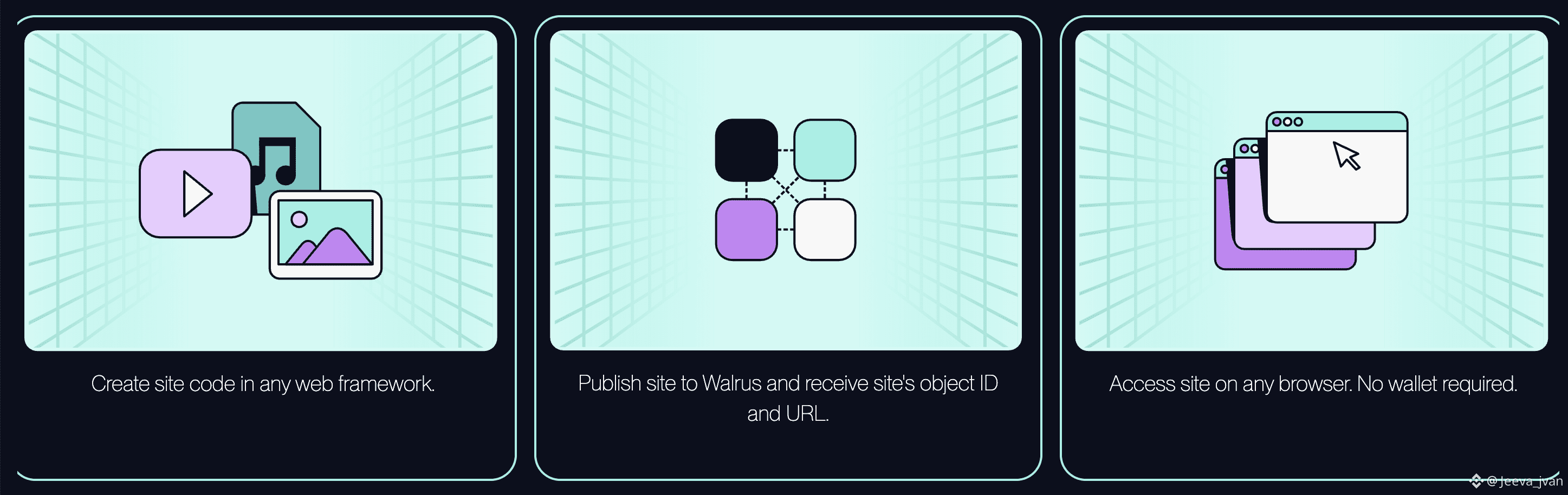
Apps powered by Walrus represent an emerging standard—one where decentralization is not a marketing phrase, but an architectural reality. Whether it’s creative worlds like Flatland, knowledge platforms like Snowreads, or future applications yet to be built, Walrus provides the foundation for applications that can outlast teams, trends, and market cycles.
Conclusion: When Storage Becomes a Catalyst
Walrus proves that decentralized storage is not just a backend concern—it’s a catalyst for better applications. By enabling apps to exist without centralized hosting, hidden permissions, or fragile infrastructure, Walrus allows developers to build with confidence and users to engage with trust.
The growing ecosystem of apps powered by Walrus signals a deeper shift in Web3: away from dependency and toward permanence. As more builders adopt this model, decentralized applications will finally become what they were always meant to be—open, resilient, and owned by the network itself.
In that future, storage is not just where data lives.
It’s where decentralization becomes real.

