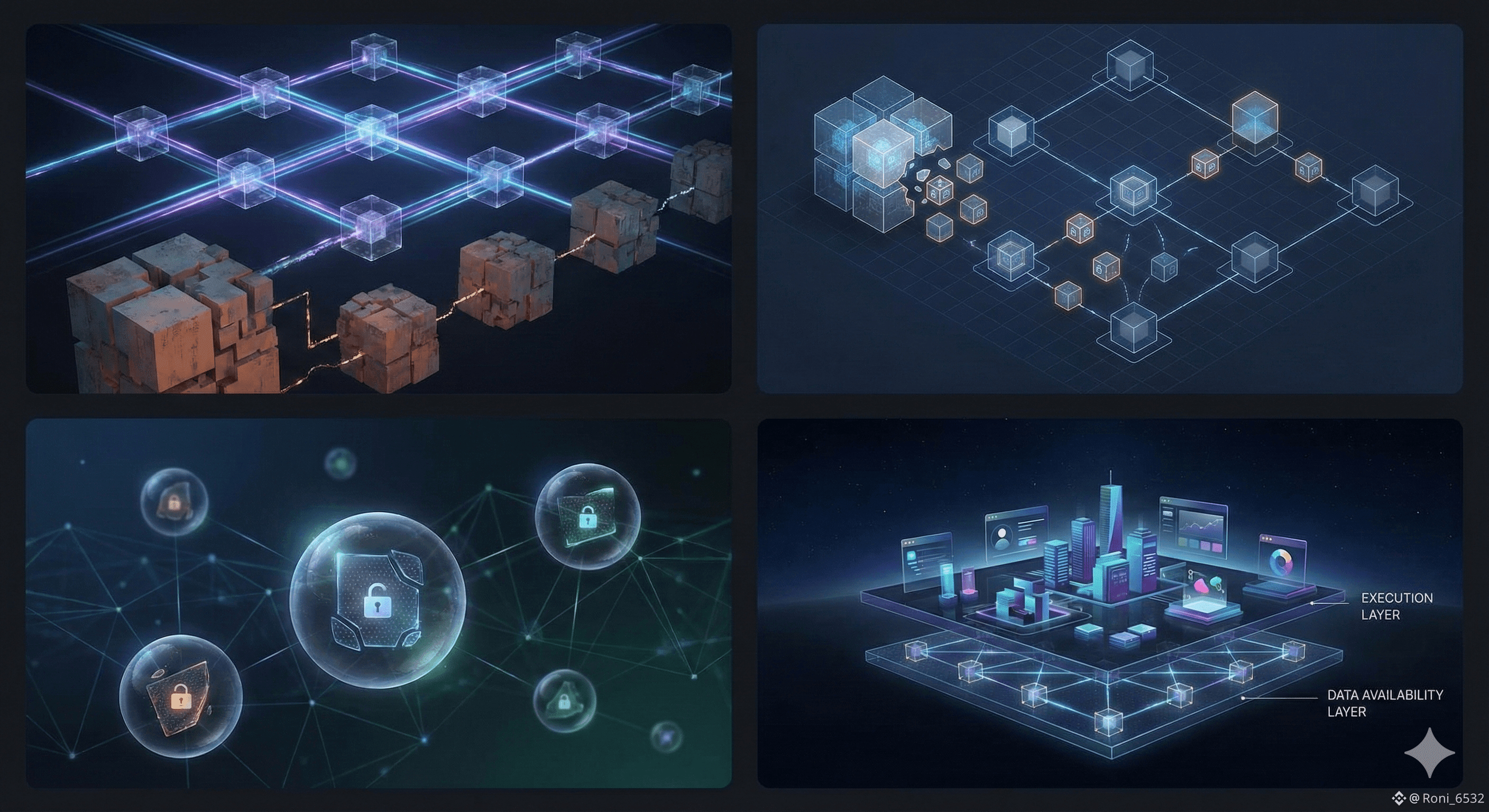
Crypto loves speed. “Breaking News: Faster transactions, less lag time and smoother execution.” But as blockchains scale up execution, something quieter begins to fail. Data. The files, records, metadata and application state supporting transactions simply cannot keep up. Now, that gap is no longer abstract. It manifests as lost NFT assets, dApps secretly leaning on centralized servers and systems that buckle when data goes missing. We need Walrus to exist because execution is miles ahead of the data infrastructure.
High throughput blockchains like Sui allow applications to run at speeds greater than ever before, but they also generate more data than traditional blockchain architectures were designed to ever process. And keeping everything onchain is not economically feasible, and sending data off chain induces the trust crypto was made to get rid of. Builders feel this pressure early. They also want scale without losing the decentralization, and most of the available storage options require a compromise they are just not comfortable to make.
This is what Walrus try to handle, but using data availability (instead of dumb storage). Instead of copying entire files all over the place, it uses erasure coding and blob storage to spread encoded chunks of data across a decentralized network. Each node does not have every byte, but the network can reconstruct data it does not have when necessary. This reflects the way real, decentralized systems scale whilst being verifiable and censorship resistant.
Privacy makes the problem sharper. Most current blockchain systems presuppose that data should be either readily visible to all or implicitly trusted to centralized actors. Walrus considers privacy as a constraint, not an opt-in characteristic. It allows for selective data access while maintaining verification, which is important as crypto marches toward enterprise use cases, governance models and regulations where full transparency isn’t always practical.
From this point of view, @walrusprotocol is less about stories and more about infrastructure. Data becomes the real bottleneck, and with execution getting cheaper and more plentiful. The significance of $WAL lies in realizing that decentralized systems are not scalable unless data availability, cost and privacy are codesigned. Walrus is here because the ecology has finally hit the wall of not data.