
I have been thinking a lot about how networks handle growing activity, and Dusk does it in a very straightforward way. @Dusk uses $DUSK as the only token to pay for transaction fees. Every action on the network, whether it's a simple transfer or running a more complex confidential smart contract, requires gas. Users pay this gas in Dusk, which covers the computation costs for validators and helps protect against spam attacks like DDoS. When the network gets busier with more transactions, the demand for Dusk naturally goes up because more fees are needed to process everything.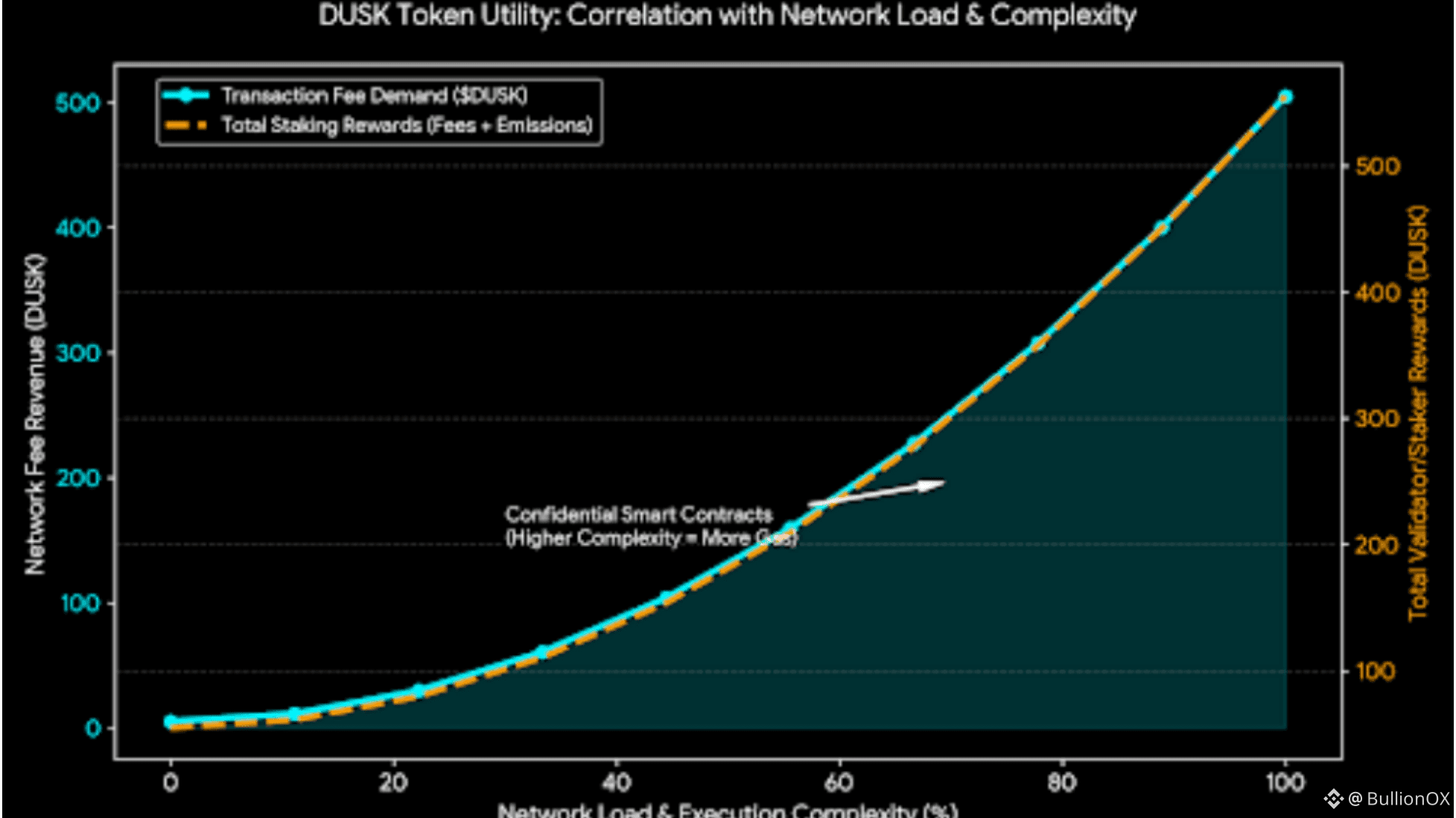
Higher execution complexity plays a big role too. Things like detailed confidential contracts or multi-step operations use more gas units, so each transaction costs more DUSK. This ties the token's utility directly to real network usage. As load increases and people run more advanced logic, the overall amount of $DUSK needed for fees rises. It's a clean mechanism that links token demand to actual activity without relying only on speculation or external factors.
On the staking side, Dusk's Proof-of-Blind-Bid consensus depends on people locking Dusk so help secure the network. Stakers earn rewards from both new token emissions (spread over 36 years) and the transaction fees collected. When network load grows and execution gets more complex, more fees flow into the system. This increases rewards for those who stake, creating a positive cycle where higher usage makes staking more attractive. It encourages people to hold and participate long term, strengthening the network's security.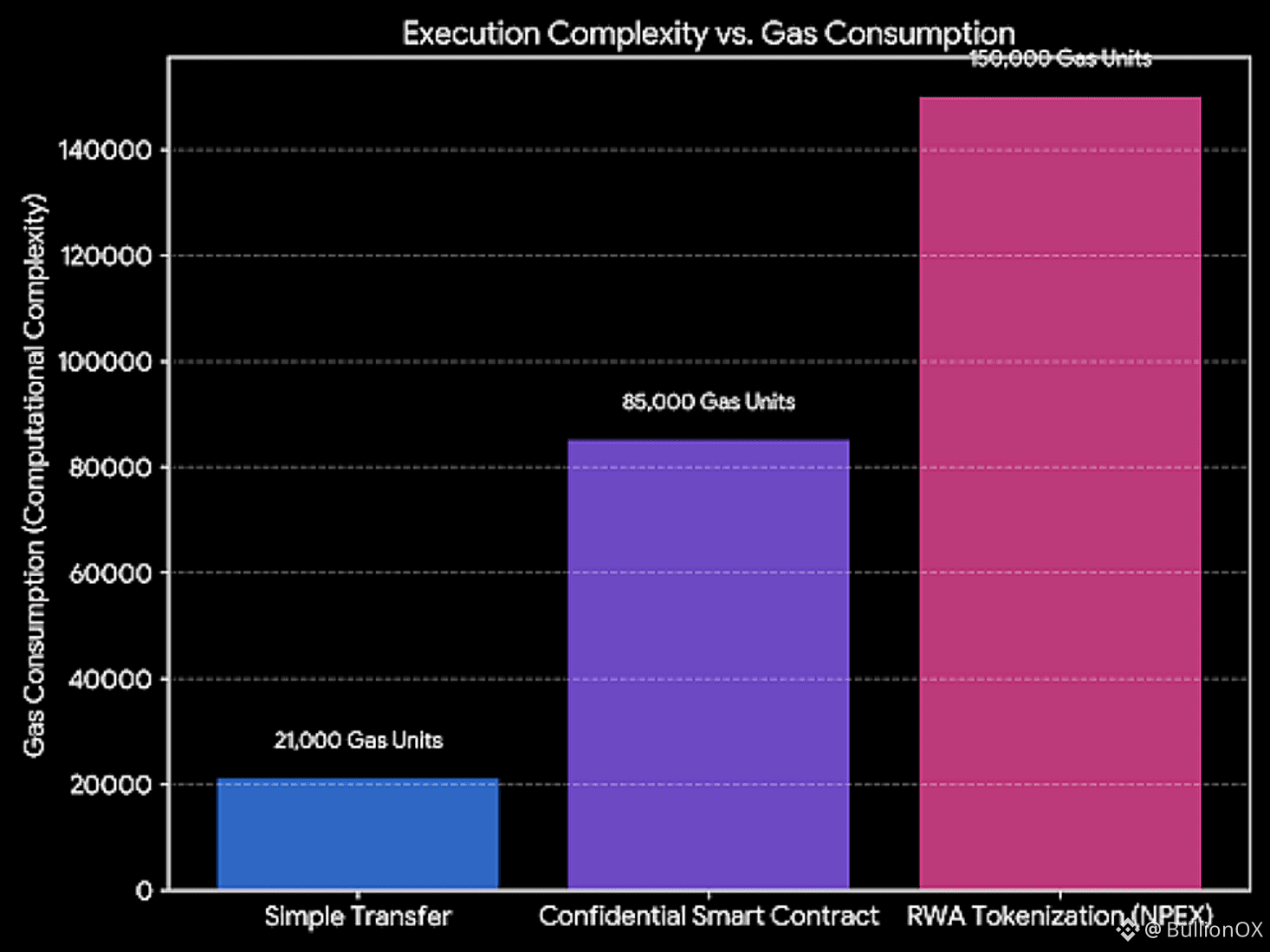
Looking at the bigger picture, Dusk keeps refining its gas system to make sure it balances user costs with token value. With DuskEVM live since January 2026, developers can build EVM contracts with privacy features, but more complex code still uses more gas paid in DUSK. As the ecosystem expands through real partnerships like NPEX tokenizing assets, load and complexity will keep rising naturally. This design makes Dusk essential to the network's growth and gives it solid, usage-based demand.
