
to AI Infrastructure
The story of blockchain technology has always been about solving fundamental challenges that prevent mainstream adoption. While countless projects promise to bridge the gap between traditional industries and Web3, few have undertaken the kind of transformation that defines Vanar Chain. What began as Virtua, a gaming and metaverse focused platform, evolved into something far more ambitious: the first blockchain infrastructure designed from the ground up to integrate artificial intelligence directly into its core architecture. This journey from entertainment to intelligent infrastructure represents one of the most significant pivots in the blockchain space, and understanding it requires examining not just what Vanar has become, but why such a transformation was necessary.
The Foundation: From Virtua to Vision
In the beginning, there was Terra Virtua Kolect, a project that launched in 2017 with a vision to create immersive digital experiences through blockchain technology. Founded by Gary Bracey, who brought over 35 years of video game industry experience from companies like Ocean Software and Digimask, and Jawad Ashraf as co-founder and CEO, the project initially focused on building a gamified metaverse. The original token, TVK, launched in December 2021, became the utility token for this virtual world where users could purchase land on Virtua Prime, stake for exclusive club membership, collect NFTs, and engage with digital experiences tied to major entertainment brands like Legendary Entertainment, Paramount Pictures, and Williams Racing.
However, as the team worked with gaming companies, entertainment brands, and mainstream businesses trying to enter Web3, they identified deeper systemic issues preventing widespread adoption. The confusion around different chains, wallets, payment providers, and regulatory compliance created friction points that kept global brands on the sidelines. More importantly, they recognized that blockchain technology itself needed to evolve beyond simple transaction processing and smart contract execution. If Web3 was truly going to bring the next three billion consumers online, it needed infrastructure that could think, not just validate.
This realization led to one of the most comprehensive rebranding efforts in cryptocurrency history. In late 2023, Virtua announced its transformation into Vanar Chain. The TVK token would become VANRY through a one-to-one swap, preserving holder value while signaling a complete reimagining of the project’s scope and ambition. Major exchanges including the platform where many readers discover such projects supported this transition, handling the technical requirements and ensuring seamless conversion for millions of token holders across more than 200 countries. By December 2023, the transformation was complete, and Vanar Chain emerged with a fundamentally different mission: to build the first AI-native Layer 1 blockchain.
The Technology That Thinks
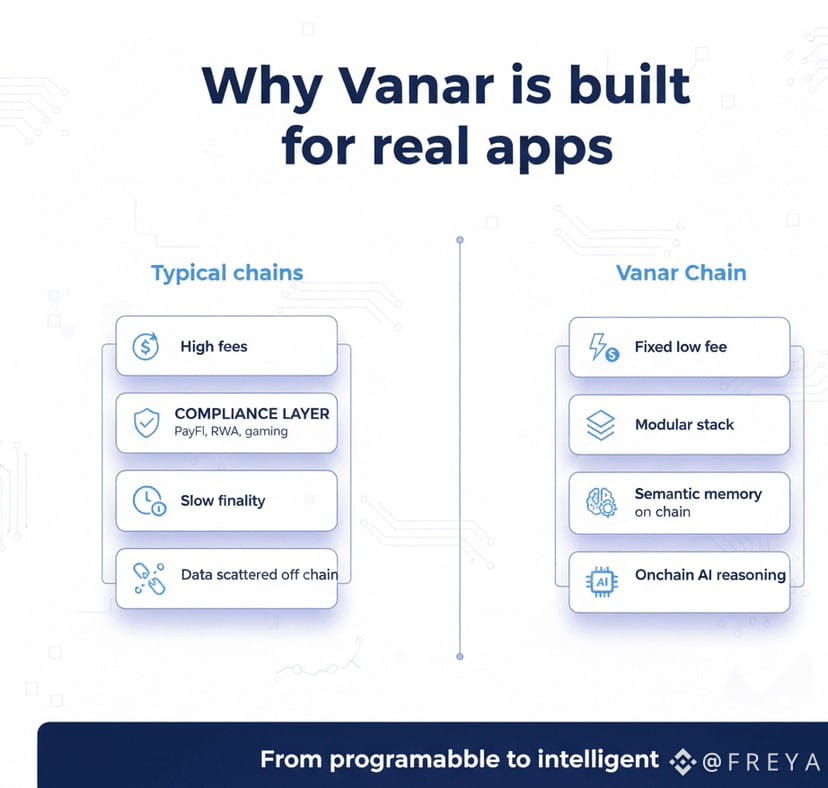
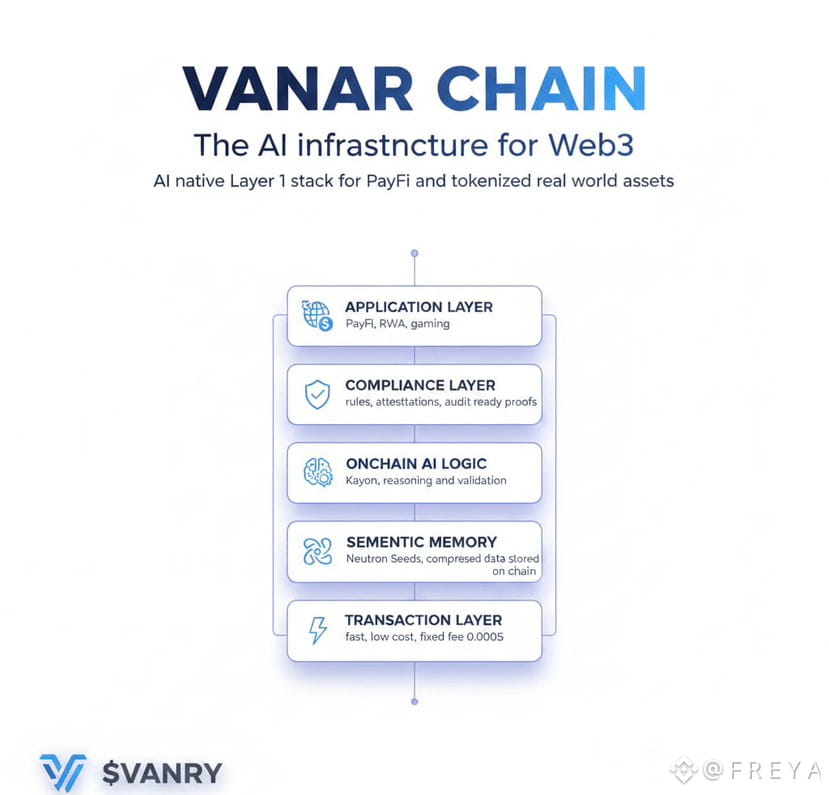
When people talk about blockchain and AI integration, they’re usually describing projects that bolt AI features onto existing infrastructure or use AI to optimize certain processes. Vanar took a radically different approach. Instead of retrofitting intelligence, they built it into every layer of the protocol from day one. The result is a five-layer architecture that transforms Web3 applications from simple smart contracts into intelligent systems capable of understanding, reasoning, and acting on data in ways that weren’t previously possible on-chain.
At the foundation sits the Vanar Chain itself, a modular Layer 1 blockchain that’s fully compatible with the Ethereum Virtual Machine. This compatibility matters enormously because it means developers can leverage their existing Solidity expertise and port applications from Ethereum with minimal adjustments. The base layer offers impressive technical specifications: block times capped at just three seconds for real-time responsiveness, a gas limit of 30 million per block to support billions of users, and a tiered fixed-fee structure that provides cost predictability for businesses while maintaining security against malicious actors. Unlike many blockchains where transaction fees fluctuate unpredictably based on network congestion, Vanar’s approach gives brands and developers the financial certainty they need for planning and budgeting.
But the real innovation begins with Neutron, Vanar’s semantic memory layer. Think of Neutron as the chain’s ability to not just store data, but to understand it. Traditional blockchains store pointers to files hosted elsewhere, usually on systems like IPFS or centralized cloud storage. This creates fragility. If the external storage fails or the link breaks, the data disappears even though the blockchain record remains. Vanar solves this through Neutron Seeds, which are complete files compressed up to 500 times their original size using advanced neural and algorithmic compression techniques, then stored directly on-chain. These aren’t just smaller files. They’re intelligent data objects that understand their own structure, context, and relationships, making them queryable by smart contracts and AI systems.
When we’re seeing major cloud outages affecting centralized exchanges and services, Vanar’s approach offers genuine resilience. During an AWS disruption in April 2025, platforms relying on traditional cloud storage experienced significant problems while Vanar’s on-chain storage continued functioning normally. The four-stage pipeline powering Neutron handles AI compression, quantum-aware encoding for future-proofing, intelligent indexing, and reliable recovery, ensuring data remains accessible even when centralized infrastructure fails.
The third critical layer is Kayon, Vanar’s on-chain reasoning engine. If Neutron is the memory, Kayon is the mind. This decentralized inference engine enables smart contracts to query data, validate information, apply real-time compliance rules, and make intelligent decisions based on context rather than just following predetermined logic. It allows natural language interactions with the blockchain, meaning users can ask questions in plain English and receive meaningful responses. For applications involving tokenized real-world assets or complex financial instruments, Kayon’s ability to understand and verify legal documents, financial proofs, and regulatory requirements directly on-chain becomes transformative.
The final two layers, Axon and Flows, are coming soon and will further enhance automated on-chain applications and intelligent data flows. Together, these five layers create what Vanar describes as intelligent financial infrastructure, designed specifically for the next generation of payments, assets, and autonomous agents.
The Green Partnership That Changed Everything
While Vanar’s technical architecture is impressive, one partnership transformed how the blockchain world thinks about sustainability. In late 2023, Vanar announced a groundbreaking collaboration with Google Cloud, not merely as a cloud services customer but as a partner in building the first genuinely carbon-neutral blockchain ecosystem powered by renewable energy.
Google has maintained carbon-neutral status since 2007 and committed to running all data centers on carbon-free energy by 2030. Their infrastructure includes extensive renewable energy projects spanning solar, wind, hydropower, and innovative energy storage solutions. When Vanar partnered with Google, they gained access to data centers already operating on renewable power, along with Google’s sophisticated tools for measuring, reporting, and reducing carbon emissions. More importantly, they could leverage Google’s high-speed internal internet infrastructure, dramatically reducing the latency issues that plague many blockchain networks.
This partnership goes far beyond using green servers. Vanar validators can operate on Google Cloud’s recycled energy data centers, with organizations like BCW Group becoming the first to host a validator node using this infrastructure. The collaboration enables granular tracking of carbon usage at every level, from routing to data center operations, allowing companies building on Vanar to comply with emissions legislation and potentially participate in future carbon credit trading. Jawad Ashraf, Vanar’s CEO, explained during an AMA with Google representatives that the goal wasn’t just carbon neutrality but creating positive environmental impact, especially considering the billions of new users Web3 hopes to onboard.
The pragmatic approach recognizes that the entire crypto landscape can’t transition overnight. Rather than mandating exclusive use of Google Cloud, Vanar clusters traffic and encourages projects to use renewable infrastructure while respecting their right to maintain their own preferences. They’re making green energy an attractive option rather than an exclusionary requirement, enabling even small players to access reliable, renewable infrastructure when running parts of their projects.
From Entertainment to Enterprise: Building the Ecosystem
Even as Vanar evolved into an AI-focused infrastructure platform, it never abandoned its roots in entertainment and gaming. Instead, the team leveraged their industry relationships and expertise to attract partners that would test the blockchain’s capabilities at scale while bringing real users to the ecosystem.
The partnership with Viva Games Studios exemplifies this strategy perfectly. Viva operates over ten gaming studios worldwide with more than 700 million lifetime downloads and 100 million monthly active users. They’ve created successful titles for major brands including Hasbro, Sony, Mattel, Paramount Pictures, Disney’s Frozen, and Star Wars franchises. Games like Cover Fire with over 100 million downloads, Talking Gummy Bear with 50 million, and Soccer Star 24 with another 50 million represent massive existing audiences that Vanar can now introduce to Web3 gaming experiences through seamless single sign-on integration.
NVIDIA’s involvement adds another dimension entirely. As a titan in AI and graphics technology, NVIDIA is providing Vanar developers with access to cutting-edge tools including CUDA, Tensor, Omniverse, and Gameworks technologies. This partnership enriches Vanar’s offerings for projects building AI solutions, metaverse experiences, and advanced gaming applications, positioning the blockchain to lead in AI innovation as these technologies converge.
The Shelby American partnership, announced in December 2024, demonstrates how traditional brands can enter Web3 meaningfully. Shelby, the legendary high-performance automobile manufacturer founded by Carroll Shelby in 1962, is creating the Shelbyverse using Vanar’s technology and the Virtua gaming platform. This digital extension of the brand offers gamified experiences where fans can interact with iconic vehicles, extending to platforms like Roblox and incorporating real-world merchandise. When traditional automotive companies embrace blockchain for genuine fan engagement rather than superficial NFT drops, it signals mainstream acceptance of the technology.
Additional partnerships span the spectrum from infrastructure to applications. ThirdWeb provides comprehensive development tools for smart contract deployment and wallet integration. Galxe brings its Web3 community building platform used by over 14 million users. DeQuest enables projects to deploy quests and engagement campaigns. Mobula Labs offers data APIs and analytics. The ecosystem also includes partnerships with Verse Digital, which has transitioned major brands like Coca-Cola, Dolce & Gabbana, and Samsung into metaverse spaces, and Emirates Digital Wallet, owned by 15 primary banks in the Middle East and accessible to over 13 million customers.
The VANRY Token: Utility Meets Intelligence
At the heart of the Vanar ecosystem sits the VANRY token, which has evolved from its TVK origins into a multi-utility asset designed for an AI-native blockchain. The token serves several critical functions that increase in importance as the platform matures and adoption grows.
As the native gas token, VANRY facilitates all transactions and smart contract operations on the Vanar Chain. The fixed-fee structure means developers and users can predict costs accurately, but more importantly, as AI tools and applications on the platform scale, every interaction generates demand for VANRY. When someone uses myNeutron to create semantic memories from uploaded files, that requires VANRY. When Kayon analyzes data and provides on-chain intelligence, it consumes VANRY. As AI agents manage compliant payments and interact with tokenized assets, they transact in VANRY.
Staking represents another major utility, allowing token holders to secure the network while earning passive returns. The staking mechanism helps decentralize validation and gives community members direct participation in network security. This becomes increasingly important as Vanar expands its validator set and aims for genuine decentralization of its infrastructure.
Perhaps most significantly, Vanar is transitioning its AI tools to a subscription model beginning in Q1 2025. This represents a fundamental shift from free access to a paid, utility-based economy where VANRY tokens are required for advanced AI tool subscriptions. This creates direct, recurring demand tied to actual platform usage rather than speculation. If developers and businesses find genuine value in Vanar’s AI capabilities, they’ll need steady supplies of VANRY to access them, creating organic buy pressure and potential token burn mechanisms.
The token is accessible through over 50 centralized exchanges serving users in more than 200 countries, providing global liquidity and reach. With a maximum supply of 2.4 billion tokens and approximately 2 billion currently in circulation, the tokenomics are designed for long-term sustainability rather than short-term hype.
The Present and Future: Where Intelligence Meets Adoption
As of early 2026, Vanar stands at a fascinating inflection point. The infrastructure is operational. The partnerships are real. The technology works. Now comes the harder part: proving that an AI-native blockchain can attract the developer mindshare and user adoption necessary to justify its ambitions.
Recent developments suggest momentum is building. The chain expanded to Base, enabling cross-chain functionality and allowing AI agents to operate across multiple networks. The integration of Humanode’s Biomapper SDK added biometric Sybil resistance, enabling applications to verify human uniqueness without compromising privacy. The Neutron storage layer launched publicly in April 2025, with compression capabilities that turn megabytes into kilobytes while maintaining full on-chain accessibility. Pilot agent integration followed in October 2025, enabling natural language interactions with blockchain functions that feel more like conversations than technical commands.
The gaming ecosystem continues expanding with partnerships like DeQuest for quest deployment, Fanton Fantasy Football for sports engagement, and World of Dypians, which already hosts over 30,000 players fully on-chain. The recent Shelbyverse launch demonstrated how traditional brands can create meaningful Web3 experiences that extend beyond simple token drops to immersive, multi-platform engagement.
The AI ecosystem is growing particularly quickly. Griffin AI joined with decentralized networks for building AI agents. ChatXBT integrated with tools for protocol interactions and social media growth. A $250,000 reward pool was announced to fund innovative AI projects, connecting them with exchanges, venture capital, and ecosystem partners while providing cutting-edge development support. Weekly updates reveal new integrations, partnerships, and milestones as the AI-blockchain convergence accelerates.
Looking ahead, the roadmap focuses on maturation rather than revolution. The public Neutron Toolkit and developer portal will make it easier for builders to leverage on-chain storage. Validator growth and additional exchange integrations will enhance decentralization and accessibility. Performance optimization will continue as the network scales to handle AI-heavy, data-hungry applications. The Axon and Flows layers will complete the five-layer architecture, enabling even more sophisticated automated systems.
The ultimate vision is ambitious but clear: become the default infrastructure for applications that cannot trust centralized cloud providers to keep their assets accessible and their data permanent. In a world where AWS outages can cripple major platforms and where centralization creates single points of failure, Vanar offers genuine alternatives built on open, intelligent, decentralized foundations.
The Deeper Question Worth Considering
As we stand in early 2026 watching Vanar evolve from gaming platform to AI infrastructure, a profound question emerges about what we actually want from blockchain technology. For years, the industry chased transactions per second, pursued lower fees, and competed on raw technical specifications. Vanar suggests that these metrics, while important, miss the larger point. What matters isn’t just processing speed but processing intelligence.
When we think about the next billion people coming to Web3, they won’t care about gas optimization or consensus mechanisms. They’ll care about experiences that work seamlessly, about applications that understand their needs, about systems that remain accessible even when parts of the internet fail. They’ll expect technology that feels intelligent because intelligence is increasingly what they encounter everywhere else.
Vanar is betting that the convergence of AI and blockchain isn’t just another narrative cycle but the fundamental infrastructure for a new kind of internet. An internet where data has permanence without centralization. Where applications have intelligence without surveillance. Where assets have liquidity without intermediaries. Whether this vision materializes depends on questions that remain unanswered: Will developers embrace AI-native blockchain architecture at scale? Will enterprises find the fixed-fee structure and green infrastructure compelling enough to build here? Will the subscription model for AI tools create sustainable demand for VANRY tokens?
The transformation from Virtua to Vanar took courage. Pivoting from an established identity in gaming and entertainment to position as AI infrastructure required conviction that mainstream adoption needed something different than what currently exists. Whether that conviction proves correct will define not just Vanar’s future but potentially influence how an entire generation of blockchains thinks about intelligence, sustainability, and real-world utility.
For now, the chain runs. The partners build. The ecosystem grows. And somewhere in the convergence of artificial intelligence and blockchain technology, we’re watching an experiment unfold that might just change how we think about what’s possible when infrastructure itself becomes intelligent. The journey from first idea to intelligent infrastructure took years of evolution, partnership building, and technological innovation. Where it leads in the years ahead remains the most compelling question of all.