
If you’ve ever built a payment app on-chain, you’ll know the real bottleneck isn’t sending a transaction, it’s making the experience feel like real payments, fast, clear, low friction, without forcing users to learn a new wallet, a new network, or a new way to think about gas. Plasma aims at that bottleneck by putting stablecoin payments at the center, while keeping EVM compatibility so developers don’t have to rebuild everything from scratch.
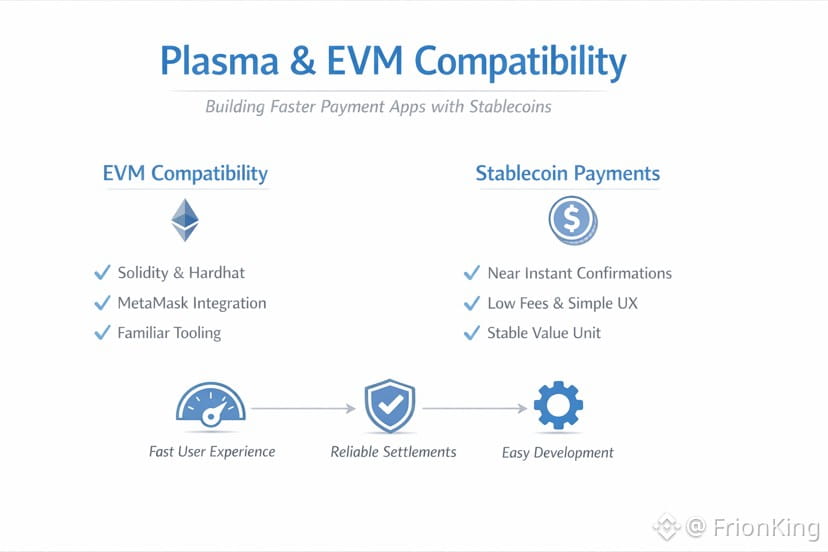
EVM compatibility means you can bring a familiar toolchain from Ethereum into Plasma, Solidity, Hardhat, Foundry, audit libraries, token standards, and wallet flows like MetaMask. When the platform doesn’t force you to learn a new virtual machine, the time from idea to working prototype shrinks dramatically. You ship faster, you test faster, you iterate faster. Do you agree that iteration speed is what decides who wins in payments.
In payments, one second of delay can make users think a transaction is stuck. One extra step can make them abandon checkout. One confusing fee can destroy trust. Plasma positions itself as a chain optimized for stablecoin payments, so the story isn’t just TPS, it’s the payment feeling, near instant, low fees that are hard to notice, and confirmations that stay consistent even when activity spikes. Have you ever wondered why web2 checkout feels simple, while web3 often turns into a chain of popups, approvals, and waiting.
When you build on Plasma with EVM compatibility, you can focus on the experience layer instead of plumbing. You can design one tap flows, saved recipients, invoice style transfers, subscriptions, refunds, reconciliation, and merchant permissions. You write smart contracts with patterns you already trust, then compose them into products, payment routers for routing and fee logic, escrow for buyer seller safety, streaming for salaries and subscriptions, spending limits for controlled accounts. This makes a payment app faster in the practical sense, less technical friction, less time rebuilding infrastructure, and more time optimizing UI, UX, and operations.
A payment product also has to scale through evolution. Today you may only need stablecoin transfers. Tomorrow you need discounts, loyalty points, coupons, invoicing, revenue splits, and settlement rules for partners. EVM compatibility lets you expand without changing the foundation. You extend contracts and the surrounding backend services while keeping the same developer mental model. And because Plasma is focused on stablecoins, you can design pricing, fees, and accounting in a stable unit from day one, instead of letting users see totals shift with gas token volatility.
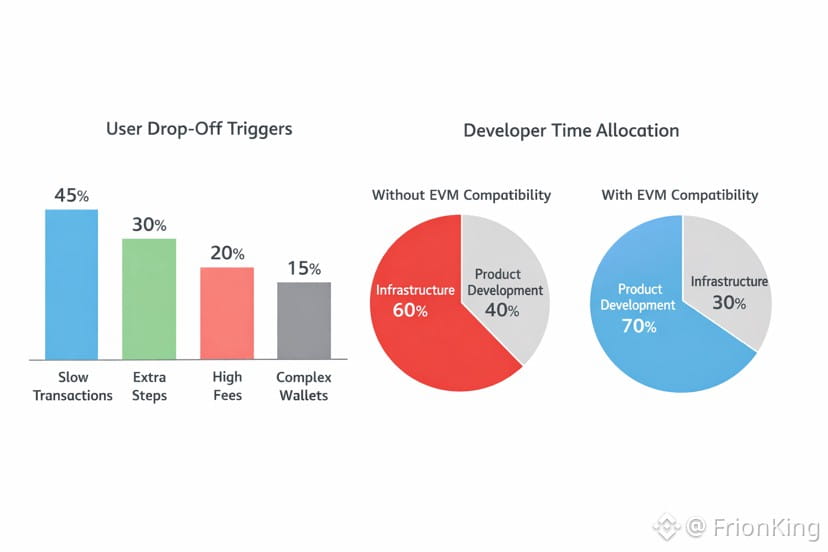
I view payments in three layers, perceived speed for the user, certainty for reconciliation, and simplicity for integration. Plasma combines a stablecoin first direction with EVM compatibility to accelerate all three. Users feel speed because confirmations are fast and steps are fewer. Merchants feel confident because the flow is clear and easy to verify. Developers move faster because they can reuse familiar tooling, audits, and patterns instead of inventing everything again. Do you want your app remembered for being as fast as tapping a card, or forgotten because it kept saying wait a bit more until users walked away.

