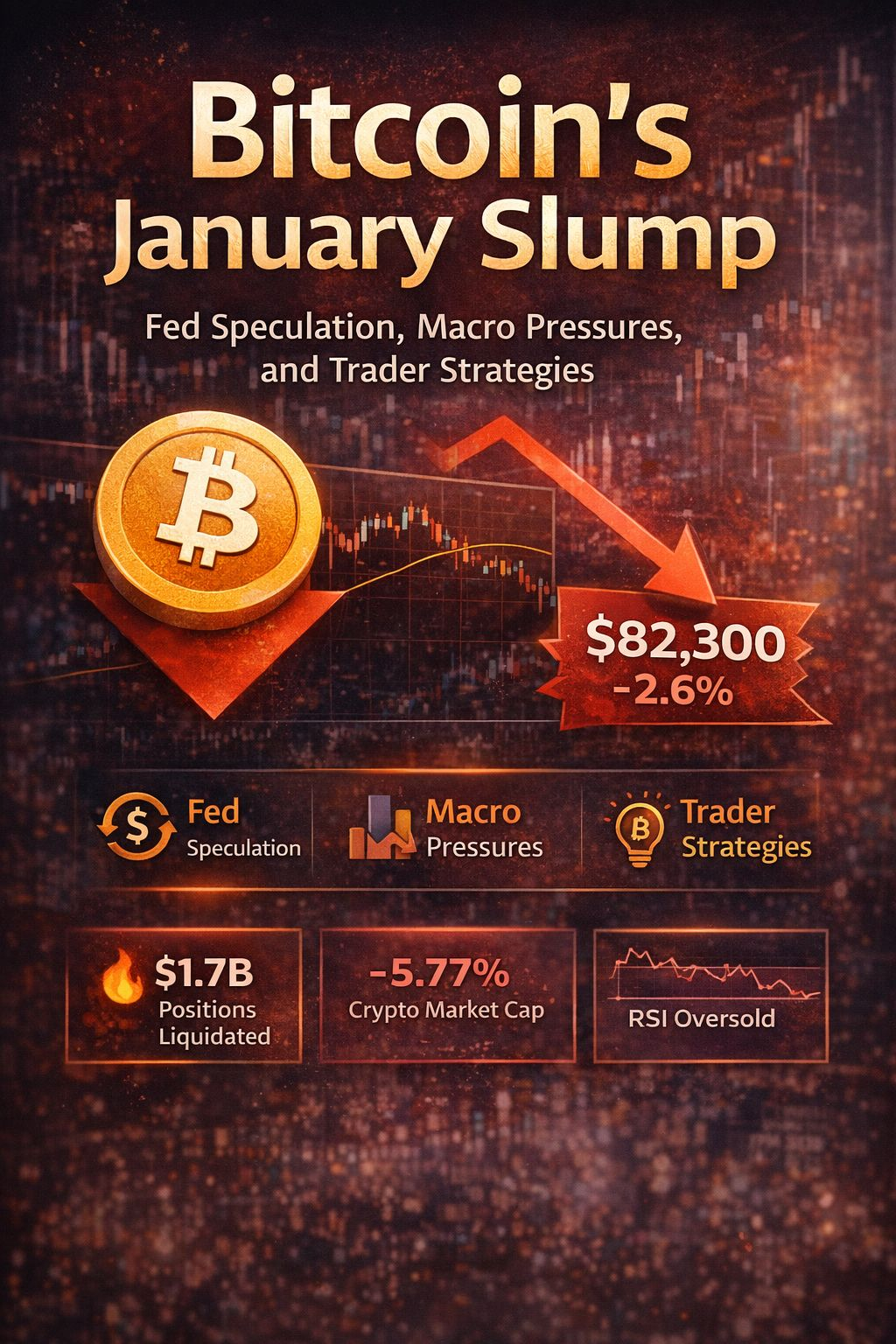
As #bitcoin slides toward $82,300 amid growing speculation around the U.S. Federal Reserve, the crypto market is entering one of its most uncomfortable phases in recent years. But the real question isn’t whether prices are falling, it’s why they are falling, and what that tells us about what comes next.
Is this the start of a deeper breakdown, or simply a market reset after months of elevated expectations?
To answer that, we need to step back from the charts alone and look at the bigger picture: macro forces, on-chain behavior, and how traders can actually positioning in this environment.
𝗔 𝗠𝗮𝗿𝗸𝗲𝘁 𝗨𝗻𝗱𝗲𝗿 𝗣𝗿𝗲𝘀𝘀𝘂𝗿𝗲, 𝗡𝗼𝘁 𝗶𝗻 𝗣𝗮𝗻𝗶𝗰.
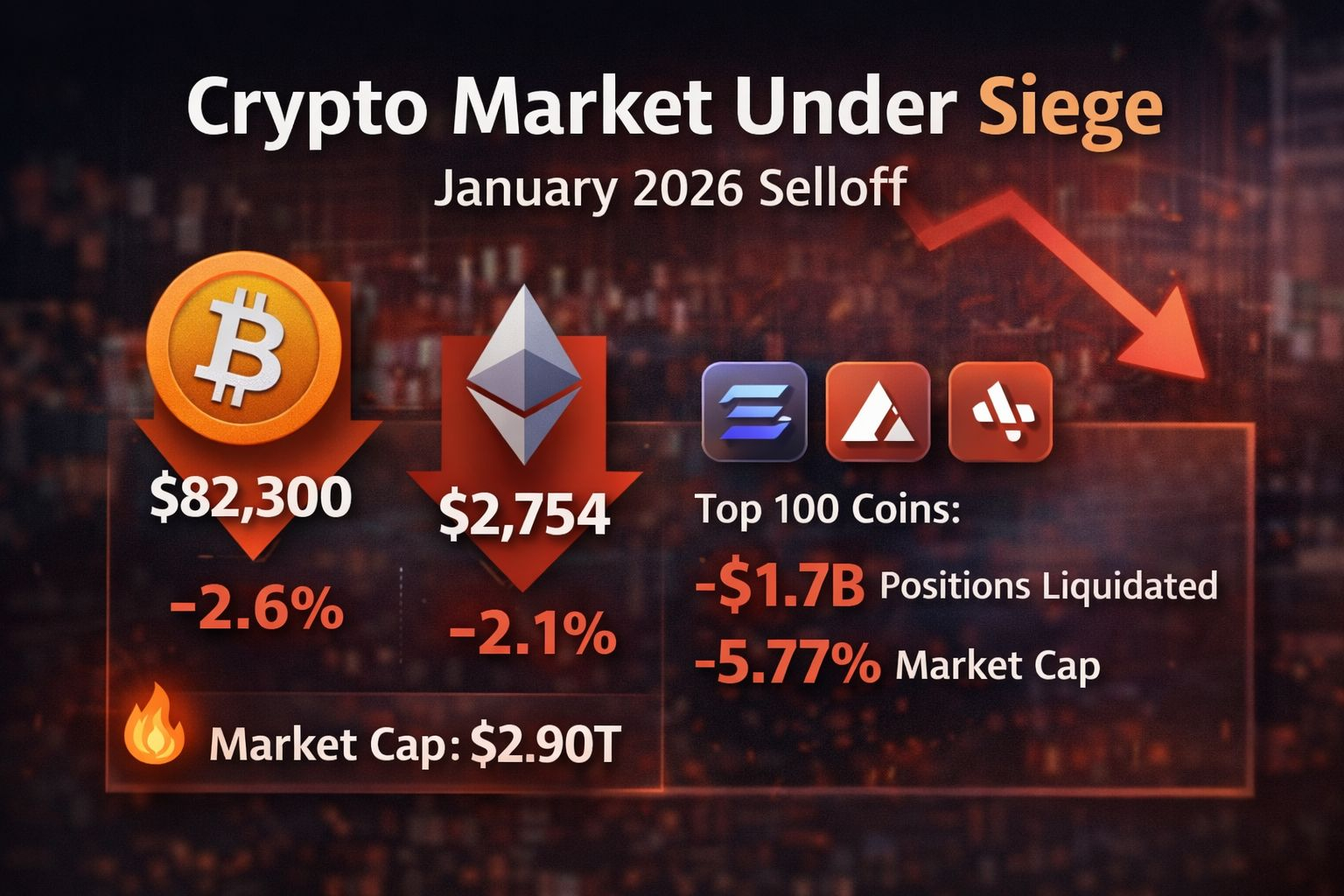
January 2026 has been rough for crypto. Bitcoin is now trading at a two-month low, down about 2.6% on the day, and on track for its fourth consecutive monthly loss something we haven’t seen in eight years.
This weakness isn’t isolated to #BTC . Total crypto market capitalization has fallen 5.77% to $2.90 trillion, with more than 90 of the top 100 tokens in the red. Ethereum has dropped 2.1% to $2,754, reflecting a broader pullback in risk appetite.
Leverage has amplified the move. Over the past 24 hours alone, nearly $1.7 billion in positions were liquidated, affecting more than 270,000 traders.
ETF flows add another layer. U.S. spot Bitcoin ETFs saw $19.64 million in outflows, while Ethereum ETFs quietly attracted $28.1 million in inflows. That divergence suggests capital isn’t fleeing crypto entirely, it’s rotating,
So what’s driving the pressure?
𝟭. 𝗙𝗲𝗱 𝗦𝗽𝗲𝗰𝘂𝗹𝗮𝘁𝗶𝗼𝗻, 𝗗𝗼𝗹𝗹𝗮𝗿 𝗦𝘁𝗿𝗲𝗻𝗴𝘁𝗵, 𝗮𝗻𝗱 𝗟𝗶𝗾𝘂𝗶𝗱𝗶𝘁𝘆 𝗙𝗲𝗮𝗿𝘀
At the center of this sell-off is rising speculation around the next U.S. Federal Reserve Chair. Former Fed Governor Kevin Warsh has re-entered the conversation, and markets are paying attention. According to a Reuters report, Warsh has been vocal about shrinking the Fed’s balance sheet, tightening monetary conditions, and pushing for higher real interest rates all signals of a more restrictive policy stance.
For crypto, that matters.
Bitcoin has historically benefited from loose monetary conditions. Periods of quantitative easing and expanding liquidity have often coincided with strong BTC performance. A more hawkish Fed narrative flips that equation.
As these rumors gained traction, the U.S. dollar strengthened, and Treasury yields moved higher with 10-year yields climbing to 4.27%. At the same time, global data continues to send mixed signals: inflation remains sticky, while labor markets show signs of cooling. The result is a classic risk-off environment.
In crypto terms, this has triggered a flight to perceived quality. Liquidity is concentrating in BTC and ETH, while altcoins which rely more heavily on speculative flows are taking sharper hits.
This isn’t emotional selling. It’s a rational response to the possibility of liquidity tightening, where assets priced on future growth become less attractive in the short term.
𝟮- 𝗢𝗻-𝗖𝗵𝗮𝗶𝗻 𝗮𝗻𝗱 𝗧𝗲𝗰𝗵𝗻𝗶𝗰𝗮𝗹 𝗔𝗻𝗮𝗹𝘆𝘀𝗶𝘀: 𝗦𝗶𝗴𝗻𝗮𝗹𝘀 𝗼𝗳 𝗖𝗼𝗻𝘀𝗼𝗹𝗶𝗱𝗮𝘁𝗶𝗼𝗻
Shifting from macros, let's examine on-chain data and technicals for a grounded view of BTC's internals..
Bitcoin's supply on exchanges remains at multi-year lows, suggesting holders are not rushing to sell a bullish long-term signal amid short-term pain. Volatility also remains relatively contained. The Bitcoin Volatility Index is hovering near historical averages, pointing to consolidation rather than chaos.
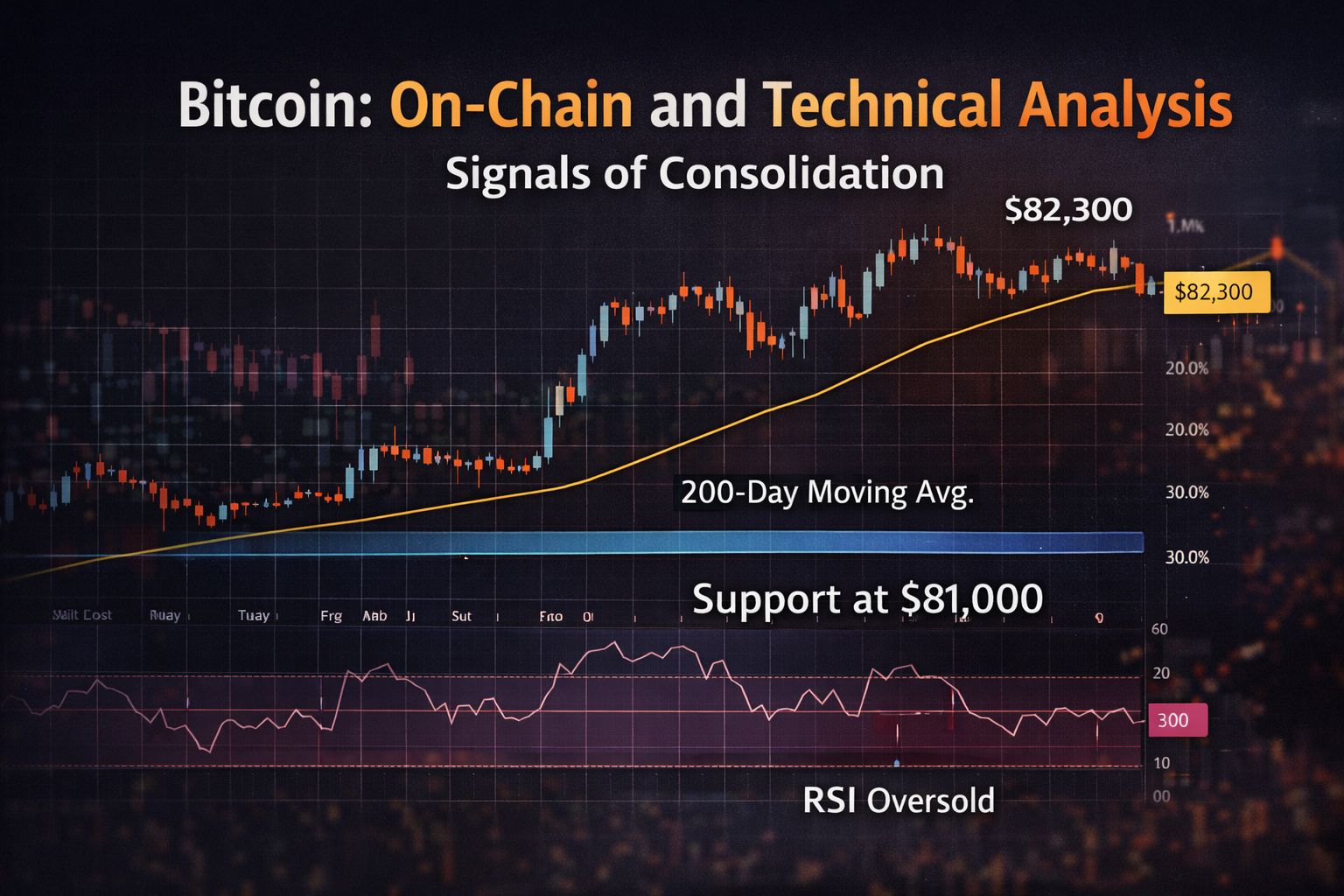
From data publiished by XTB, Technically BTC is testing key support at $81,000, a level that aligns with the 200-day moving average and previous local lows from November 2025. A break below could open the door to $78,000, but RSI (Relative Strength Index) readings in the oversold territory (below 30) suggest a potential rebound. Compared to the 2022 bear market —when volatility was far higher this phase looks more like a controlled reset than a structural breakdown.
Elsewhere, Ethereum’s relative strength stands out. ETF inflows and staking yields appear to be providing a buffer, while derivatives data shows leverage has already been flushed out. That reduction in leverage lowers the risk of further cascading liquidations.
𝟯. 𝗪𝗵𝗮𝘁 𝘁𝗵𝗶𝘀 𝗺𝗲𝗮𝗻𝘀 𝗶𝗻 𝗽𝗿𝗮𝗰𝘁𝗶𝗰𝗲: 𝗻𝗮𝘃𝗶𝗴𝗮𝘁𝗶𝗻𝗴 𝘁𝗵𝗲 𝘂𝗻𝗰𝗲𝗿𝘁𝗮𝗶𝗻𝘁𝘆
So how should traders and investors approach this environment?
In the short term, risks remain tilted to the downside. A confirmed shift toward a more hawkish Fed leadership could keep pressure on BTC, particularly if dollar strength persists. Levels between $78,000 and $80,000 would not be surprising in that scenario. But volatility also creates opportunity if approached carefully.
Some market participants are rotating into ETH or yield-bearing strategies, while others are waiting patiently for volatility to cool before re-entering higher-risk altcoins. The key is selectivity.
𝗔 𝗳𝗲𝘄 𝗽𝗿𝗮𝗰𝘁𝗶𝗰𝗮𝗹 𝗽𝗿𝗶𝗻𝗰𝗶𝗽𝗹𝗲𝘀 𝘀𝘁𝗮𝗻𝗱 𝗼𝘂𝘁:
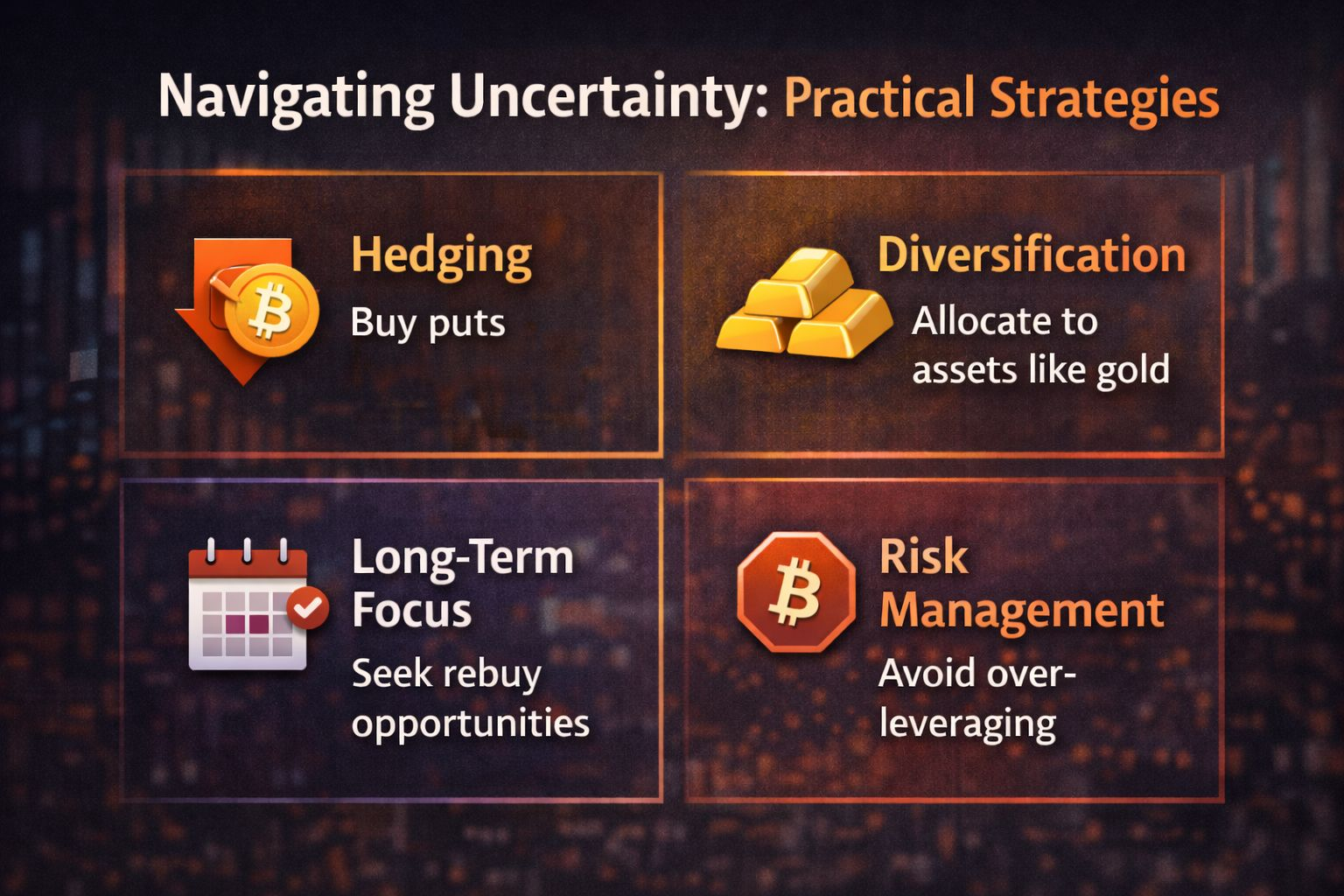
● 𝗛𝗲𝗱𝗴𝗶𝗻𝗴: Use options to protect portfolios; for example, buying put options on BTC if support breaks. In past cycles, simple hedges have reduced drawdowns by double-digit percentages during similar macro shocks.
● 𝗗𝗶𝘃𝗲𝗿𝘀𝗶𝗳𝗶𝗰𝗮𝘁𝗶𝗼𝗻: Assets like gold despite recent pullbacks still offer defensive characteristics during monetary uncertainty.
● 𝗥𝗶𝘀𝗸 𝗖𝗼𝗻𝘁𝗿𝗼𝗹: This is not an environment for heavy leverage. Clear invalidation levels and disciplined position sizing matter more than conviction. Avoid over-leveraging; set stop-losses at key levels and monitor Fed announcements closely.
● 𝗠𝗮𝗰𝗿𝗼 𝗔𝘄𝗮𝗿𝗲𝗻𝗲𝘀𝘀: Fed communication now matters as much as on-chain metrics. Ignoring policy signals has historically been costly.
For everyday crypto users, this moment highlights an often-overlooked truth: crypto does not trade in isolation. Understanding how policy decisions ripple through markets is no longer optional it’s important.
𝟰- 𝗠𝘆 𝗳𝗶𝗻𝗮𝗹 𝘁𝗵𝗼𝘂𝗴𝗵𝘁𝘀 𝗮𝗯𝗼𝘂𝘁 𝘁𝗵𝗶𝘀:
Bitcoin’s January slump is uncomfortable but discomfort doesn’t mean collapse.
What we’re seeing looks less like capitulation and more like a market adjusting to changing expectations. If monetary conditions stabilize and innovation continues, this consolidation phase could ultimately strengthen the foundation beneath the market.
For now, patience, discipline, and data matter more than bold predictions. Stay vigilant on Fed updates, diversify wisely, and remember: crypto's resilience shines in uncertainty. If Warsh's policies foster discipline without stifling innovation, Bitcoin could emerge stronger.