
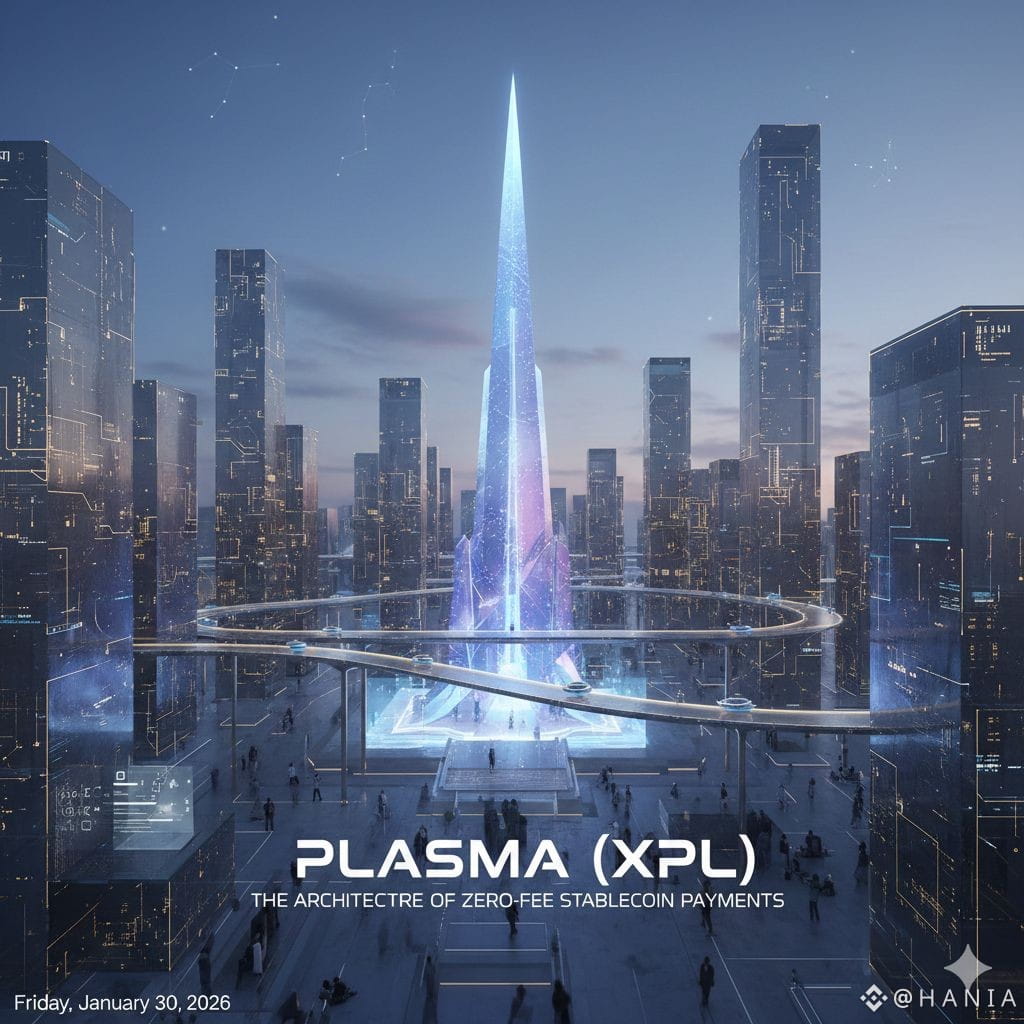
 In the current landscape of 2026, the blockchain industry has reached a pivotal realization: for digital assets to achieve mass adoption, they must become invisible. Users do not want to calculate "gas" or manage multiple tokens just to send a payment. Plasma (XPL) has emerged as the definitive solution to this friction, serving as a stablecoin-native Layer 1 (L1) designed to make global money movement as simple as sending a text message.
A Protocol Built for the Stablecoin Era
While general-purpose blockchains like Ethereum and Solana attempt to serve everything from NFTs to complex DeFi, Plasma is hyper-focused on payments. It recognizes that stablecoins—specifically USDT—are the "killer app" of crypto.
The network’s core innovation is its Stablecoin-Native Design. Unlike other chains where stablecoins are secondary assets, Plasma integrates them at the protocol level. This allows for a "gasless" user experience that removes the biggest hurdle in Web3: the need to hold a native volatile token to pay for transaction fees.
The Technical Edge: PlasmaBFT and Bitcoin Security
Plasma’s performance is underpinned by PlasmaBFT, a high-performance consensus mechanism derived from the Fast HotStuff protocol. This system is engineered for:
Sub-Second Finality: Transactions are confirmed in under one second, meeting the speed requirements of retail point-of-sale systems.
High Throughput: The network comfortably handles over 1,000 Transactions Per Second (TPS), rivaling traditional payment processors like Visa.
What sets Plasma apart from other high-speed chains is its Bitcoin-Anchored Security. Plasma operates as a Bitcoin sidechain, periodically "checkpointing" its state to the Bitcoin blockchain. This provides an additional layer of immutable security, ensuring that while the network is fast enough for daily coffee purchases, it is secure enough for institutional-grade settlements.
Zero-Fee USDT: The "Paymaster" Revolution
The most talked-about feature of the Plasma ecosystem is its Zero-Fee USDT transfers. This is achieved through a decentralized Paymaster System. How it works: When a user sends USDT, the protocol-level paymaster automatically "sponsors" the transaction fee. The network effectively internalizes the cost of these transfers, allowing users to move digital dollars across the globe with $0.00 gas fees.
This feature is a direct challenge to established networks like Tron and Ethereum. For the average user in Southeast Asia or South America using the Plasma One wallet, the experience feels like a traditional fintech app (like Venmo or PayPal) but with the transparency and global reach of a blockchain.
2026: The Year of Scaling and Value
As of January 2026, Plasma has moved from "theoretical potential" to "production-grade infrastructure." The network has seen significant growth in key regions:
* Middle East & Southeast Asia: Strategic partnerships with local payment gateways have enabled crypto-linked debit cards that use Plasma for real-time settlement.
* DeFi Integration: With over $2 billion in daily USDT volume, Plasma has become the second-largest market for protocols like Aave, proving that "liquidity follows efficiency."
* EVM Compatibility: Because Plasma is fully EVM-compatible (built on the high-performance Reth engine), developers have seamlessly ported Ethereum-based dApps to the network, enjoying the speed of a sidechain with the familiar tools of the Ethereum ecosystem.
Tokenomics: The Role of $XPL
The $XPL token serves as the economic backbone of the network. While USDT transfers are free for the end-user, $XPL remains vital for:
* Staking: Validators stake $XPL to secure the network and earn rewards.
* Governance: Holders vote on inflation rates, fee structures, and ecosystem grants.
* Complex Execution: While simple payments are gas-free, complex smart contract interactions (like minting RWAs or complex swaps) utilize XpL or processing power.
With a major token unlock scheduled for July 2026, the ecosystem is currently focused on "Value Accumulation"—turning its massive user base into long-term network participants.
Conclusion
Plasma (XPL) is not just another Layer 1; it is a specialized settlement layer for the internet’s dollar. By eliminating gas friction and anchoring itself to Bitcoin's security, it provides the bridge the world needs to move from speculative trading to a functional global economy.