
Walrus Network is a decentralized data storage and management platform built on the Sui blockchain, designed to power verifiable, programmable data markets for the AI era. It provides a decentralized infrastructure for storing and monetizing large-scale data like AI datasets, NFTs, and media, giving users control and verifiability over their information. Developed by Mysten Labs, the same team behind the high-performance Sui blockchain, Walrus aims to address the limitations of traditional centralized storage by eliminating single points of failure and reducing storage costs.
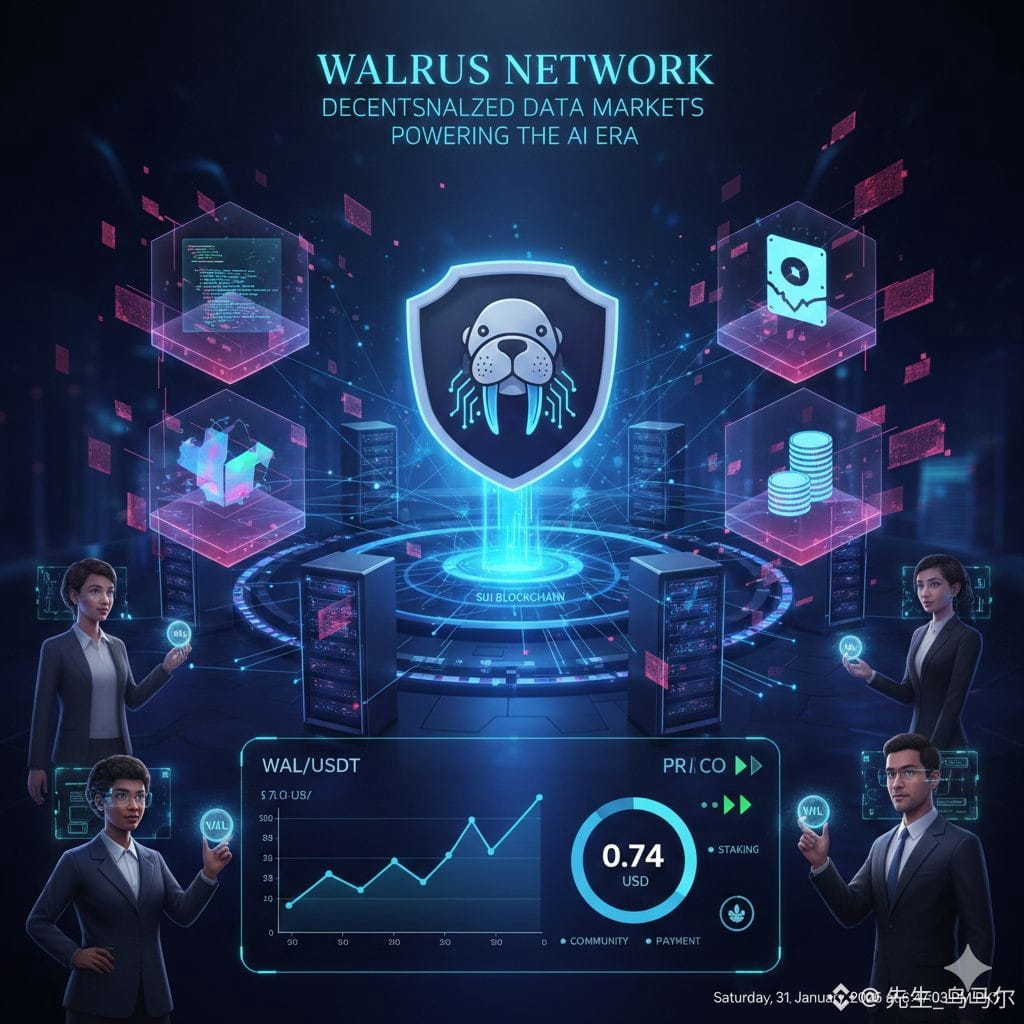
The significance of Walrus Network lies in its ability to tackle the challenges of storing large, unstructured data files, often referred to as "blobs," in a secure, efficient, and scalable manner within the Web3 ecosystem. Traditional blockchain storage systems face high costs and limited scalability due to the need for full data replication across all validators. Walrus offers a solution that makes decentralized storage economically viable for data-intensive applications, which were previously too expensive for this technology. It enables new possibilities for decentralized applications that require robust data management, such as those in AI, healthcare, DeFi, and entertainment.
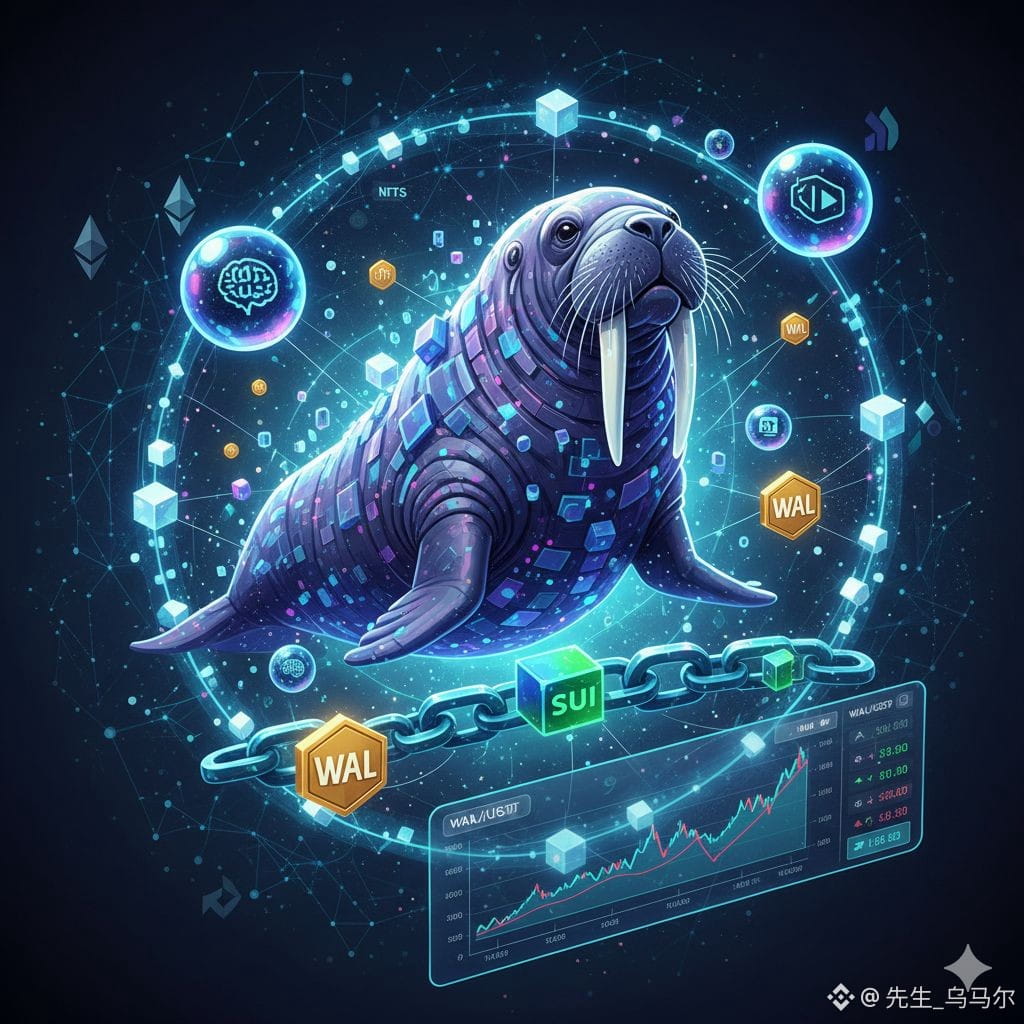
Walrus works by taking large files and breaking them down into smaller fragments called "slivers." These slivers are then distributed across a global network of independent storage nodes. This process uses an innovative encoding algorithm called "Red Stuff," a two-dimensional erasure coding technique that enhances efficiency and resilience. Red Stuff allows data to be recovered even if a significant portion of the network (up to one-third of nodes) fails or becomes malicious, ensuring high redundancy and data availability. The Sui blockchain acts as a coordination layer, managing metadata, proofs of data availability, and payment transactions. When a user wants to retrieve their file, Walrus reassembles the data from multiple nodes and delivers it efficiently.
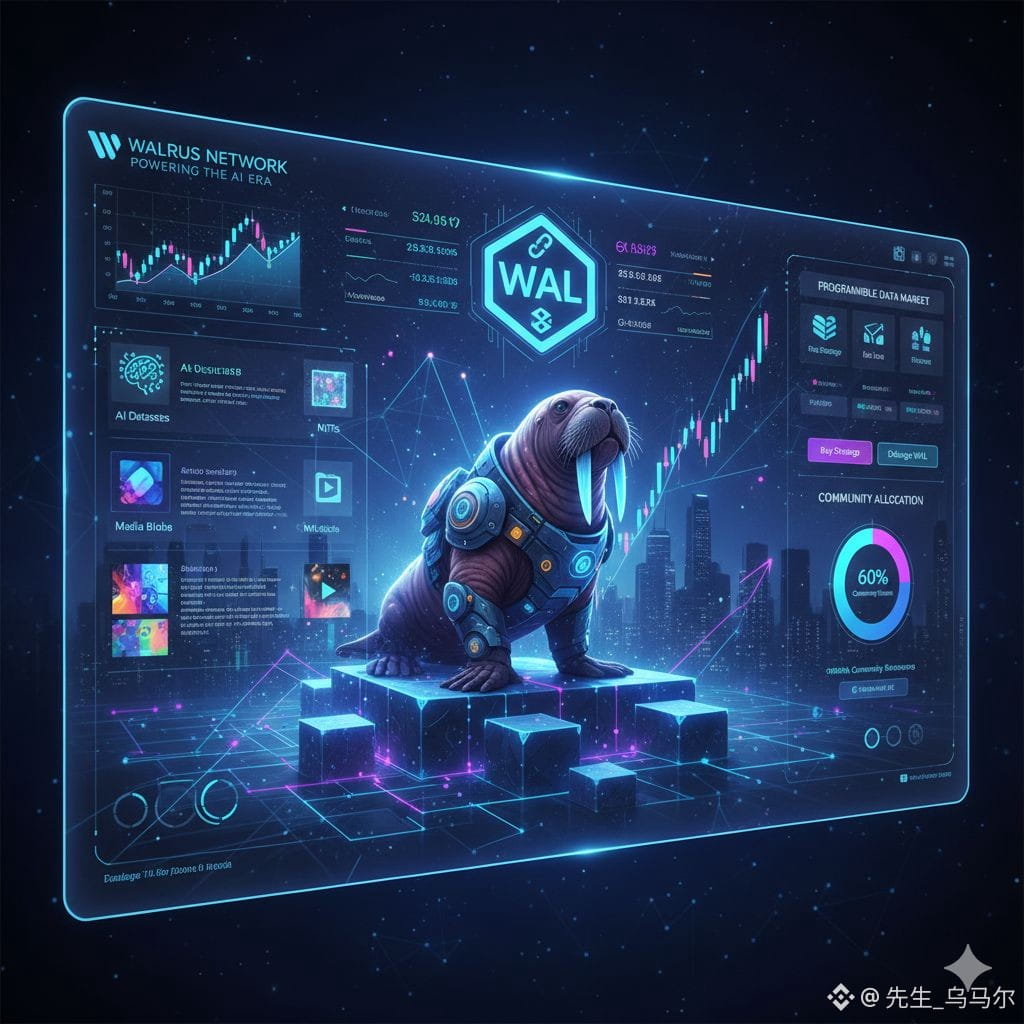
The architecture and privacy system of Walrus are designed for both security and programmability. Data is stored as "blobs" that are managed by Sui smart contracts, enabling direct programmability. This means storage resources can be tokenized, allowing for programmable ownership and trading. Users retain control of their encryption keys, ensuring data integrity and privacy. Walrus also supports cross-chain integration, working with other blockchains like Ethereum and Solana, expanding its reach and utility.
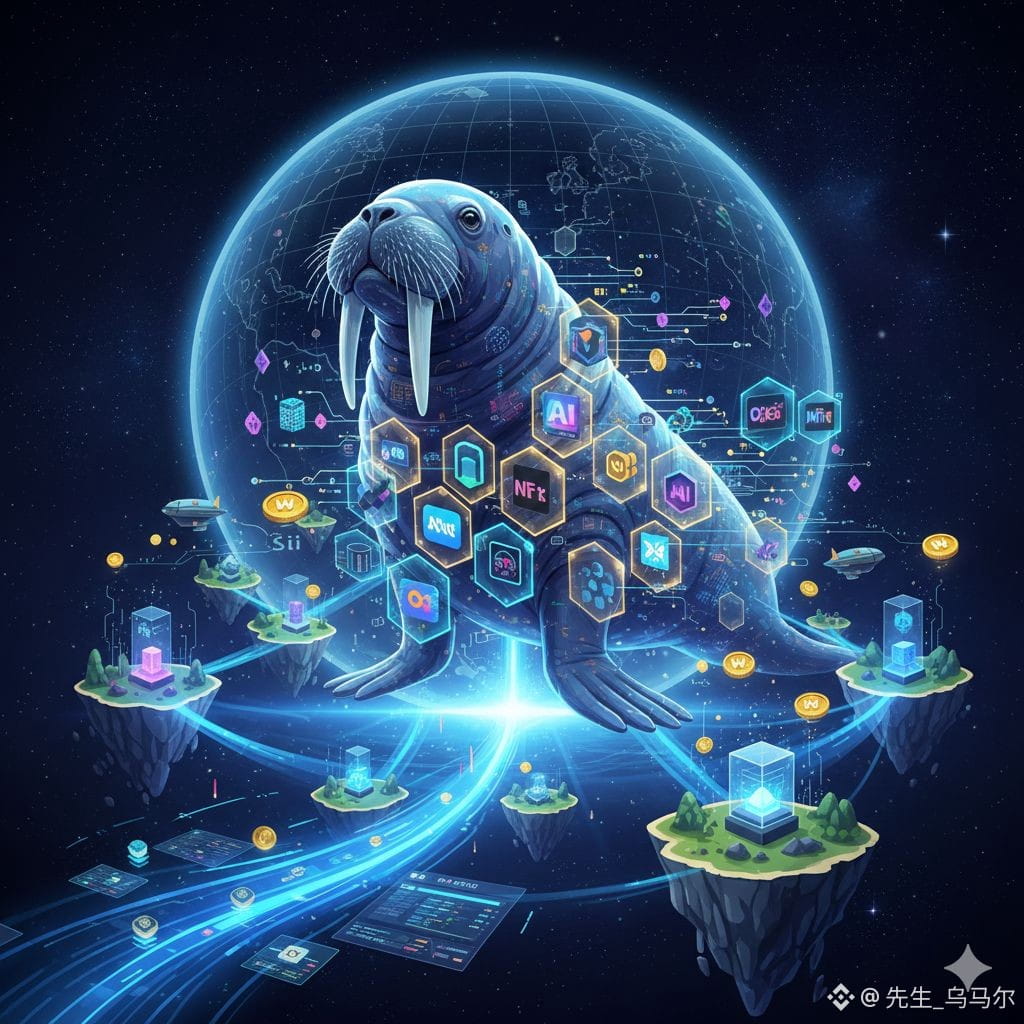
The consensus mechanism employed by Walrus is a Delegated Proof-of-Stake (DPoS) system. In this model, WAL token holders can delegate their tokens to trusted validators who are responsible for maintaining the network and validating transactions. This approach ensures efficient and secure consensus while promoting scalability and high throughput. Storage nodes must stake WAL tokens to participate, and they earn rewards based on their performance. Malicious behavior is deterred through slashing penalties. The network operates in epochs, typically lasting 24 hours, during which storage nodes are reconfigured, and rewards and governance parameters are adjusted.
Tokenomics revolve around the native utility token, WAL, which has a maximum supply of 5 billion. The WAL token serves three primary functions: payment for storage services, staking for network security, and participation in on-chain governance. A portion of transaction fees is burned, creating deflationary pressure and aligning the token's value with network usage. The payment mechanism is designed to keep storage costs stable in fiat terms, with upfront payments distributed over time to storage nodes and stakers. A significant portion of WAL tokens, over 60%, is allocated to the community through airdrops, subsidies, and a community reserve, emphasizing a community-driven approach.
The Walrus ecosystem is growing, supported by an independent Walrus Foundation that encourages its advancement and adoption. Key implementations and partnerships include Tusky, a privacy-focused platform for decentralized content storage, and TradePort, a multichain NFT marketplace that utilizes Walrus for dynamic metadata. Decrypt Media also stores its content library on Walrus.
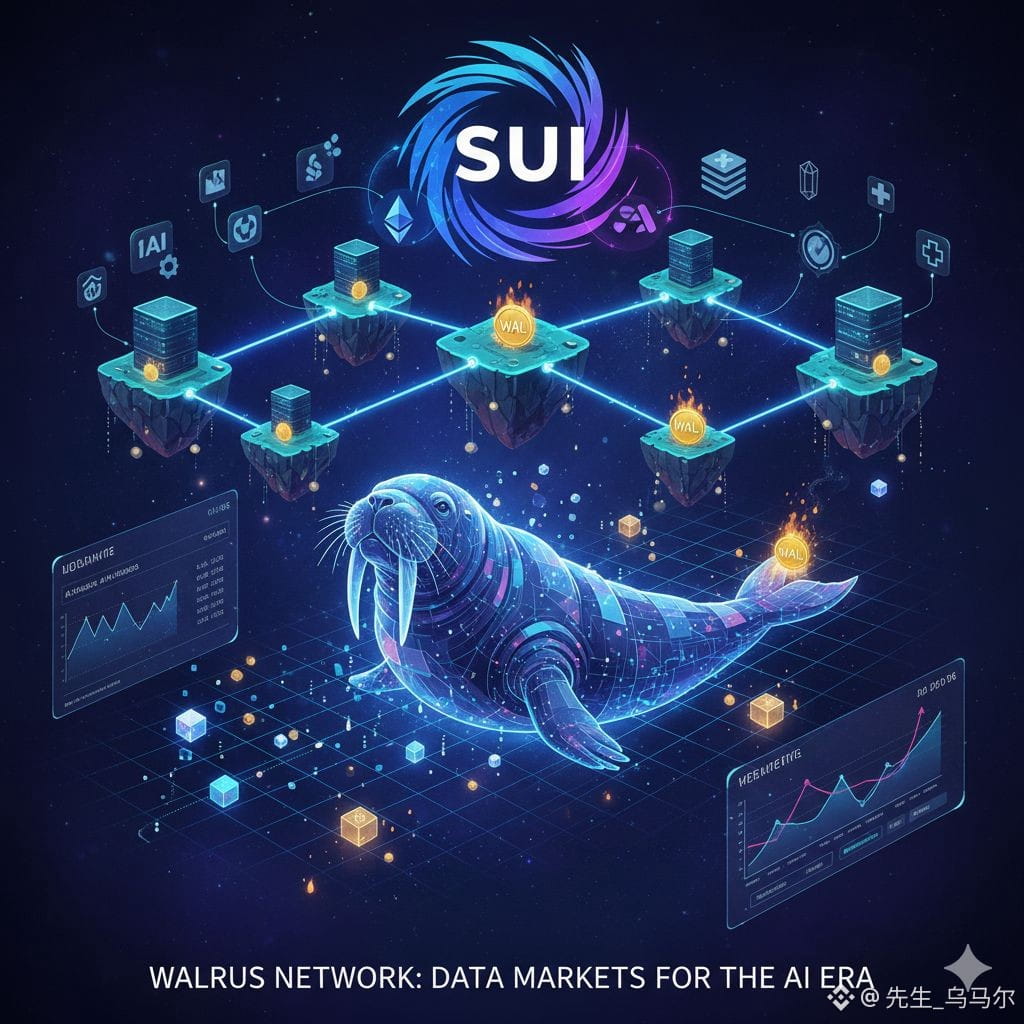
Walrus offers a wide range of use cases. It is ideal for storing large media files like videos and images, AI training datasets, and for blockchain archiving. It also supports decentralized website hosting and can be used for NFT media storage and game assets. The programmable nature of its storage enables innovative applications such as NFTs with mutable data and AI systems with on-chain dataset management.
While a detailed roadmap typically involves specific timelines, Walrus launched its public testnet in 2024 and planned for its mainnet launch in Q1 2025. Milestones have included features like a Deletable Blobs API for managing data lifecycles, the implementation of the WAL token economy, and explorer tools for network analysis.
Like any innovative technology, Walrus faces challenges and risks. Being an early-stage project, it has execution challenges in delivering on its ambitious technical roadmap. It competes with established decentralized storage solutions that already have working products and active user bases, requiring significant marketing and partnership efforts to gain adoption. Potential regulatory uncertainties surrounding decentralized storage solutions also pose a risk. Furthermore, managing long-term contracts in a decentralized system where nodes might be tempted to default over time presents an economic challenge, though Walrus aims to mitigate this through its incentive structure and the security provided by the underlying blockchain.
Despite these challenges, Walrus Network holds significant future potential. Its focus on efficiency, scalability, and cost-effectiveness for large data storage, coupled with its programmable architecture and integration with the Sui blockchain, positions it as a crucial infrastructure layer for the evolving Web3 landscape. By making storage a programmable blockchain resource, Walrus aims to redefine how decentralized applications handle data, paving the way for more sophisticated and data-intensive dApps, particularly in the AI and NFT sectors. Its ability to offer a robust and reliable alternative to centralized cloud storage could drive broader adoption of decentralized technologies and empower users with greater control over their data.