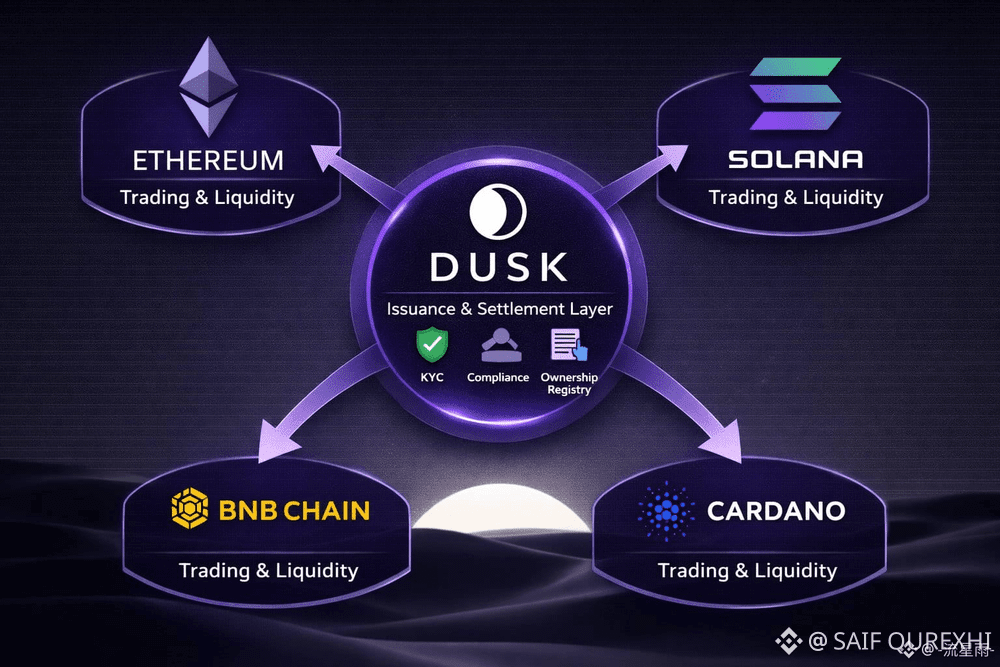
For years, the blockchain industry has faced a paradox. Financial institutions want the efficiency of a decentralized ledger, but they are legally barred from using public chains like Ethereum for many tasks because they cannot broadcast sensitive client data to a public block explorer.
Enter the Dusk Foundation.
What is Dusk?
The Dusk Foundation is a decentralized infrastructure project focused on building Dusk Network, a privacy-first Layer-1 blockchain. Unlike "privacy coins" that focus on anonymity, Dusk focuses on confidentiality. It is built from the ground up to support the issuance of regulated financial instruments, such as tokenized shares, bonds, and electronic money.
The Three Pillars of Dusk Technology
Zero-Knowledge Proofs (ZKPs): Dusk uses its own ZK-virtual machine (Piecrust) to allow users to prove they have the right to make a transaction (e.g., "I am a verified investor") without revealing who they are or how much they own.
Succinct Attestation (SA): A novel consensus mechanism that provides near-instant settlement. In finance, waiting 10 minutes for a block is an eternity; Dusk aims for the speed required by high-frequency trading.
The Citadel Framework: A "Know Your Customer" (KYC) protocol that allows users to share their identity with a regulator once, and then navigate the entire ecosystem privately thereafter.
Why the World Needs It
As we move toward the Tokenization of Real-World Assets (RWA), we need a "Goldilocks" blockchain.
Public chains are too transparent (exposing trade secrets).
Private chains are too siloed (defeating the purpose of a global ledger).
Dusk is the "just right" solution. It offers the security of a public network with the privacy of a private one. By partnering with entities like the Dutch stock exchange NPEX, the Dusk Foundation is already proving that the future of finance isn't just digital—it’s private and compliant.