

Most people in crypto chase what moves fast. New narratives, new tokens, new hype cycles. But real infrastructure rarely announces itself loudly. The most important upgrades usually happen quietly at the architecture level, where better design compounds over time and slowly makes older models feel outdated.
@Vanarchain is not trying to win attention with bigger numbers alone. Instead, it is redesigning how a chain thinks, stores data, and executes logic. Rather than treating the blockchain as a simple transaction processor, Vanar approaches it as an intelligent system where data, reasoning, and execution are deeply connected.
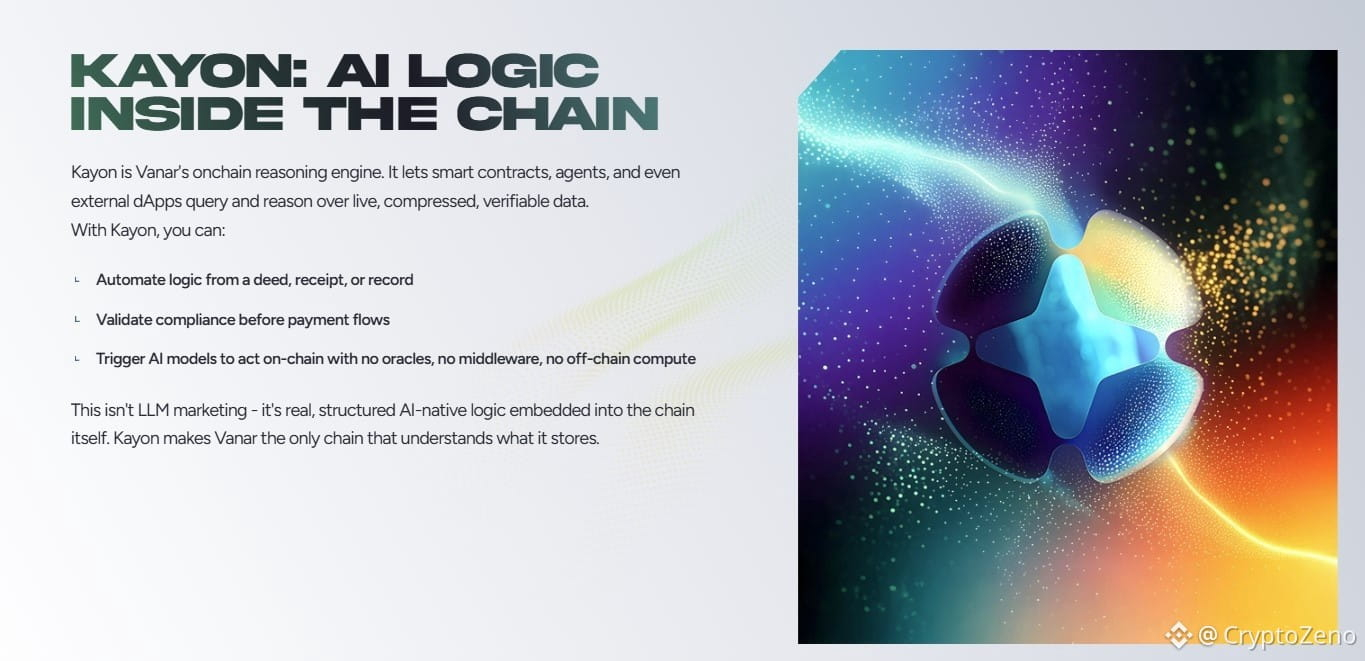
#Kayon introduces onchain reasoning directly inside the network. Smart contracts and agents can query structured, verifiable data and automate decisions without relying on external middleware or fragile offchain layers. Logic no longer lives outside the chain. It becomes native, which reduces friction and increases reliability for real world use cases like compliance, payments, and automated workflows.
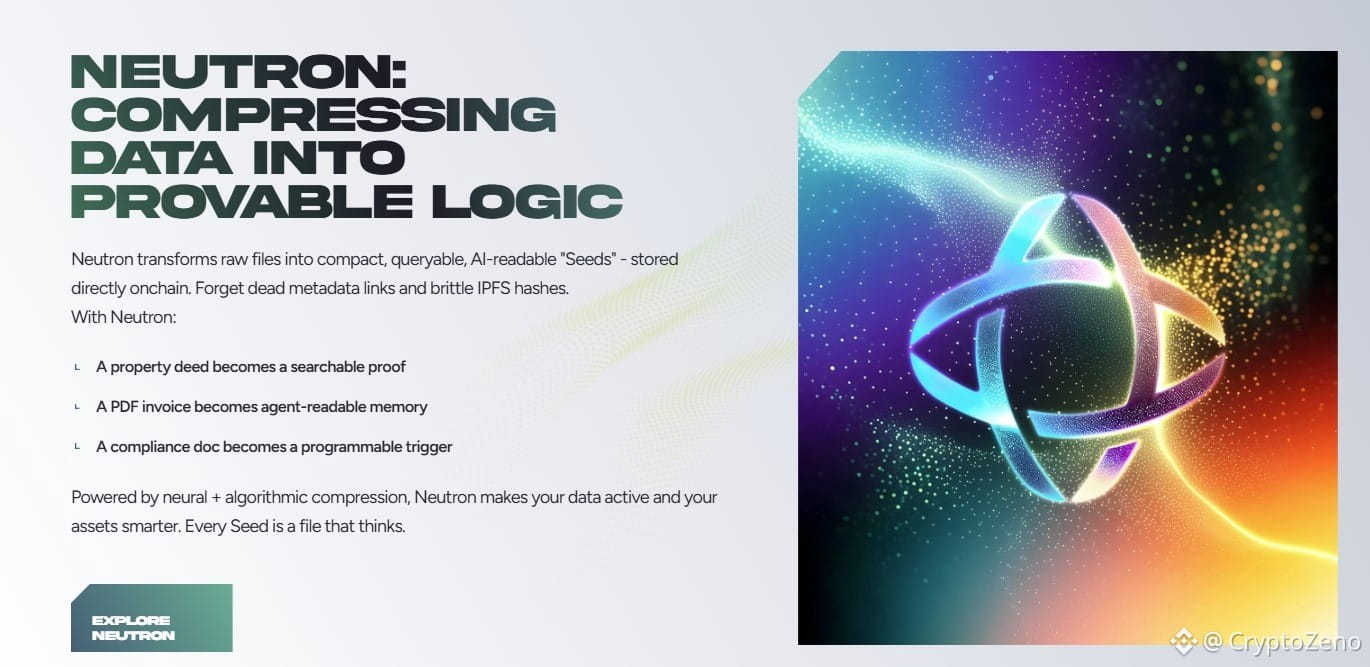
#Neutron focuses on the data layer. Instead of storing files as passive blobs or links, it compresses information into compact, queryable forms that remain provable and AI readable. Documents, receipts, and records turn into active data that applications can understand and act on. This shifts blockchain storage from static archiving to functional intelligence.
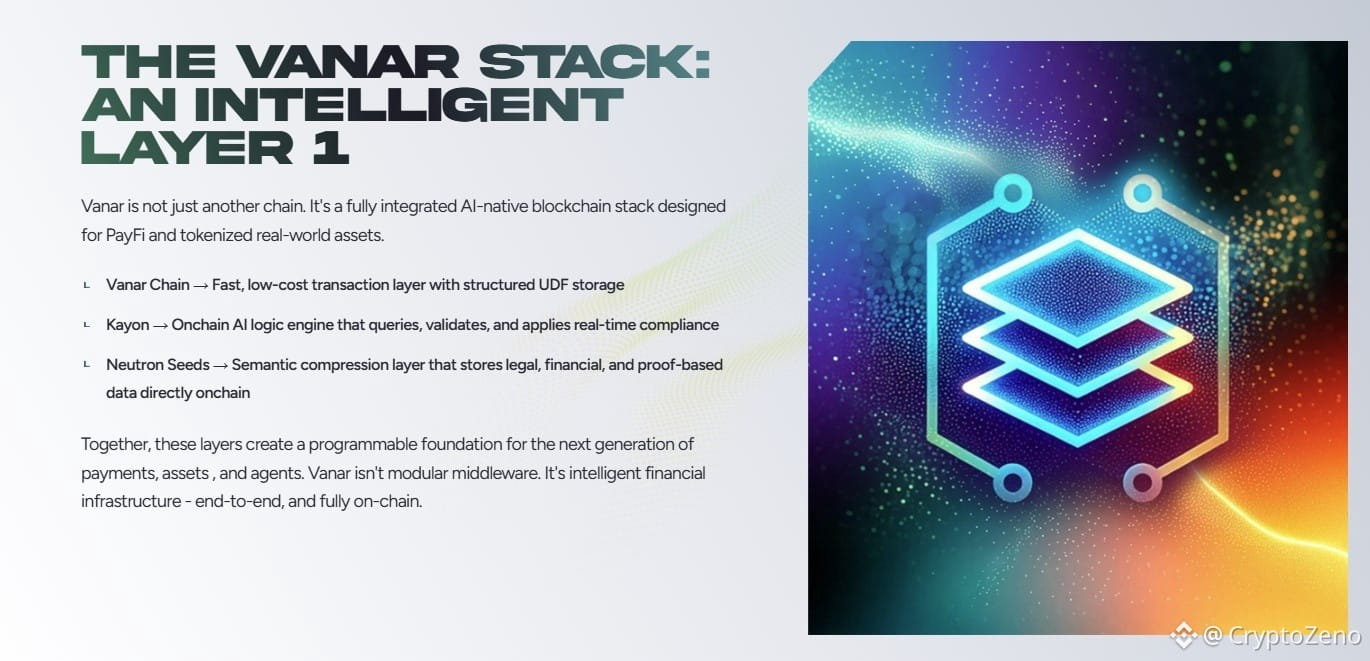
At the base, the full Vanar stack ties everything together into a Layer 1 designed for continuity. Fast execution, structured storage, embedded reasoning. Each layer supports the next, creating an environment where applications do not constantly rebuild context from scratch. As activity grows, efficiency improves rather than degrades.
This is the kind of progress that does not create instant noise but quietly reshapes what is possible. Over time, systems built this way become harder to ignore because they simply work better. With $VANRY and the broader #Vanar ecosystem, the shift may be subtle today, yet the long term impact on scalable, AI native infrastructure could be significant.