Plasma is doing something most L1s refuse to do:
it prioritizes payment UX over token price optics.
That raises an uncomfortable question:
Is XPL being diluted so users can have a smoother experience?
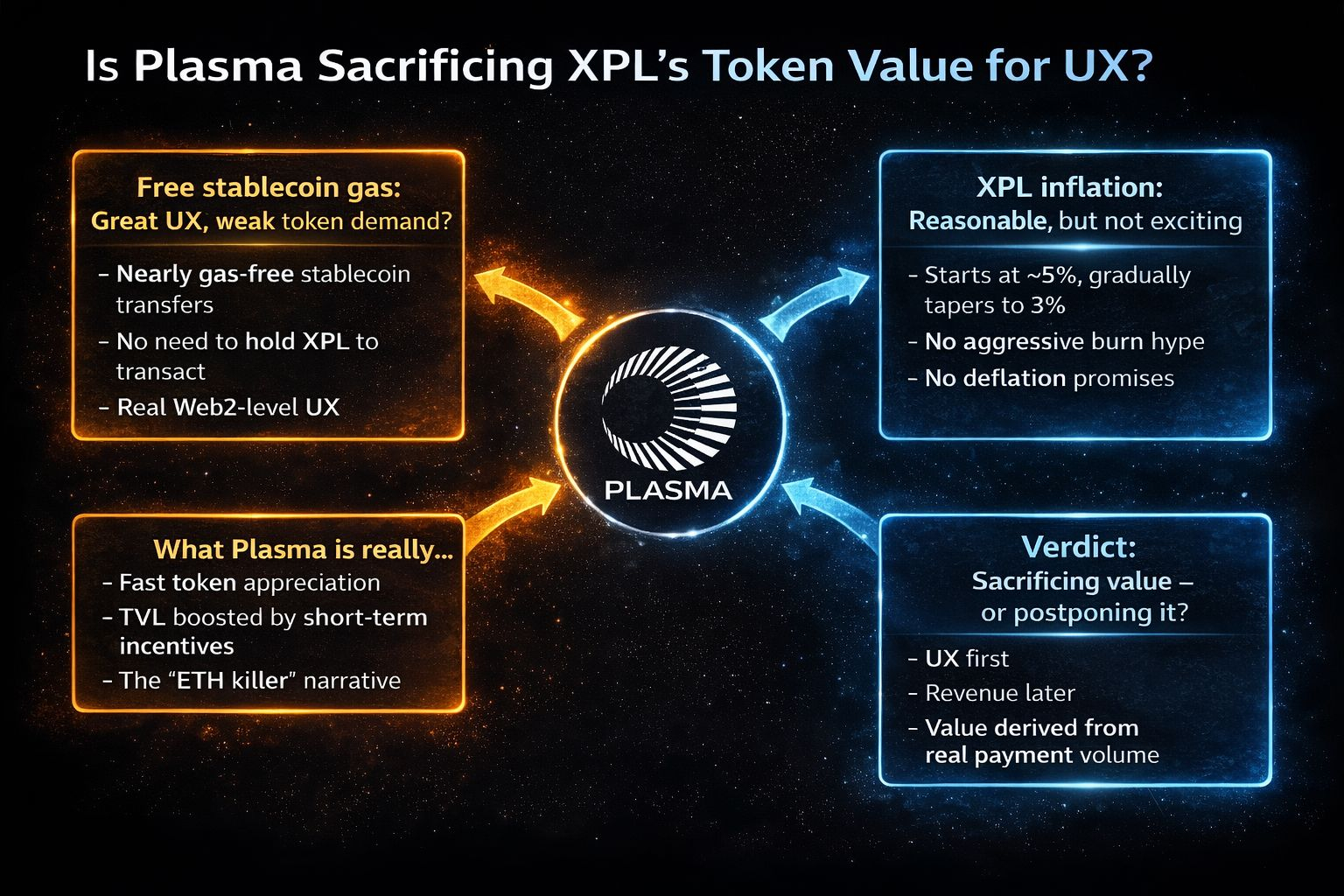
1. Free stablecoin gas: great UX, weak token demand?
On @Plasma , stablecoin transfers can be nearly gas-free.
For users, that’s real Web2-level UX:
No fee spikes😍
No need to hold the native token😀
No “pending” during congestion👍
But for $XPL holders, this is controversial.
If users don’t need XPL to transact, what actually drives demand for the token?
Plasma is clearly willing to delay short-term token demand to onboard real users first.
2. XPL inflation: reasonable, but not exciting
XPL starts at ~5% annual inflation, gradually tapering to 3%.
It’s controlled, transparent, and tied to validator participation — but it’s not designed to create scarcity narratives.
No aggressive deflation promises.
No token-burn hype.
This is clean tokenomics — and also hard to market in a speculation-driven cycle.
3. What #Plasma is really betting on
Plasma isn’t betting on:
Fast token appreciation
TVL boosted by short-term incentives
“ETH killer” narratives
It’s betting on something slower — and harder:
Consistent, real payment volume.
As usage grows:
EIP-1559 fee burns scale naturally
Staking rewards become meaningful
XPL gains value from network activity, not hype
4. Verdict: sacrificing value — or postponing it?
XPL is not designed to enrich early holders quickly.
But it’s also not a hollow governance token.
Plasma chose the hard path:
UX first
Revenue later
Token value derived from real usage
The real question isn’t:
“Will XPL pump?”
It’s:
“Does the market still have patience for tokens that only appreciate when infrastructure is actually used?”
If the answer is yes, XPL wins — quietly, and very differently from the rest of the market.