
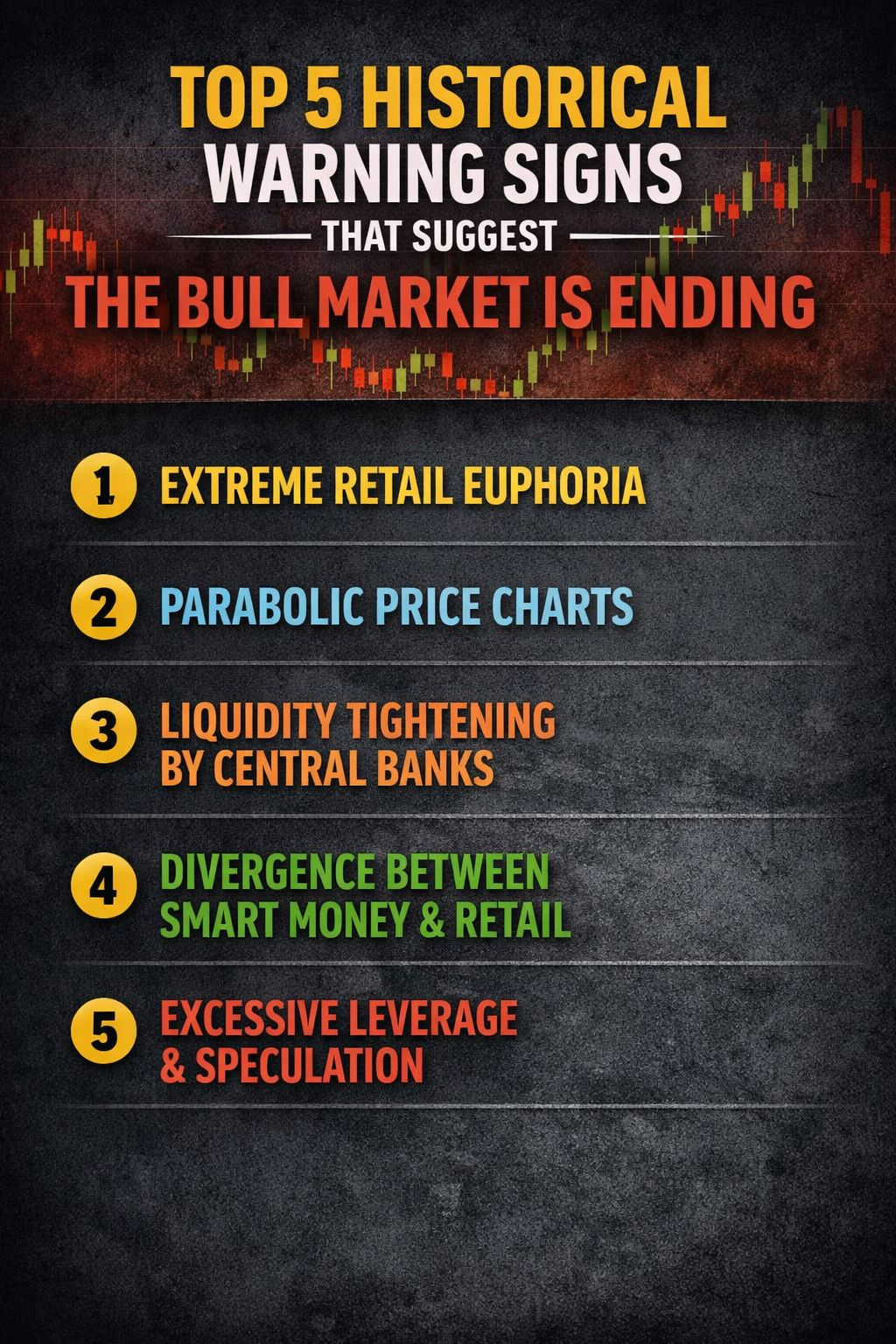
History tells us that bull markets do not end randomly. They do not die due to one tweet, one news or one red candle. It takes a lot of factors to kill the upward momentum of markets. Historical crashes, like Dot Com Bubble Crash(2000) and Financial Crisis(2008), show that market leaves some clues before crashing completely. Lets analyze some of those historical clues:
1- EXTREME RETAIL EUPHORIA:
When everyone feels like a genius and starts investing blindly, danger is likely close. In 2000, taxi drivers were giving advice on which stocks should you buy. In 2021, many people quit their job because they thought crypto market is very easy to make money from. This is classical retail euphoria.
During this phase:
i) Search terms related to buying stocks, crypto or metals,spike on google
ii) Finance influence multiply overnight.
iii) Risk appetite is extremely high.
iv) "This time it is different" becomes common language.
Markets don’t crash when people are scared.They crash when everyone believes prices can only go up.
2- PARABOLIC PRICE CHARTS:
Before any major crash, the chart of that certain financial item generally goes parabolic without any major correction. There are mostly green candles on the chart with little pullback. History tells us that such momentum does not last forever and eventually the market corrects itself or completely crashes.
3- LIQUIDITY TIGHTENING BY CENTRAL BANKS:
Bull Markets are fueled by liquidity and any setback to liquidity is detrimental for the market. Whenever the interest rates, risk assets often tend to suffer due to lack of liquidity.
For example, in 2022, Federal Reserve starting hiking the rates and Tech stocks and crypto collapsed.
4- DIVERGENCE BETWEEN SMART MONEY AND RETAIL
Smart money often quietly sells the market at the end of a bull run. You often see:
i) CEOs selling their shares
ii) Big Institutions quiting the markets
5- EXCESSIVE LEVERAGE AND SPECULATION:
High Leverage is the ultimate receipe for disaster.
Whenever the market is about to top, we see:
i) High margin debts
ii) Massive futures open interest
iii) Overvalued IPOs with no profits
Leverage accelerates gains, but it also accelerates collapses.