
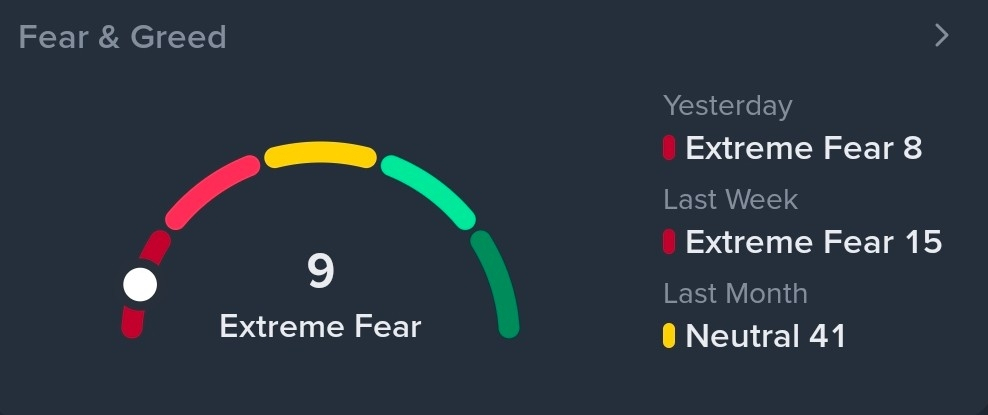
The Fear & Greed Index has fallen to around 14, a level widely classified as “Extreme Fear.” This reading signals intense risk aversion across markets, even as trading activity continues at a steady pace. Historically, such conditions reveal a sharp disconnect between sentiment and participation, a dynamic that often precedes major market inflection points.
In this article, we break down what an extremely low Fear & Greed Index means, why fear can dominate despite active trading, and how investors typically respond in these environments.
What Is the Fear & Greed Index?
The Fear & Greed Index is a sentiment indicator designed to measure investor emotions in financial markets. It aggregates multiple data points such as:
Market momentum
Volatility levels
Trading volume
Price strength
Demand for safe-haven assets
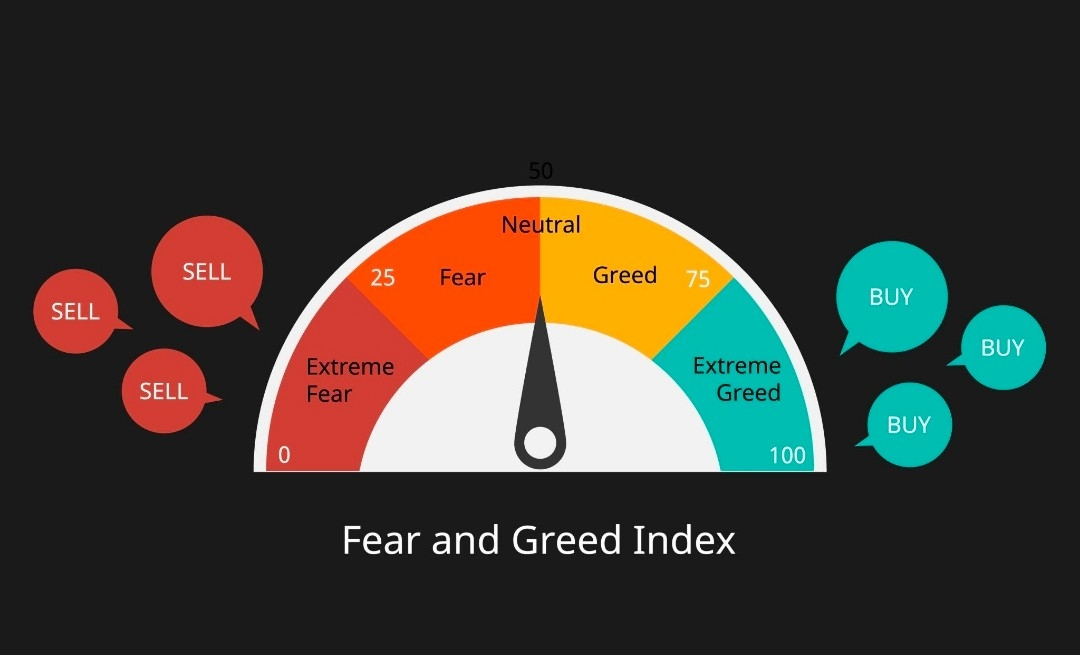
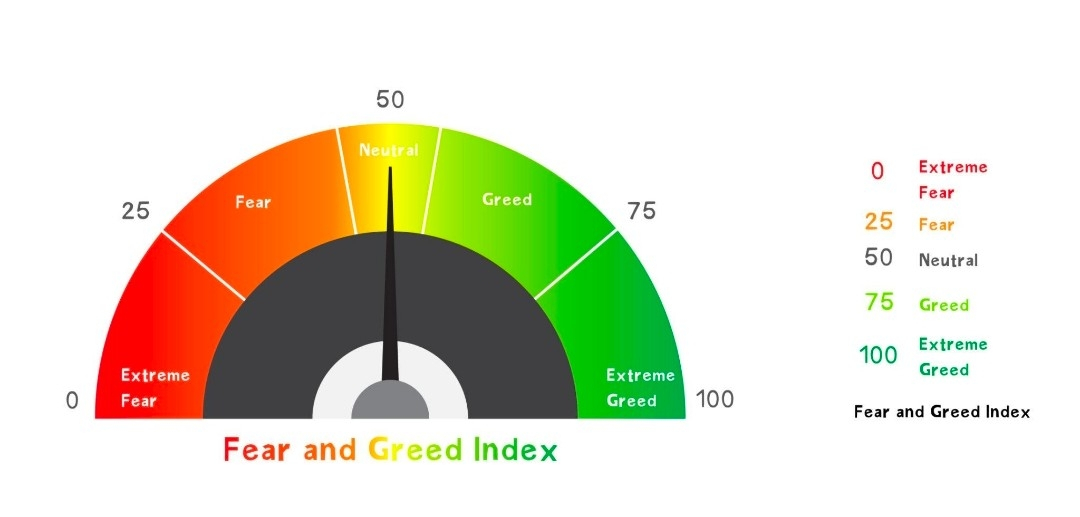
The index ranges from 0 to 100:
0–24: Extreme Fear
25–49: Fear
50: Neutral
51–74: Greed
75–100: Extreme Greed
A reading near 14 places the market firmly in panic territory.
Why Is Fear So High Right Now?
An extremely low index reading typically reflects a combination of factors:
1. Heightened Uncertainty
Macroeconomic pressure, unclear policy direction, or global instability can drive investors to reduce risk exposure aggressively.
2. Volatility Spikes
Sharp price swings increase emotional reactions. Even short-lived drops can amplify fear when confidence is already fragile.
3. Recent Market Drawdowns
Losses tend to linger psychologically. After prolonged downside action, investors often expect further declines, regardless of improving fundamentals.
4. Negative News Cycles
Markets often react more strongly to bad news than good. Persistent bearish narratives can overpower neutral or positive data.
Why Trading Activity Remains Strong Despite Fear
A common misconception is that fear equals inactivity. In reality, extreme fear often increases trading volume:
Short-term traders capitalize on volatility
Long-term investors begin gradual accumulation
Forced liquidations trigger automated selling and rebalancing
Institutions reposition portfolios quietly
This creates an environment where prices fluctuate aggressively, even though sentiment remains deeply pessimistic.
Historical Perspective: What Extreme Fear Has Meant Before
Looking back, periods where the Fear & Greed Index fell below 20 have often coincided with:
Local or macro market bottoms
Capitulation phases before stabilization
High-risk, high-opportunity zones for long-term investors
While extreme fear does not guarantee an immediate reversal, it frequently signals that much of the selling pressure has already occurred.
How Investors Typically Respond to Extreme Fear
Different market participants react in distinct ways:
Retail investors often reduce exposure or exit positions emotionally
Experienced traders focus on range setups and volatility plays
Long-term investors scale into positions gradually rather than all at once
The key distinction is time horizon. Fear-driven environments punish impatience but can reward discipline.
Key Takeaways
A Fear & Greed Index near 14 reflects extreme pessimism, not necessarily market collapse
High fear can coexist with strong trading volume and liquidity
Historically, extreme fear zones often precede stabilization phases
Risk management and patience matter more than prediction
Final Thoughts
An extremely low Fear & Greed Index is less about predicting exact market bottoms and more about understanding emotional extremes. When fear dominates headlines and sentiment metrics, markets are often closer to exhaustion than euphoria.
For investors, this is a time to stay rational, manage risk carefully, and avoid emotional decision-making. Fear may feel overwhelming, but historically, it has also been the emotion most closely associated with opportunity.