
What’s changed recently is pretty simple, but important. Vanar isn’t just talking about AI anymore. It’s shipping tools people can interact with, and more importantly, pay for.
Neutron and Kayon the layers that handle semantic data and on-chain reasoning are now part of how users actually engage with the chain. And instead of everything being “free for now, maybe useful later,” Vanar is rolling out subscription-style access paid in @Vanarchain for advanced AI features. That’s a real shift.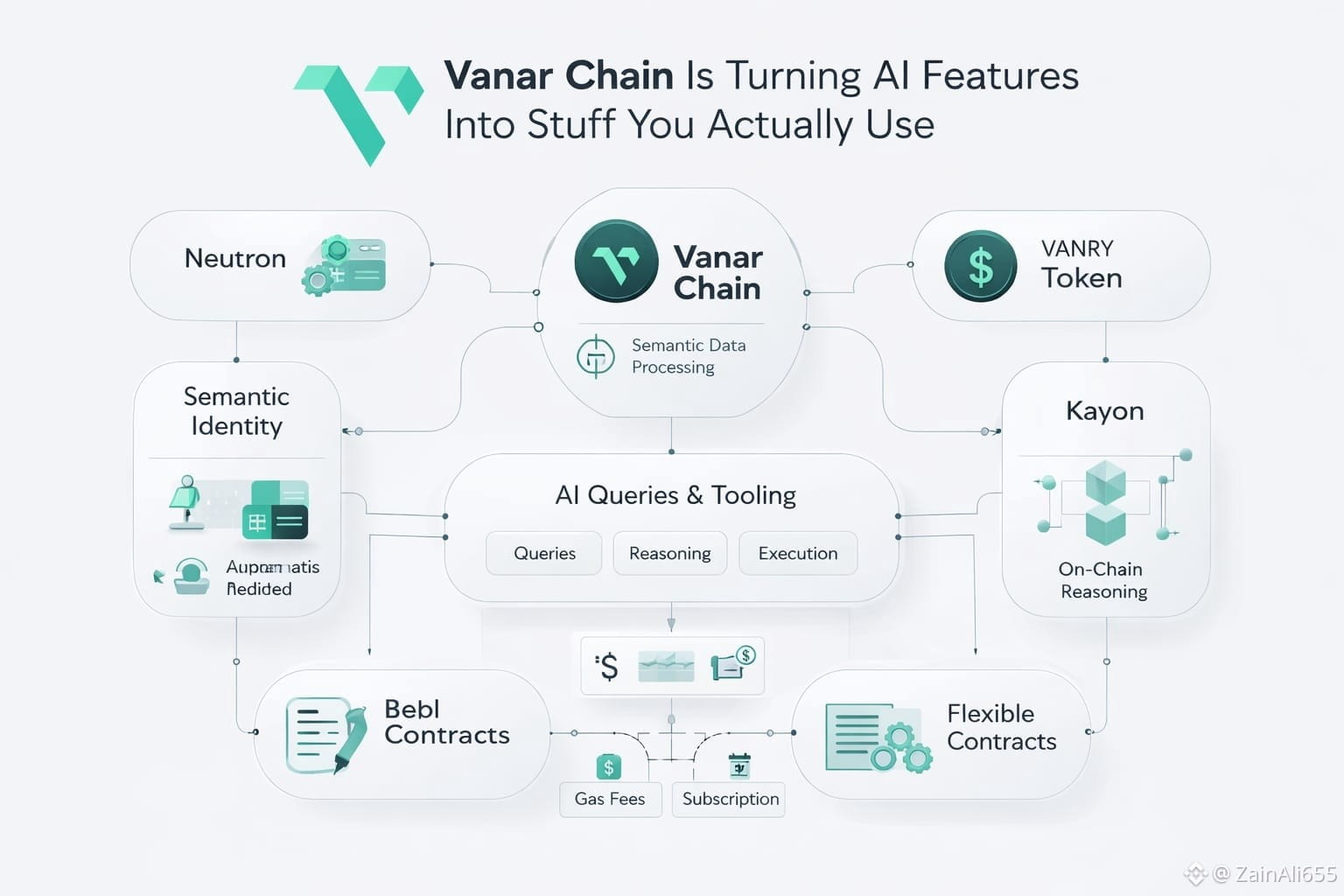
It means using AI queries, reasoning calls, or premium tooling isn’t abstract future utility. It’s direct demand tied to the token. Gas plus subscriptions plus execution all flowing through the same system. That’s the kind of economic loop a lot of Layer 1s promise, but rarely implement cleanly.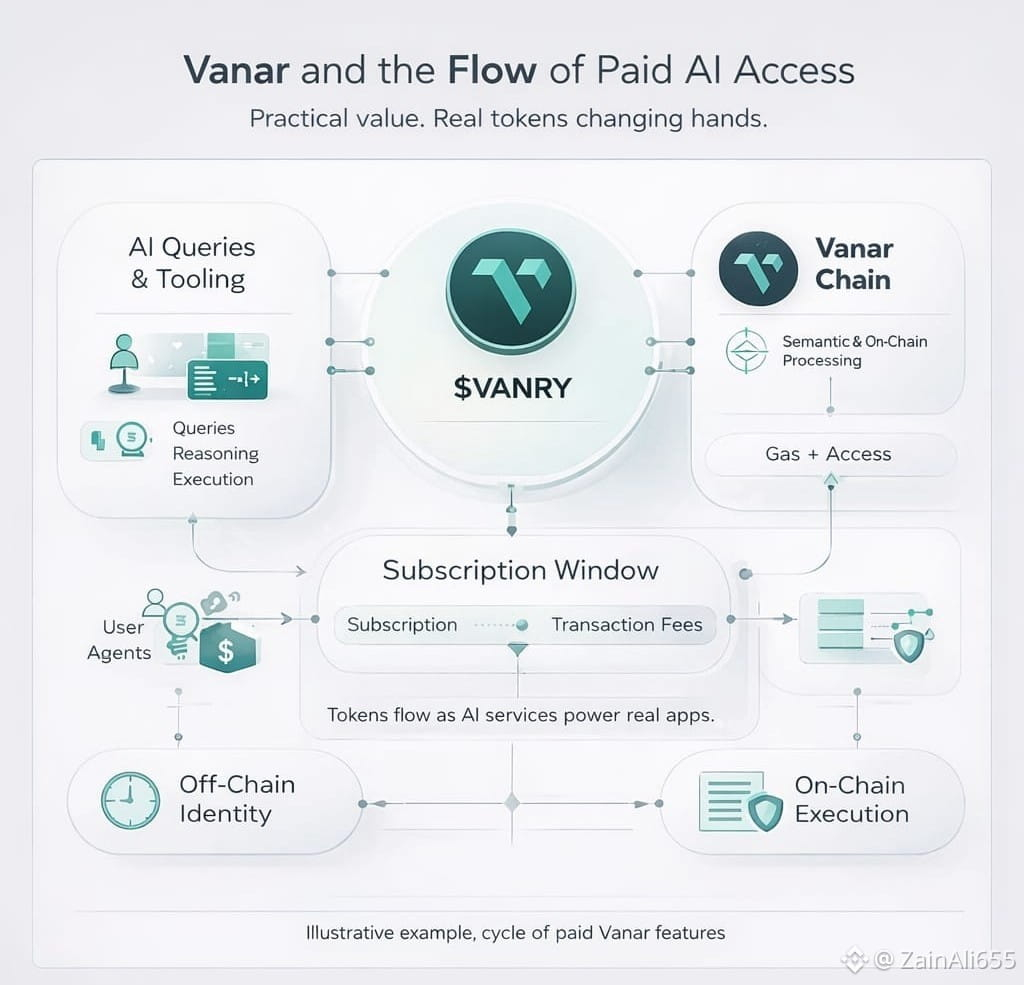
Another quiet but interesting update is around semantic identity. Vanar’s been working toward human-readable wallet identities and richer context layers. In plain English, apps don’t just see an address anymore they start to understand who or what is interacting with them. That’s a big deal if you’re thinking about agents, automated finance, or anything that needs intent, not just raw transactions.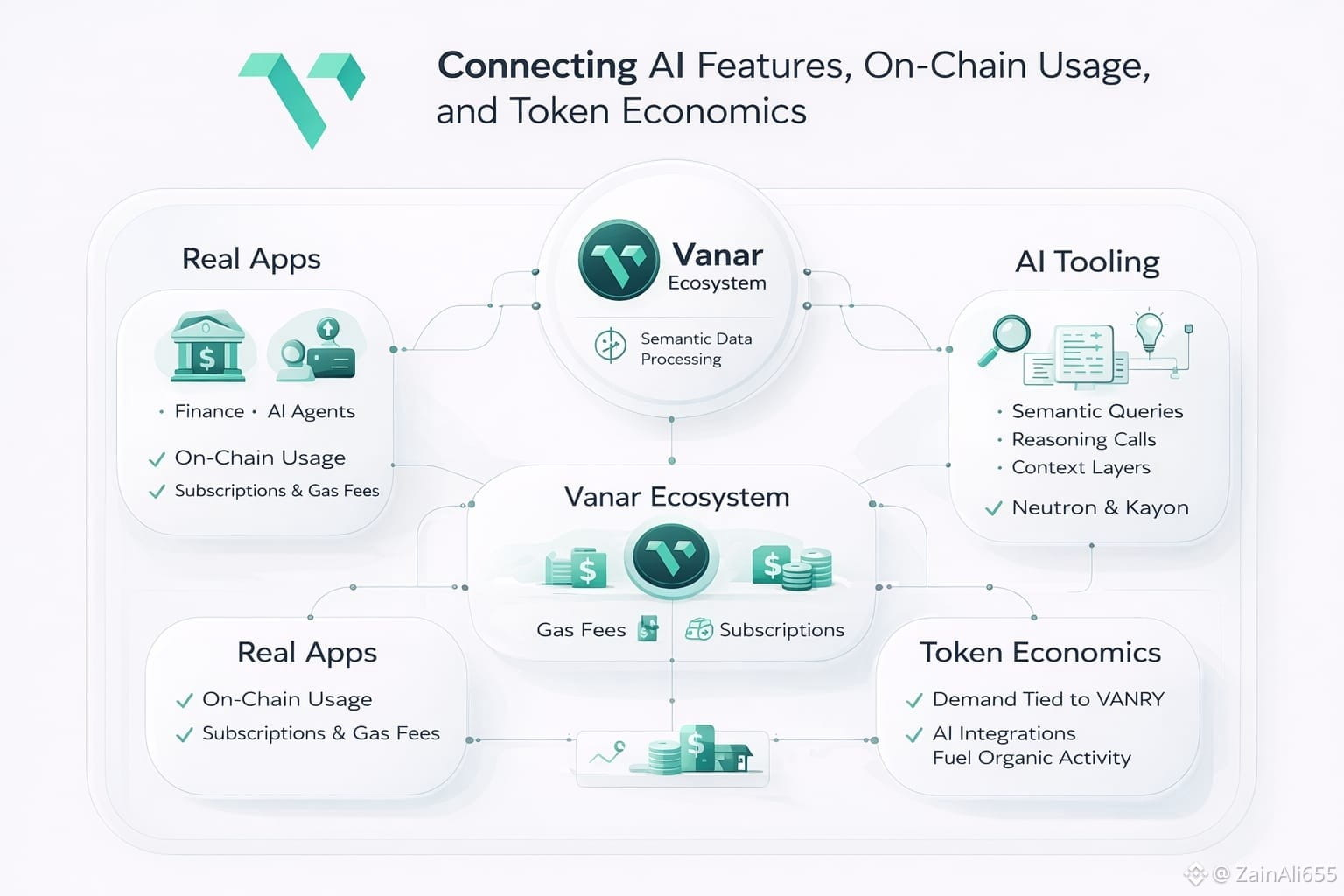
There’s also movement on the contract side. Vanar’s newer execution upgrades are aimed at making contracts more flexible over time. Instead of locking logic forever at deployment, developers can design systems that adapt as conditions change. That’s especially relevant for real-world finance and compliance-heavy workflows, where static contracts usually break down.
Now, let’s talk market reality for a second. $VANRY is still early-stage. Price is hovering in the low-cent range, liquidity isn’t deep, and volatility is just part of the deal. This isn’t a “set it and forget it” asset. It moves fast, both directions.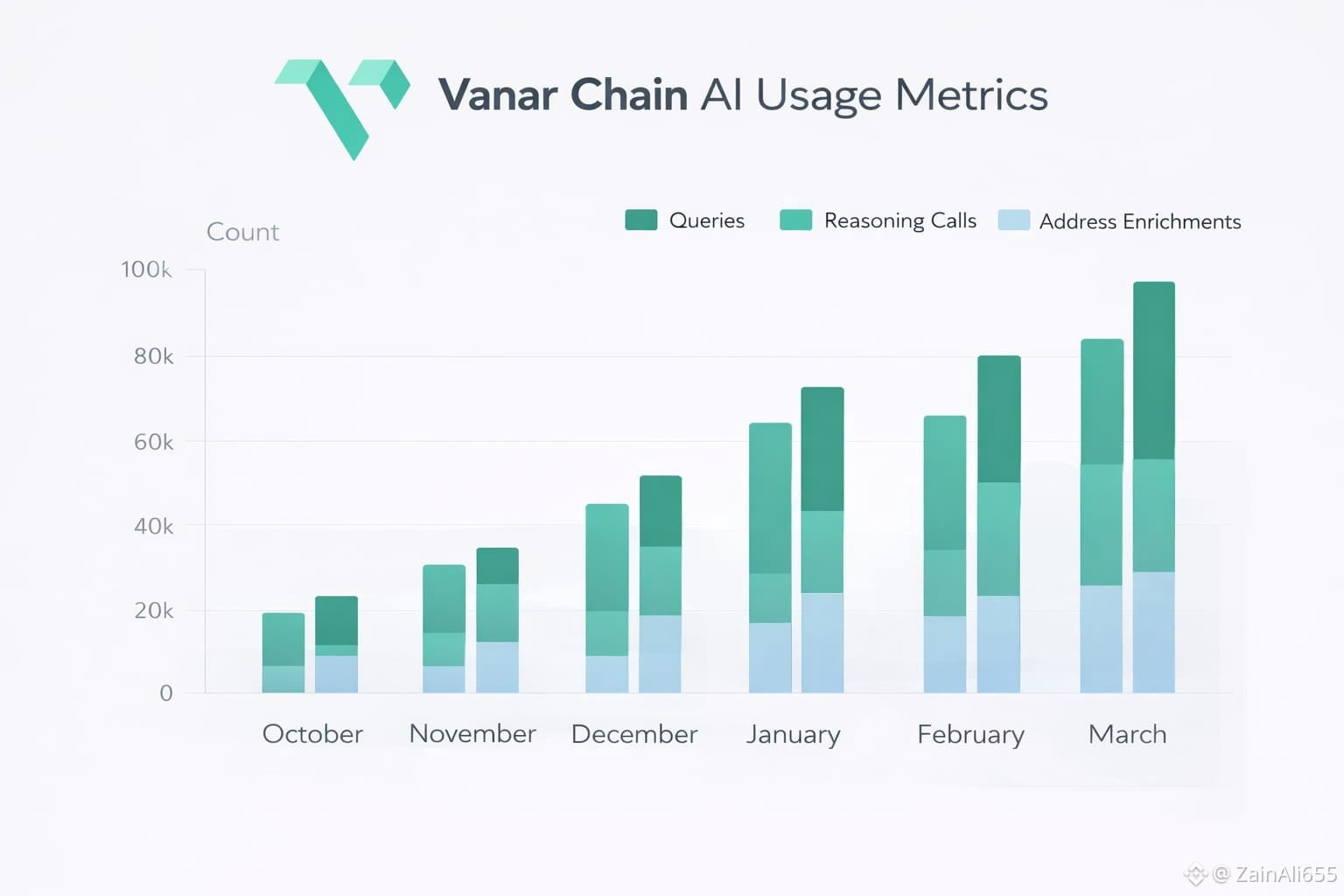
But the reason people are talking isn’t just price action.
It’s that Vanar is finally connecting AI features, on-chain usage, and token economics into one picture. Builders have tools. Users have reasons to interact. And the chain is starting to feel less like an experiment and more like infrastructure in progress.
There are still risks. Adoption is early. Developers need time. And none of this matters unless real apps show up. But compared to a year ago, the difference is visibility. You can point to what’s live. You can explain how it’s used. You can see where #vanar fits in.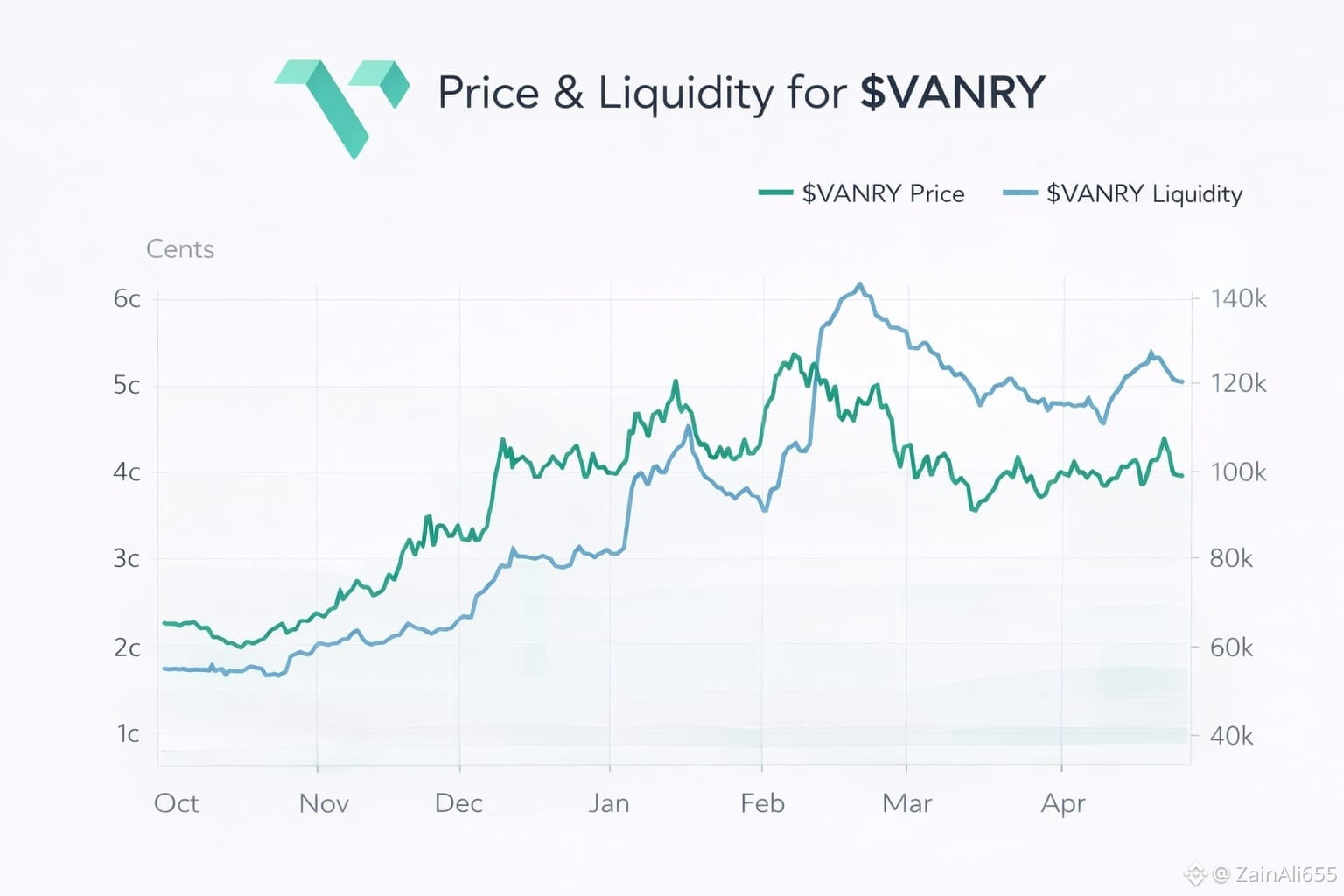
That’s usually when things get interesting. Not loud. Not flashy. Just quietly moving from idea to execution.