
@Fogo Official most underappreciated design decision is physical proximity. While most Layer 1 networks accept geographic dispersion as an unavoidable latency cost, Fogo intentionally compresses distance. By colocating its initial validator set inside a high-performance data center, Fogo removes the variable most chains treat as noise: signal travel time.
Blockchains are fundamentally coordination machines. Coordination speed depends on how fast messages propagate between validators. When nodes are scattered globally, physics becomes the bottleneck.
Fogo sidesteps that constraint by designing around deterministic networking conditions. Forty-millisecond block times are not just a software achievement; they are a systems engineering outcome.
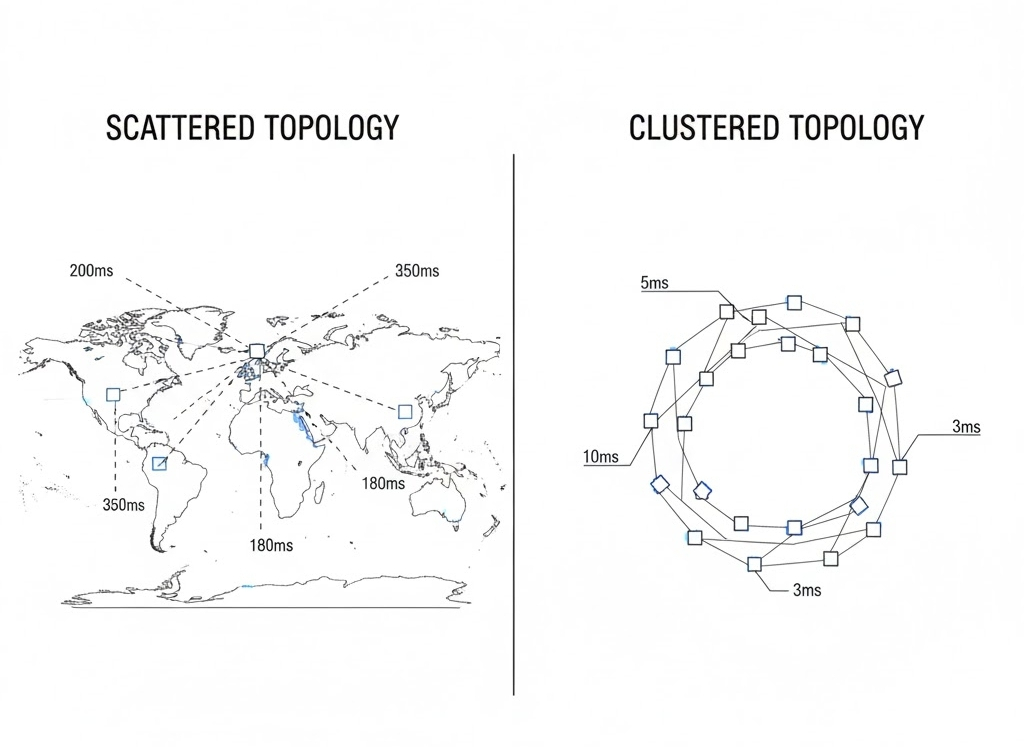
From my perspective, this approach reframes decentralization as a phased optimization rather than a fixed starting point.
I acknowledge that physical clustering raises philosophical debates, yet it also creates a controlled performance baseline rarely seen in public chains
Fogo is effectively importing high-frequency trading infrastructure logic into decentralized consensus. By reducing network entropy at the physical layer, Fogo ensures that execution fairness is not distorted by unpredictable propagation delays. In real-time markets, consistency matters more than theoretical dispersion.
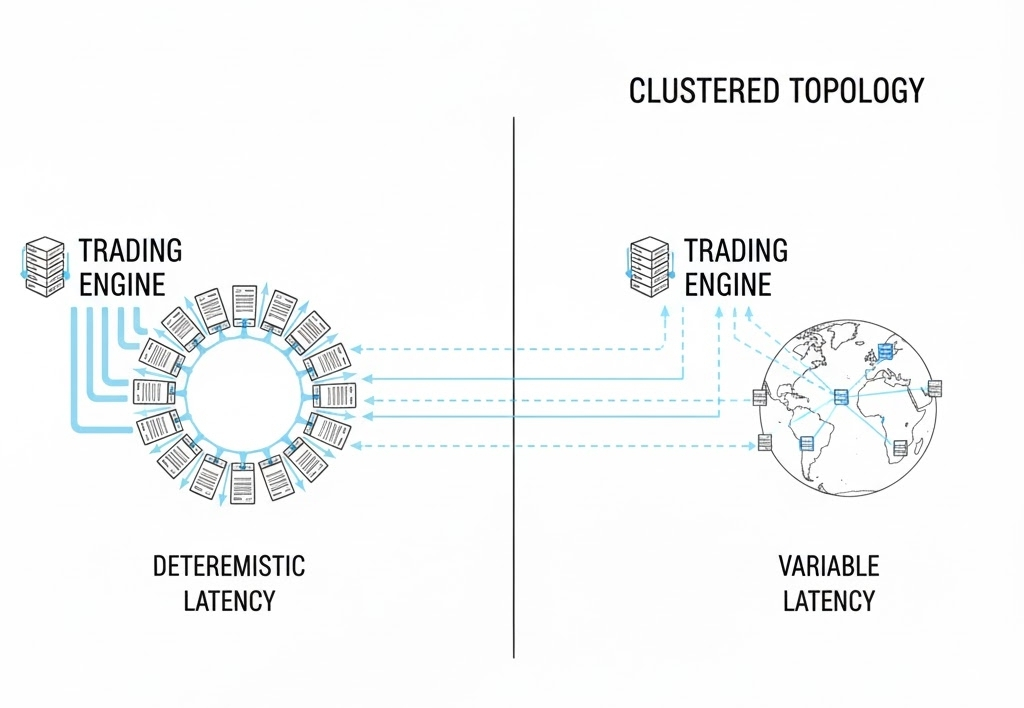
As Fogo evolves, the long-term question is not whether speed can scale, but whether deterministic coordination becomes the new competitive standard for Layer 1 design.
Fogo's predictable latency proves more valuable than geographic randomness, future chains may begin with controlled environments before expanding outward.
In that sense, Fogo is not rejecting decentralization, it is sequencing it. Performance first establishes credibility; distribution can follow once the coordination engine is optimized. Determinism, not dispersion, may ultimately define the next generation of on-chain infrastructure.