


I didn’t open Vanar’s GitHub looking for architecture theory. I opened it because I wanted to understand one practical thing: how difficult it would actually be for a developer already working with Ethereum tooling to interact with the network without relearning everything from scratch.
Marketing pages often promise EVM compatibility. GitHub repositories show whether that promise survives contact with reality.
The vanarchain-blockchain repository immediately answered the first question. Vanar didn’t design a completely new execution environment. It forked Go-Ethereum (geth), which means the execution logic, tooling assumptions, and debugging workflows begin from something developers already understand.
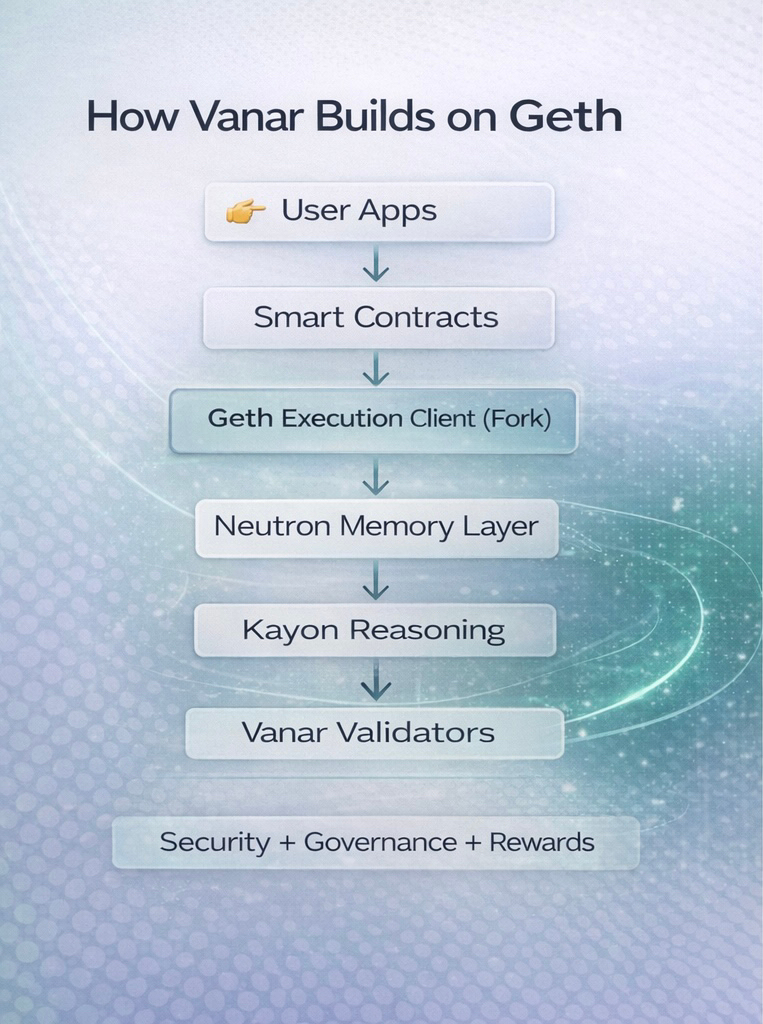
The README makes that transparency very obvious. There is no proprietary installer or hidden dependency stack. Building the client requires Go 1.21 or later alongside a standard C compiler, followed by familiar commands like make geth or make all. Anyone who has compiled Ethereum infrastructure before immediately recognizes the process. That matters more than branding.
Familiar build instructions reduce uncertainty. Developers can audit what they run instead of trusting binaries distributed elsewhere.
Looking through the repository structure reinforced that impression. Directories such as cmd/ and recognizable client layouts mirror patterns common across geth implementations. Nothing felt intentionally abstracted away.
To test whether compatibility translated into practice, I reused a small Solidity contract setup I previously deployed in an Ethereum test workflow. The goal wasn’t optimization. It was friction measurement. Changing the RPC endpoint and redeploying through standard tooling required minimal adjustment. Hardhat configuration stayed intact. Compiler settings remained unchanged. Deployment scripts executed without unexpected errors. The experience felt almost uneventful. In infrastructure work, uneventful is usually a good sign.
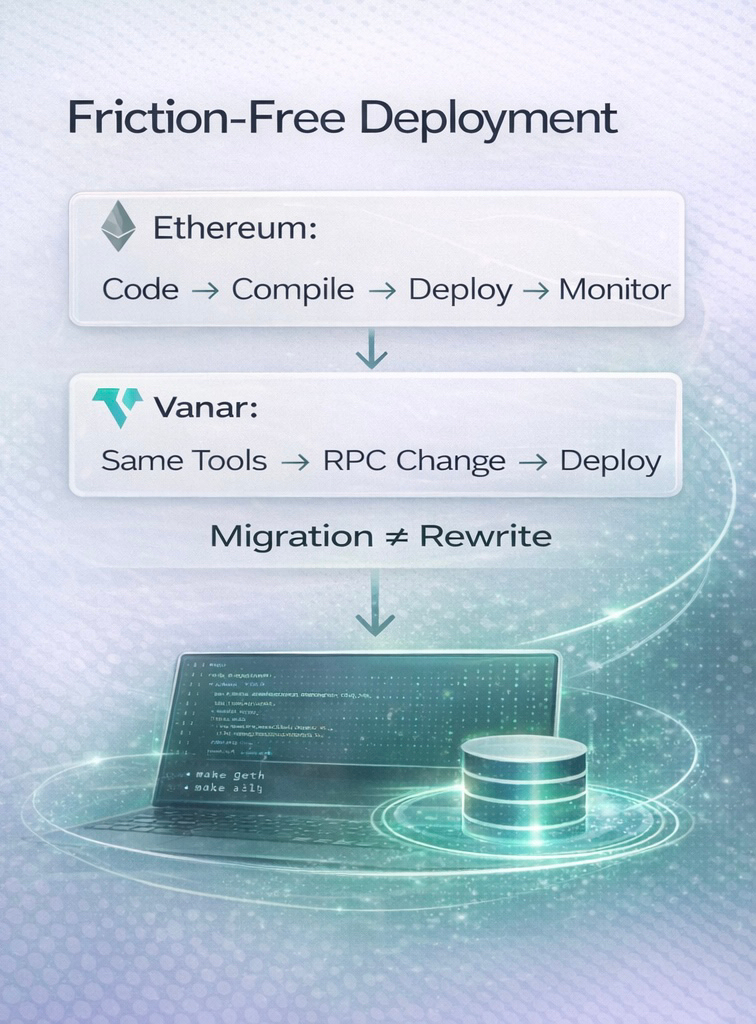
Programmatic access also follows familiar JSON-RPC standards across HTTP, WebSocket, and IPC interfaces. Monitoring scripts, wallets, and automation pipelines don’t require adapters or custom middleware just to communicate with the node. That reduces migration cost significantly. But testing the repository also revealed where responsibility shifts.
Forking geth is not a one-time decision. Ethereum continues shipping upgrades and security patches. Every divergence introduces maintenance obligations.
What remains less visible publicly is how closely Vanar intends to synchronize long-term with upstream geth improvements. The repository doesn’t yet outline a detailed public synchronization strategy, which developers evaluating production environments will likely watch carefully. It’s the reality of maintaining any forked execution client.
At the same time, the architectural direction becomes clearer once you look beyond deployment mechanics. Vanar appears to adapt the geth foundation toward AI infrastructure workloads rather than purely financial throughput.
Neutron memory storage, Kayon reasoning interactions, and agent workflows introduce execution patterns that behave differently from traditional DeFi traffic. Validators are no longer only processing token transfers. They increasingly support semantic queries and persistent context interactions. Consistency starts to matter as much as speed.
From a token perspective, this decision quietly connects to $VANRY’s role inside the ecosystem. Lower onboarding friction means more experiments reach deployment faster. Each deployed application generates Seeds, reasoning queries, and operational demand across the network’s AI stack. Usage grows through activity rather than incentives alone.
After spending time inside the repository instead of reading summaries about it, the biggest takeaway wasn’t performance claims or positioning language. It was accessibility.
Would you trust a Layer-1 where you couldn’t compile the execution client on your own machine?