
Japan just made history again — and the global markets are watching closely 👀🌍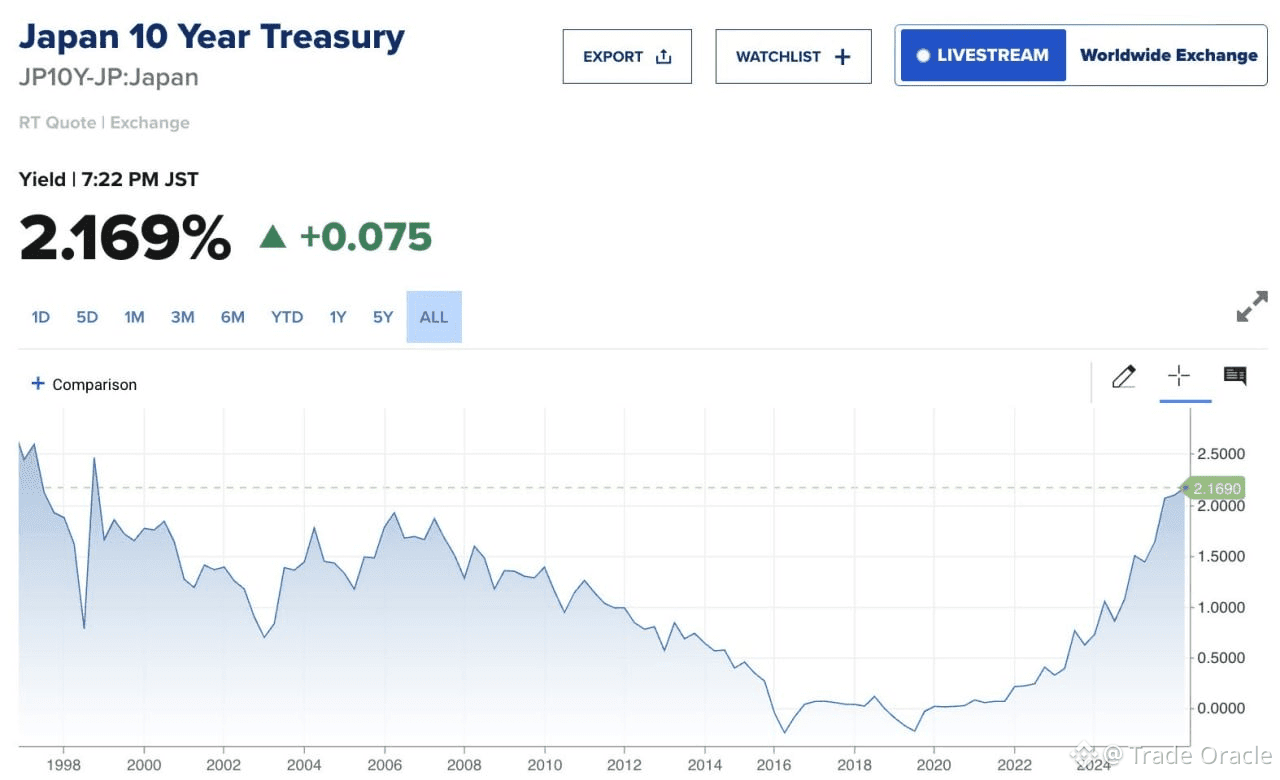
📊 Japan’s 10-year government bond yield has surged to 2.17%, marking its highest level since 1999, according to Barchart. This isn’t just a number — it’s a signal 🚨.
For decades, Japan has been synonymous with ultra-low yields, deflationary pressure, and easy money 💴⬇️. Now, that narrative is changing — fast ⚡. Rising yields suggest that the era of near-zero interest rates may finally be fading into the past 🕰️➡️📈.
💡 Why does this matter?
🔹 Higher yields increase government borrowing costs
🔹 They pressure equity valuations 📉
🔹 They can strengthen the yen 💱
🔹 And they ripple across global bond markets 🌊
Investors are reassessing risk as the Bank of Japan slowly loosens its grip on yield curve control 🏦🔓. Inflation expectations, wage growth, and policy normalization are no longer theoretical — they’re happening in real time ⏱️🔥.
🌐 Global Impact Alert:
Japan is one of the world’s largest holders of foreign assets. Rising domestic yields could encourage Japanese investors to repatriate capital, potentially shaking U.S. Treasuries, European bonds, and emerging markets 📉🌎.
📌 This move may mark a turning point for global liquidity. What Japan does next could redefine carry trades, FX flows, and risk appetite worldwide 💼💱📊.
🔮 Bottom line:
A 2.17% yield might sound modest — but for Japan, it’s monumental 🏔️. This is a reminder that even the most stable financial regimes eventually shift.
Stay alert. Markets are entering a new chapter 📖⚠️
#StrategyBTCPurchase #CPIWatch #USDemocraticPartyBlueVault #USNonFarmPayrollReport #USJobsData