

In many decentralized systems, every project ends up running its own small world. Each team chooses providers, sets up backups, defines recovery plans, and negotiates its own trust relationships. This creates a lot of repeated work and a lot of hidden risk. Walrus approaches this from a different direction by turning storage into a shared responsibility enforced by common rules. Instead of many small agreements, there is one larger system that everyone participates in.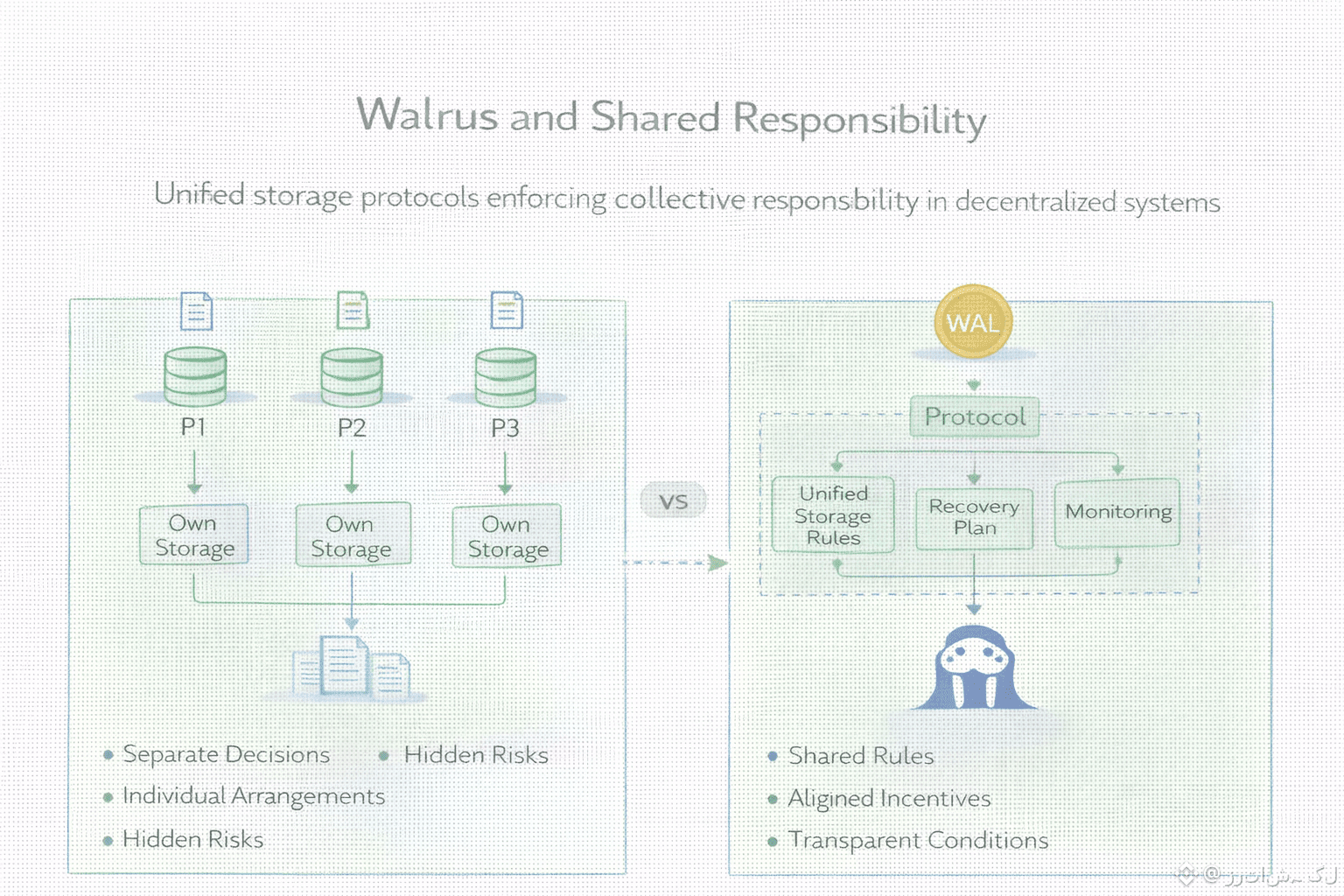
This has social consequences as much as technical ones. When responsibility is shared through a protocol, it stops being a matter of personal trust and becomes a matter of system design. The WAL token exists inside this structure as part of how the system aligns behavior, not as a decoration. It helps define who maintains the system and under what conditions. This kind of setup reduces the number of private arrangements that need to be made and replaced. Over time, that makes the ecosystem simpler and more predictable.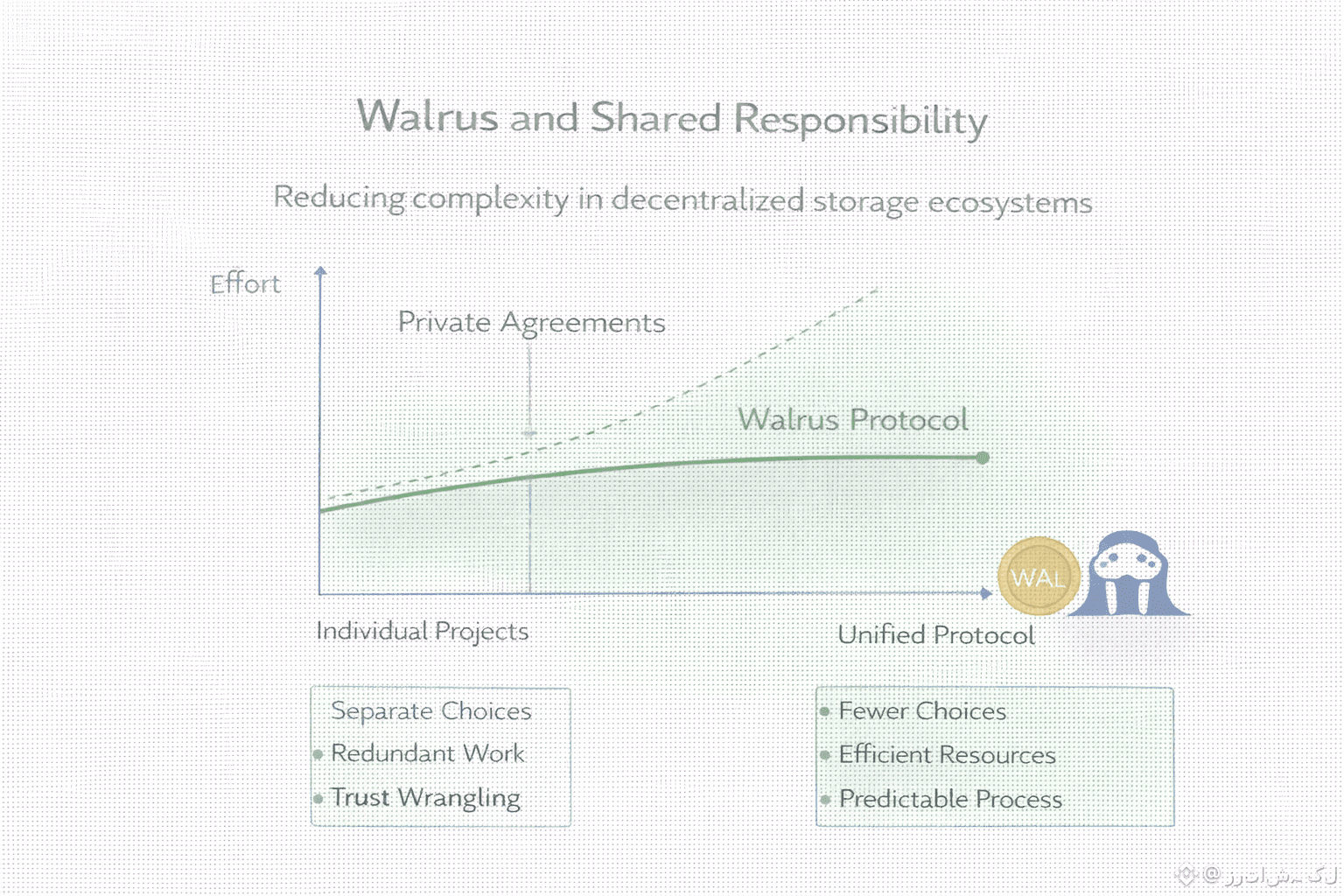
Systems like this tend to scale not because they are faster, but because they reduce the number of decisions each new participant has to make. A developer does not need to invent a storage strategy from scratch. They adopt one that already exists. This is how cities, markets, and technical standards usually grow. Walrus follows that same pattern. Its real contribution may not be how it stores data, but how it turns many separate responsibilities into one shared piece of infrastructure.

