

Most people think blockchains fail in finance because they are slow or expensive, but in practice they fail because they do not fit into how real organizations actually work, since real financial operations are built around roles, approvals, reporting duties, timing windows, and responsibility boundaries, and when you look at most crypto systems they assume that once something is written to a ledger the story is over, even though in real institutions the story usually begins after the ledger changes, because someone still has to explain what happened, confirm that it was allowed, check that it matched internal rules, and make sure it will still make sense when someone asks about it weeks later, and this is exactly the part of the world that Dusk seems designed around, not the excitement of moving assets fast but the much quieter problem of making sure movements can live inside organizations without constantly creating exceptions, manual reviews, and emergency calls between teams that do not fully trust what the system just did.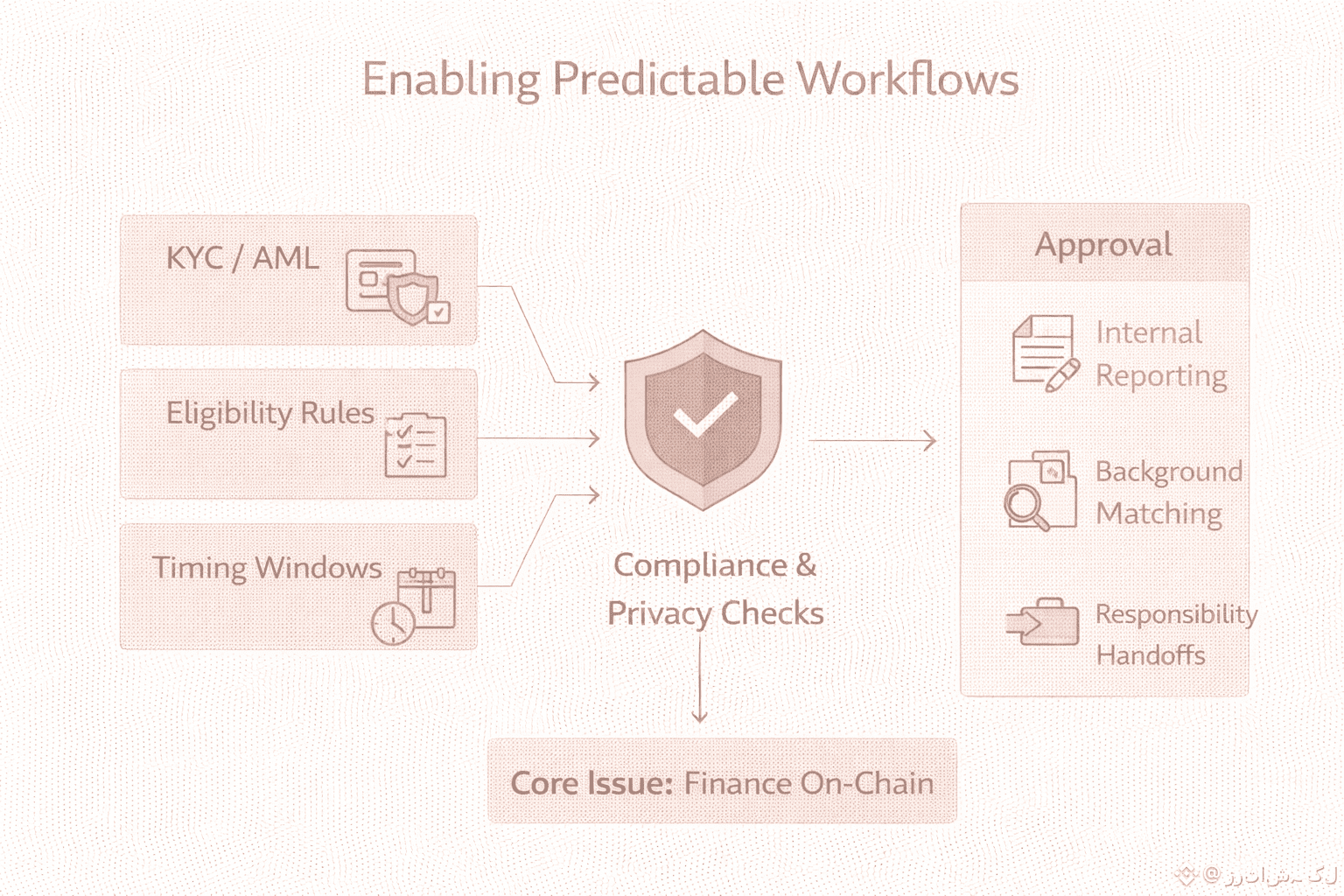
If you imagine how a real financial workflow looks, you do not see a single button that says “send” and then everyone goes home, you see a chain of steps where identity, eligibility, limits, disclosures, and timing all matter, and where the cost of a mistake is not that the transaction fails but that it succeeds in a way that creates trouble later, and Dusk’s approach of putting privacy, compliance, and settlement rules directly into the system changes where that trouble can appear, because instead of discovering after the fact that something should not have happened, the system forces those questions to be answered before the state can move forward, which does not make life more exciting but does make it more predictable, and in environments where many people depend on the same infrastructure, predictability is often more valuable than speed, because it reduces the number of situations where humans have to step in and negotiate reality back into something that can be defended to management, auditors, or regulators.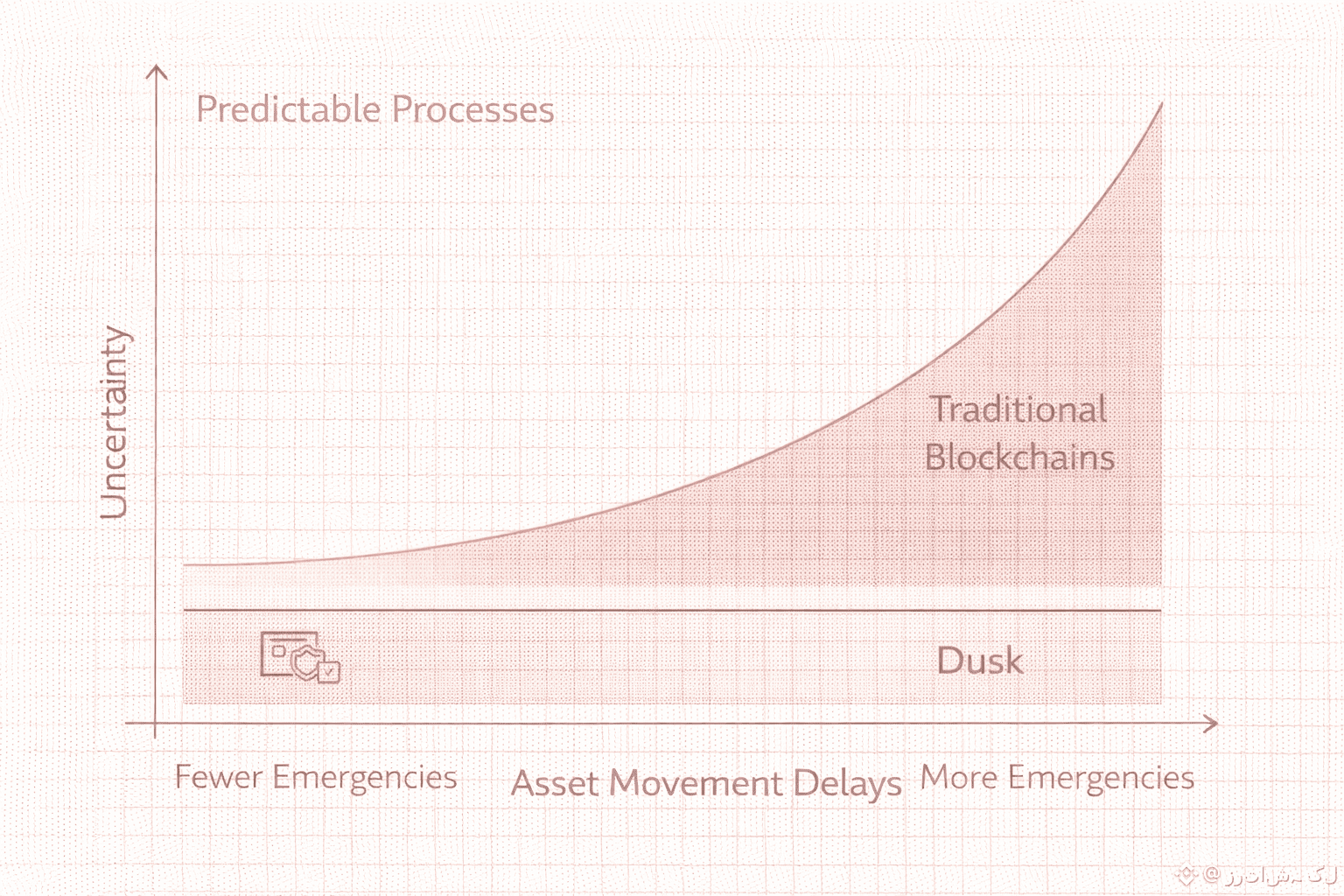
What makes this interesting is that Dusk does not try to replace human judgment, since there will always be edge cases, changing rules, and new interpretations, but it does try to remove the easy mistakes and the lazy ambiguity, the kind that comes from systems that are not built to carry responsibility, and over time that kind of design tends to change behavior, because people stop assuming that problems can be fixed later and start preparing things properly before they act, which is not a dramatic transformation but a quiet one, and if Dusk succeeds it probably will not look like a revolution from the outside, it will look like fewer broken processes, fewer late surprises, and fewer situations where someone has to explain why something that is technically final is still not acceptable inside the organization that is supposed to rely on it.
