
Hello everyone, pull up a seat I've been spending time lately really diving into @Walrus 🦭/acc , and I want to share what I've learned like we're all sitting together talking through it. As someone who's followed how creators struggle with ownership and control over their work in digital spaces, Walrus feels like a meaningful step forward. It's not hype; it's practical infrastructure that lets artists, writers, musicians, and builders truly own their intellectual property (IP) in a decentralized way.
I've seen too many creators lose control when platforms change rules or shut down. Centralized storage means your files images, music, videos, 3D models sit on someone else's servers. Walrus changes that by giving you decentralized blob storage on the Sui blockchain. It's built for large unstructured data, called "blobs," like high res artwork or audio tracks.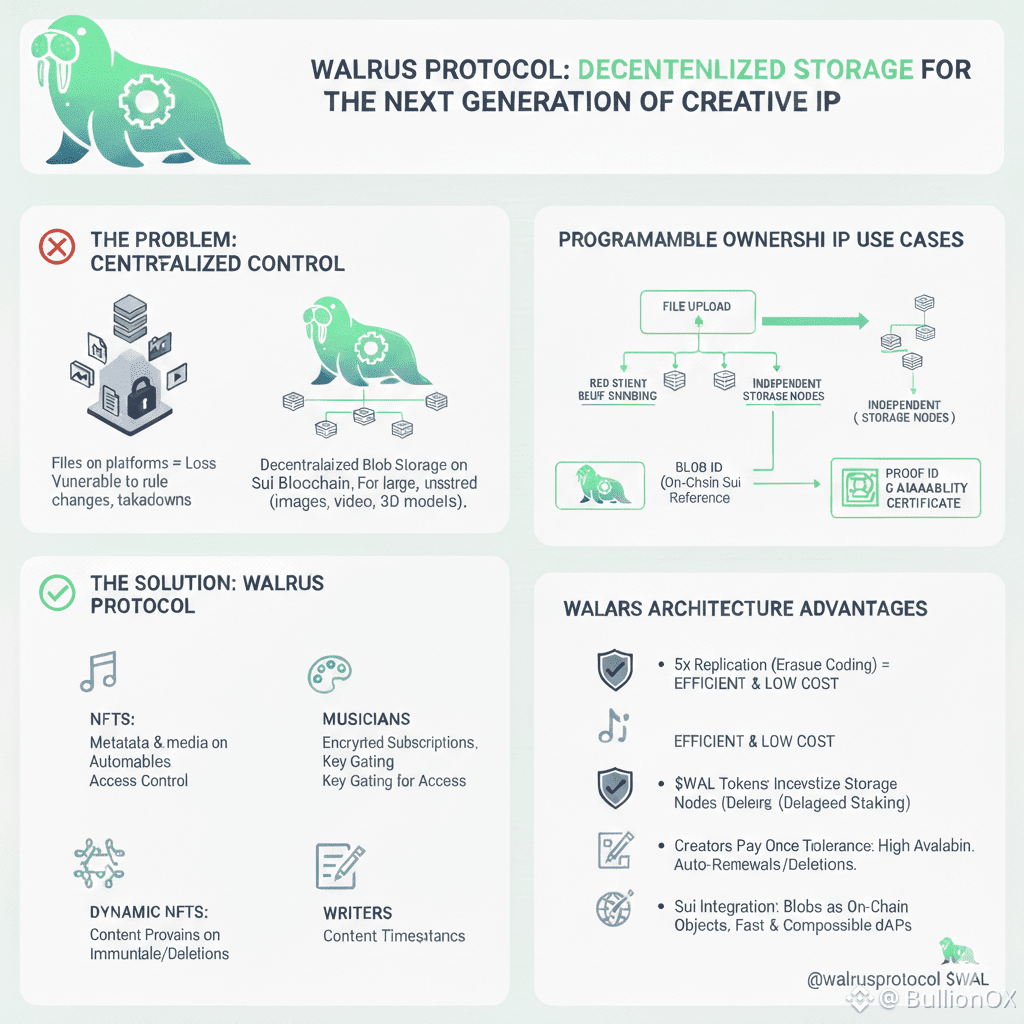
What stands out to me is how Walrus makes ownership programmable. When you store a file, it gets encoded with Red Stuff a fountain code based erasure coding algorithm. This splits the data into efficient shards distributed across independent storage nodes. You get a blob ID that's an on chain reference on Sui, turning your content into a verifiable, programmable object.
This ties directly into creative IP. Imagine minting an NFT where the metadata and media live on Walrus. The file isn't just linked off chain; it's stored with Proof of Availability certificates from Sui smart contracts. Ownership can be enforced through code: royalties automate on resales, access can be gated via decryption keys for subscriptions, or dynamic updates happen based on conditions in Move contracts.
I've thought about this for artists especially. A digital painter uploads their high res piece to Walrus. The blob becomes a Sui object. Smart contracts handle licensing grant temporary access to buyers, track usage, or enable collaborative edits with clear attribution. No central platform can delist or censor it; the network's Byzantine fault tolerance (resilient even if many nodes fail) keeps it available long term.
Walrus uses about 5x replication through erasure coding far more efficient than full copies everywhere. Storage costs stay low, paid in $WAL tokens, which incentivize nodes via delegated staking. Creators pay once for duration, and the system handles renewals or deletions programmatically.
Projects like TradePort show this in action. They use Walrus for NFT metadata and user content, avoiding congestion issues from older solutions. Dynamic NFTs become possible metadata evolves on chain, media stays decentralized. For writers or musicians, subscription models work: encrypt content on Walrus, release keys only to paying holders.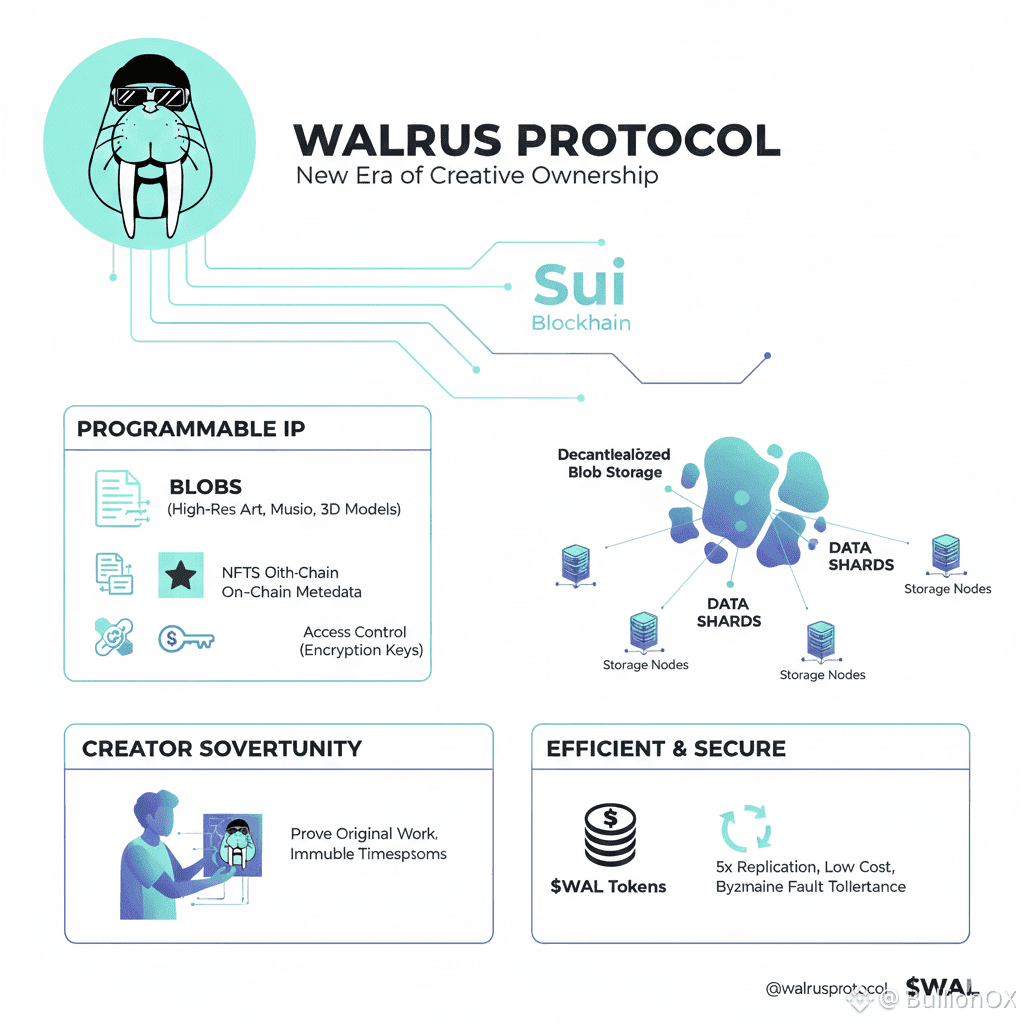
This isn't about replacing everything overnight. It's about giving creators tools for true sovereignty over IP. Data becomes an asset you control, not rent from a company. In a world of AI training on scraped content, decentralized storage like Walrus offers provenance prove your original work is yours, stored immutably with timestamps and ownership trails.
I've been impressed by how Walrus integrates with Sui's speed and composability. Blobs register as objects, so dApps can reference them directly no external gateways needed long term.