
When I talk to people about decentralized storage, I usually notice one misunderstanding right away. Most assume storage networks are only valuable when data is accessed frequently. But when I spent time studying @Walrus 🦭/acc , I realized Walrus is designed for something deeper: long-term data persistence, even when files are rarely retrieved.
Walrus is a decentralized storage and data availability protocol built for the Sui ecosystem. Its architecture separates storage durability from constant access. In simple terms, Walrus doesn’t assume that all data needs to be “hot.” A large portion of on-chain related data historical records, NFT media, application snapshots, governance archives is written once and then preserved for years. Walrus is optimized for exactly this kind of use case.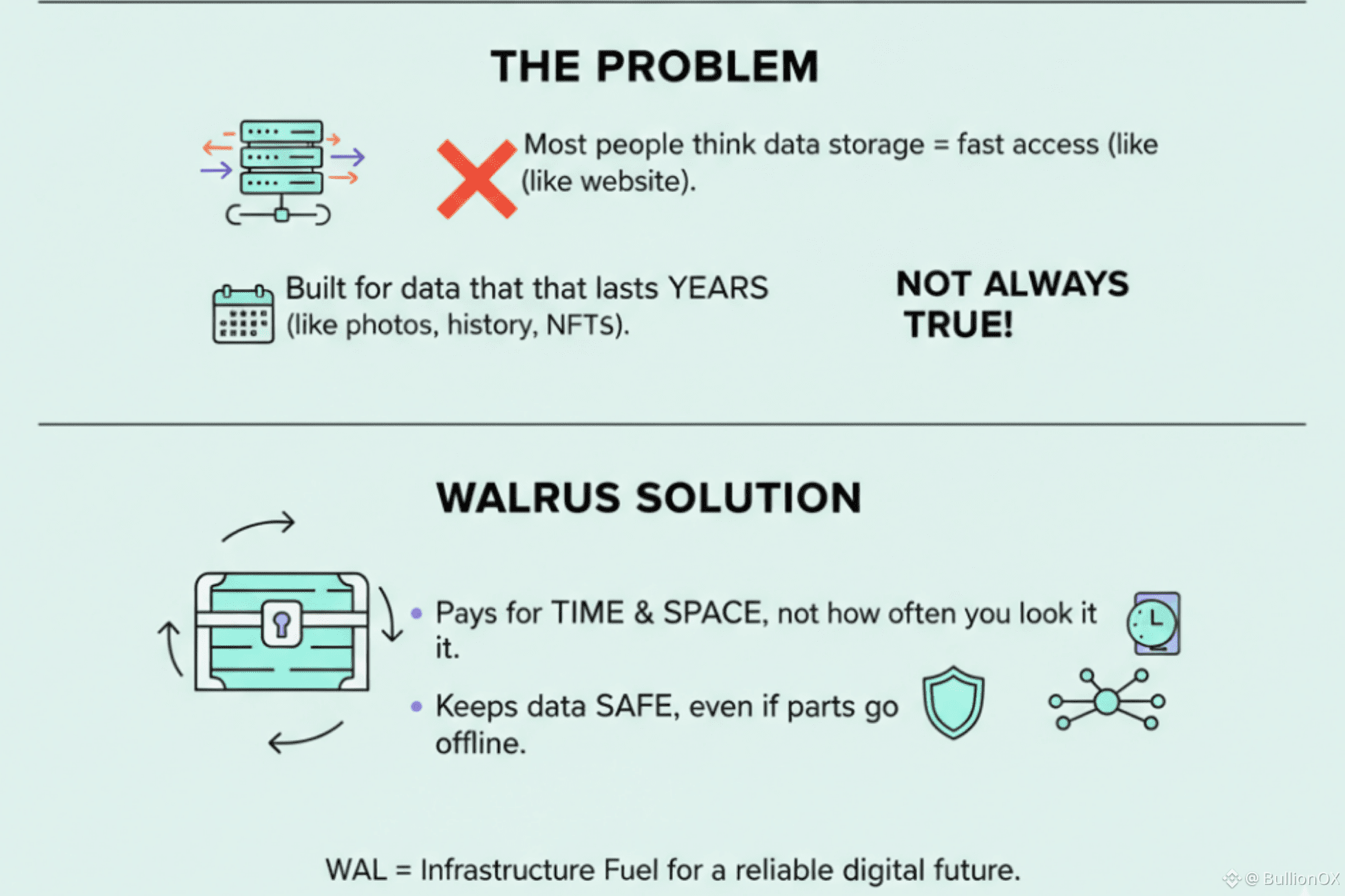
From my own observation, this is where the discussion around WAL utility becomes more interesting. Storage on Walrus is paid for through usage fees, and those fees reflect how much data is stored and for how long, not how often it is retrieved. As archival storage grows relative to active reads, the network’s role shifts from bandwidth provider to long-term data guardian. That’s a different economic model than most people expect.
What I like about this approach is its realism. Most decentralized applications don’t generate constant read traffic, but they do need guarantees that data won’t disappear. Walrus uses redundancy and erasure coding to ensure data can be recovered even if some storage nodes go offline. This makes archival storage reliable without requiring constant network activity.
When explaining this to others, I often say that Walrus measures success quietly. The more data that stays safely stored over time, the more the network proves its value. WAL fees are tied to real demand for storage space, and parts of those fees are designed to support long term network sustainability rather than short term speculation. That’s why $WAL behaves more like infrastructure fuel than a trading gimmick.
As archival storage begins to outweigh frequent retrieval, Walrus starts to look less like a CDN and more like decentralized digital memory. That distinction matters. It means the protocol isn’t chasing attention; it’s building trust through consistency.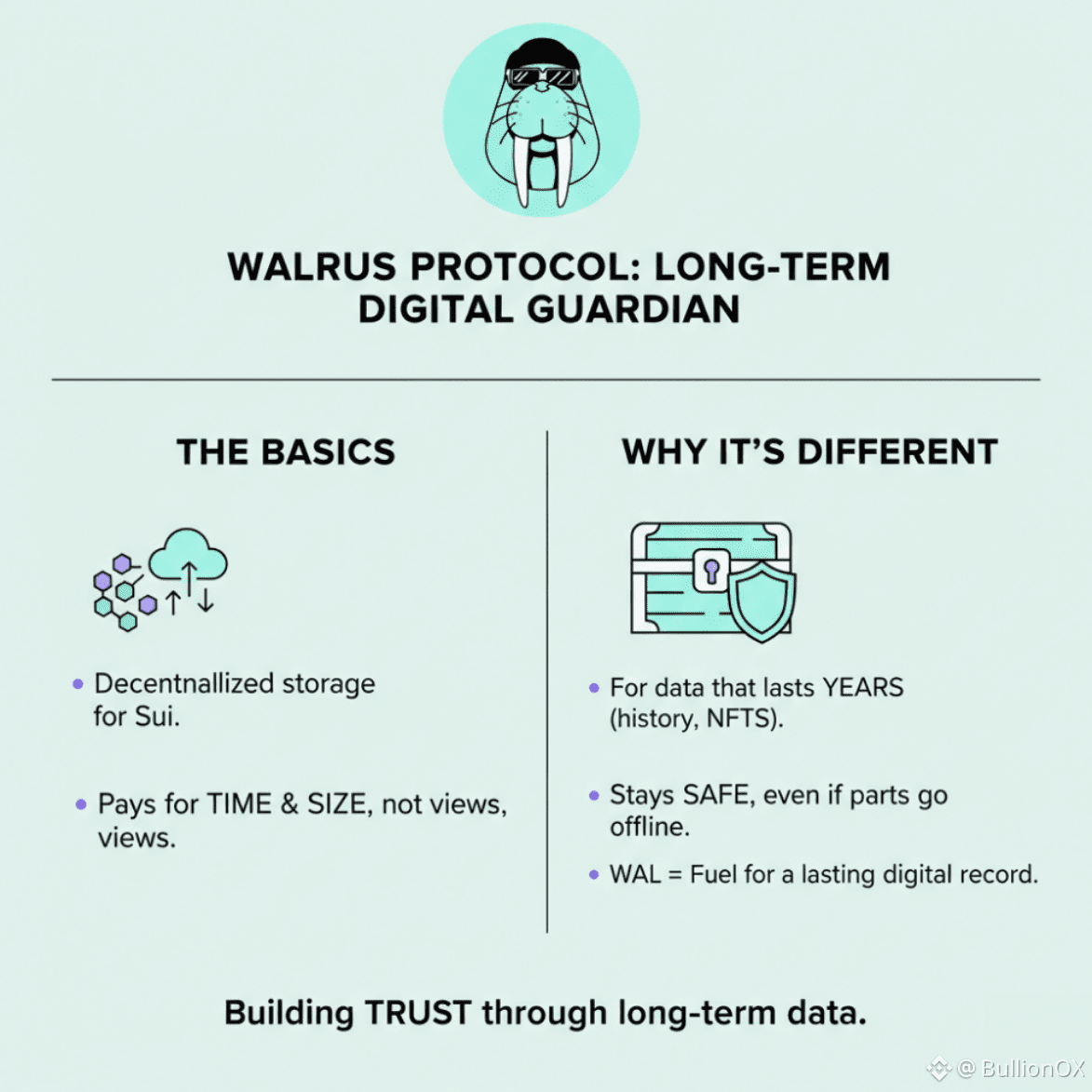
From my perspective, this is why #Walrus fits naturally into serious Web3 infrastructure conversations. It’s not trying to reinvent storage hype. It’s focusing on the unglamorous but essential task of keeping data safe, verifiable, and available long after the initial transaction is done.