
@Dusk Network addresses a core limitation in today's Web3 landscape: the absence of native, practical support for confidential smart contract execution. Public blockchains excel at transparency and immutability, but they expose every detail of transactions and contract states. This makes them impractical for regulated financial use cases where data sensitivity is critical. Dusk was engineered from the beginning to close that exact gap.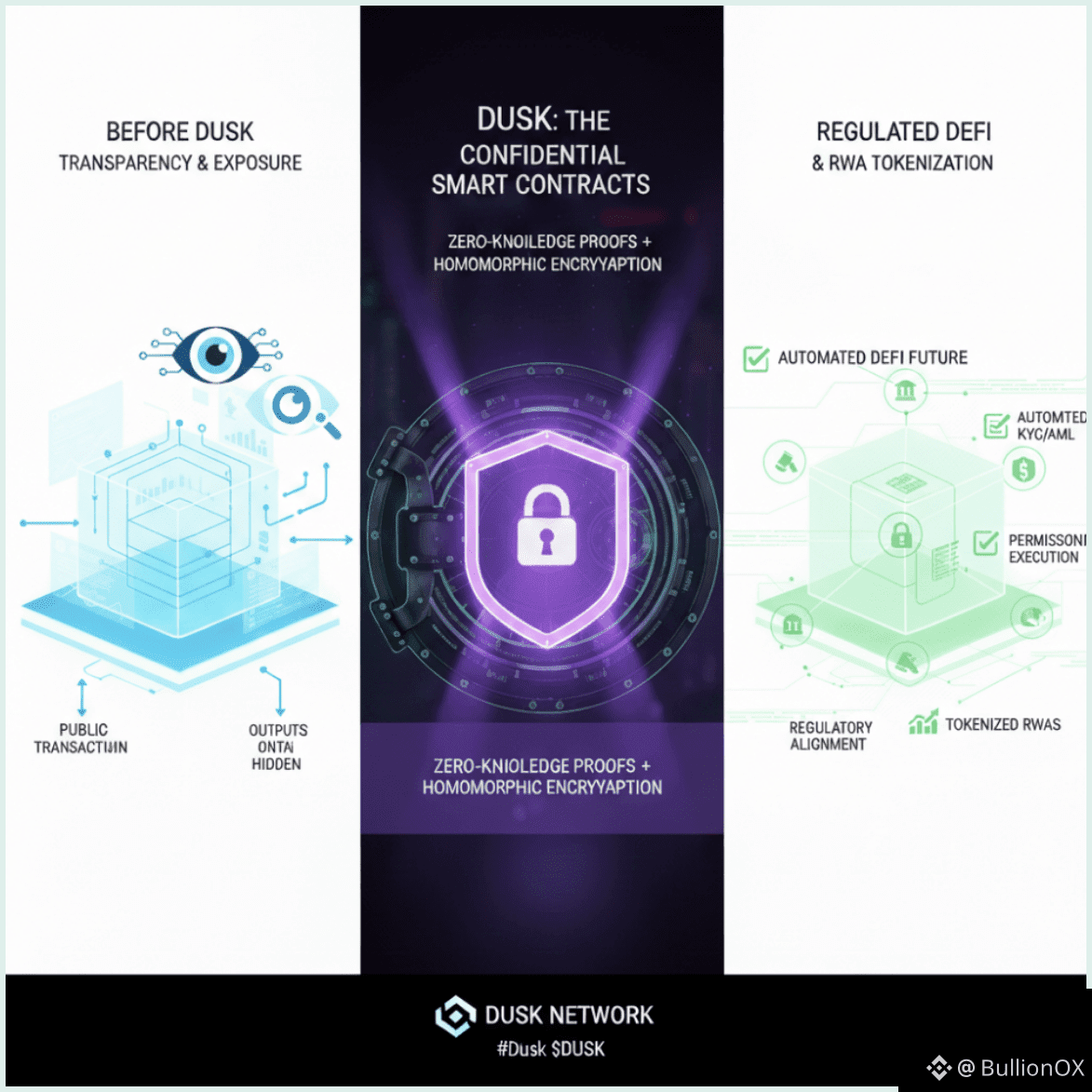
The platform's strength lies in its privacy architecture. It combines zero-knowledge proofs with homomorphic encryption to enable confidential smart contracts. These contracts process complex financial logic while concealing inputs, outputs, and intermediate values. Hedger, in its Alpha phase, brings this capability to EVM environments, allowing developers to maintain familiar workflows without sacrificing privacy.
Confidential execution opens realistic pathways for institutional DeFi and real-world asset tokenization. Dusk embeds compliance tools directly into the protocol: automated KYC/AML checks, permissioned execution, and built-in reporting. This design supports alignment with regulatory standards such as MiCA in the EU. Tokenized equities, bonds, or private credit can be issued, managed, and settled on-chain with institutional safeguards intact.
Network progress has been consistent and focused. Mainnet launched in early 2025 using Proof-of-Blind-Bid consensus, which secures staking through anonymous, ZKP-verified bids to prevent targeted attacks while preserving decentralization. DuskEVM reached mainnet in January 2026, delivering full Solidity compatibility. Developers can deploy standard contracts that benefit from Dusk's confidential execution and Layer-1 settlement.
Adoption is demonstrated through meaningful partnerships. The collaboration with NPEX, a licensed Dutch exchange with MTF, Broker, and ECSP status, has tokenized more than €300 million in assets on Dusk under regulated conditions. Chainlink integrations via CCIP and DataLink provide secure cross-chain transfers and verified data feeds, enabling compliant composability for tokenized RWAs.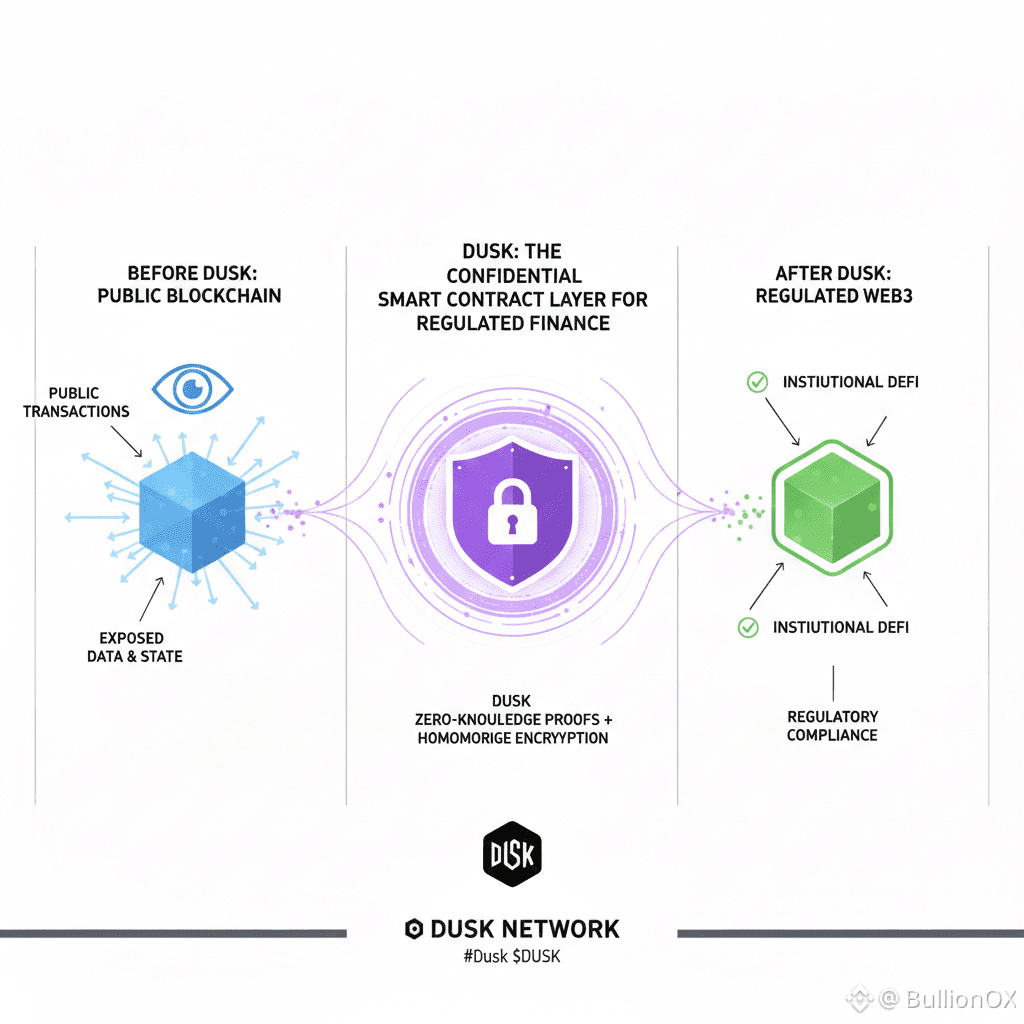
Dusk provides the missing piece in Web3: confidential smart contracts that are programmable, auditable, and designed for real regulatory environments. This focused development supports sustainable institutional involvement without compromising on privacy or decentralization principles.
How do you see confidential smart contracts shaping the next phase of regulated DeFi?
Have you reviewed Hedger or the DuskEVM capabilities in detail?
