
Blockchain promised to change finance, but for years the gap between crypto innovation and real financial systems remained wide. Most blockchains focused on speed, openness, and speculation, while institutions needed privacy, regulation, and trust. Dusk Foundation was created to address this exact gap. Instead of trying to disrupt finance overnight, Dusk is quietly building infrastructure that financial markets can realistically adopt.
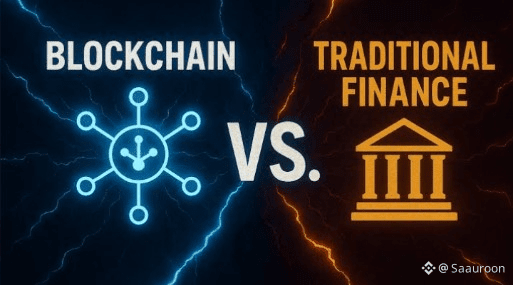
Why Traditional Finance Could Not Use Most Blockchains
Banks, exchanges, and asset managers operate under strict rules. Transactions must be auditable, but sensitive data cannot be public. Most blockchains expose everything by default, making them unsuitable for regulated environments. This is why many institutions stayed away from crypto infrastructure. Dusk recognized this limitation early and designed a blockchain where confidentiality and verification can exist together.
Privacy Designed for Real Use, Not Secrecy
Privacy in Dusk is not about hiding activity from regulators. It is about protecting sensitive information while keeping the system trustworthy. Using advanced cryptographic methods, transactions can remain confidential without losing proof or accountability. This approach allows financial institutions to use blockchain technology without exposing trade strategies, client identities, or internal operations.
Compliance as an Advantage, Not a Restriction
Many crypto projects avoid regulation, fearing it will slow growth. Dusk Foundation takes the opposite view. Regulation creates clarity, reduces risk, and enables scale. By aligning its infrastructure with regulatory requirements, Dusk removes legal uncertainty for institutions. This opens the door to real partnerships, real assets, and real adoption instead of experimental use cases.
Enabling Real-World Assets on the Blockchain
Tokenizing real-world assets is one of blockchain’s most powerful opportunities. However, it requires more than smart contracts. Ownership, settlement, privacy, and legal recognition must all work together. Dusk provides the infrastructure needed to issue, trade, and settle regulated assets on-chain while respecting financial laws. This turns tokenization into a practical financial tool instead of a theoretical idea.
Infrastructure Built for Institutions
Institutions do not move fast, but when they move, they move with size. Dusk is designed for stability, predictable costs, and secure settlement. Its architecture allows institutions to integrate blockchain technology without rebuilding their entire systems. This lowers the barrier to entry and increases long-term confidence in adoption.
Improving User Experience Without Complexity
Mass adoption requires simplicity. Dusk allows applications to manage transaction costs internally, removing friction for users. End users interact with services, not blockchain mechanics. This makes blockchain applications feel familiar, reducing psychological and technical barriers for non-crypto users.
Long-Term Thinking Over Short-Term Noise
Crypto markets often reward hype, but infrastructure is built quietly. Dusk Foundation focuses on long-term development rather than short-term attention. This patient strategy allows technology to mature properly and gain trust over time. History shows that financial infrastructure becomes valuable slowly, then permanently.
Why Dusk Matters for the Future of Finance
The future of blockchain depends on its ability to support real economic activity. Privacy, compliance, and usability are no longer optional. Dusk Foundation brings these elements together in one system. It does not replace traditional finance; it upgrades it with better tools.
Conclusion
Dusk Foundation represents a mature evolution in blockchain design. By focusing on real financial needs instead of speculation, it positions itself as infrastructure for the next generation of finance. In a space full of noise, Dusk builds with purpose — and purpose is what lasts.
