

Does Walrus Actually Need Governance?
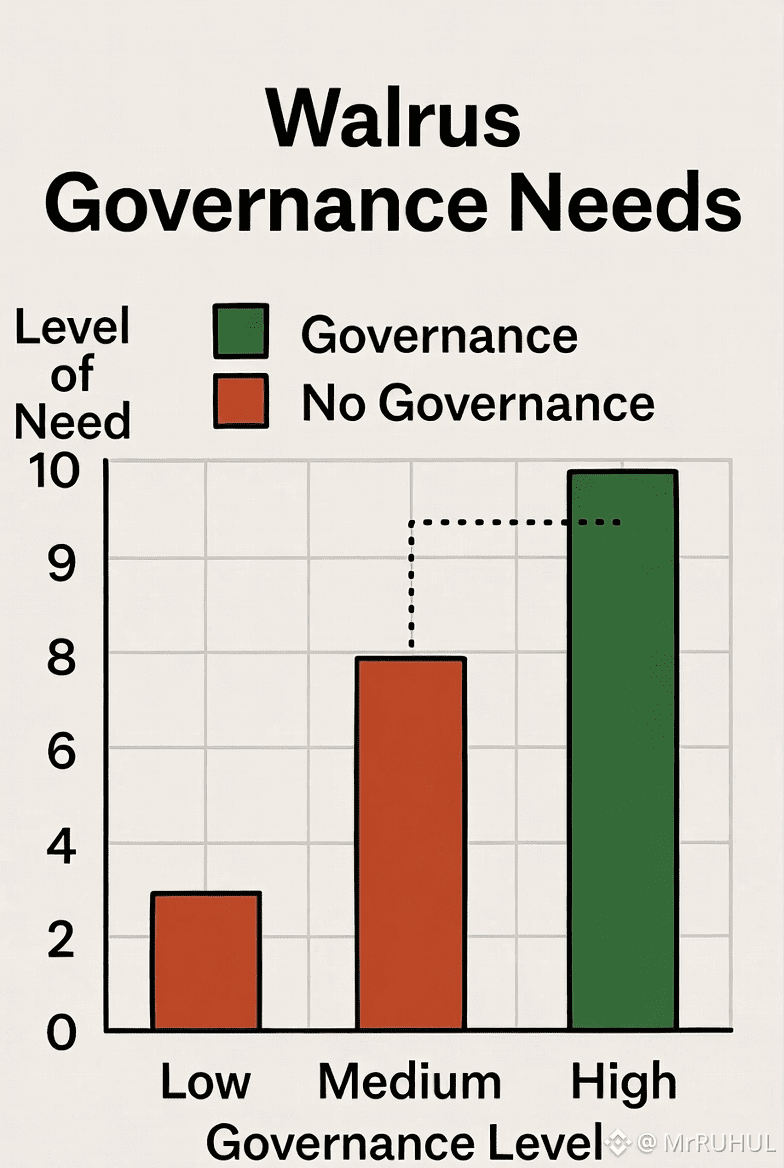
In crypto, governance almost feels like a default setting. If there’s a new protocol, people expect a DAO, token votes, endless proposals, and all the drama that comes with on-chain politics. But is governance actually a good thing? Sometimes, it just gets in the way—slows things down, hands control to a few whales, or turns what should be a technical project into a messy popularity contest. So, does Walrus even need governance?
Here’s the thing: Walrus is infrastructure, plain and simple. It’s built to store data reliably, move it around efficiently, and keep it available even when things get rough. These are engineering challenges, not political ones. When everything depends on technical correctness, speed, and solid incentives, adding layers of governance usually adds more risk than safety.
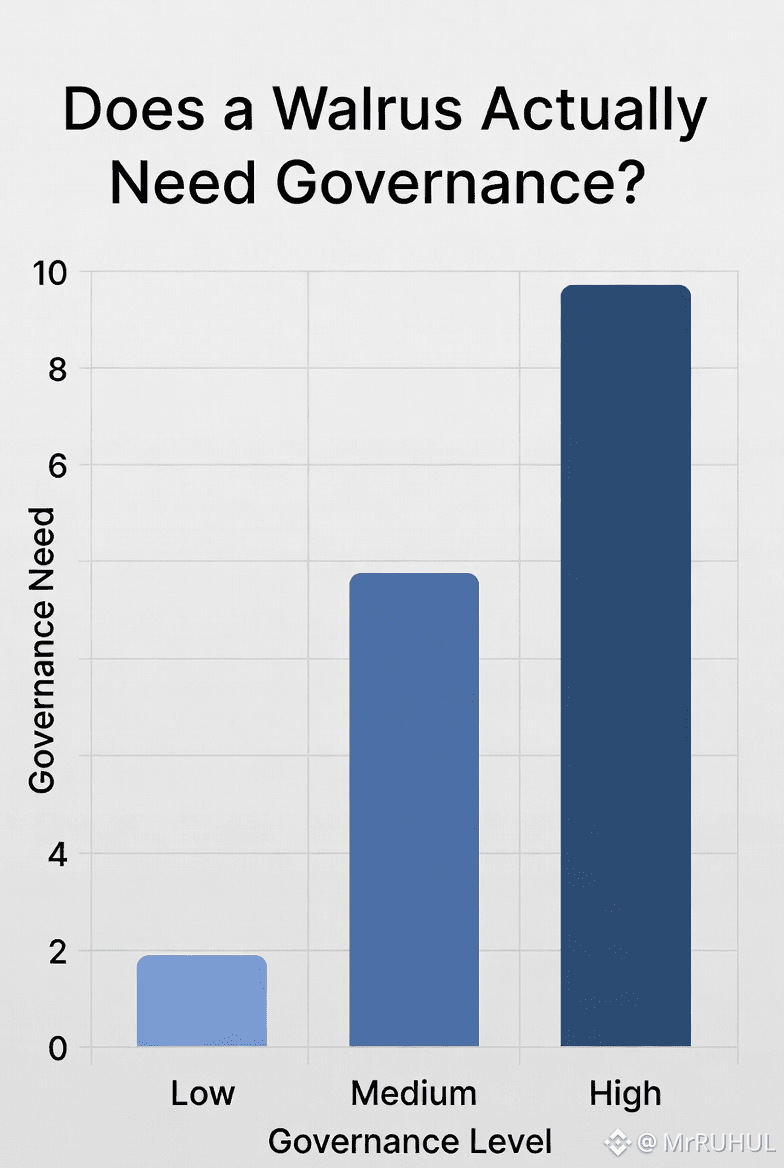
Honestly, the strongest case against governance is that Walrus already puts decision-making where it matters: inside the code and the incentives. Storage fees, redundancy, penalties, rewards—they’re all handled by algorithms. If node operators have real economic reasons to play fair, and cryptography keeps them honest, then day-to-day human governance just isn’t needed. In that way, Walrus is more like TCP/IP than a country. No one votes on how internet packets move around; the protocol just does its job.
Governance can also open up new ways for things to go wrong. Token voting tends to concentrate power with early investors or exchanges—people who might not care about the network’s long-term health. Governance tokens usually slide from being useful to just being speculative, and before long, every proposal turns into a battle over token prices, not protocol improvements. That’s a disaster for infrastructure like Walrus. Storage users want stability, not wild mood swings caused by governance cycles.
Upgrades are another sticking point. People argue that governance helps protocols evolve, but often it just makes the whole thing less trustworthy. Businesses and developers don’t want to build on systems that can change overnight because someone won a vote. If Walrus wants to be the backbone for storage, it should value stability over flexibility. Clear upgrade paths, long deprecation periods, and versioning beat political uncertainty any day.
Now, skipping governance entirely doesn’t mean ditching coordination. The real question isn’t whether Walrus needs governance, but what kind—and where. Sometimes, you just can’t avoid it. Maybe you need to tweak parameters early on, react fast to emergencies, or deal with a treasury. That’s fine. The danger comes from letting governance creep into places where code does a better job.
Honestly, the best move might be to keep governance as minimal as possible. Instead of running constant votes, Walrus could treat governance like a fire alarm: only pull it in case of emergency. Don’t let it drive the system, just let it step in when things go off the rails. This way, you avoid endless debates and cut down on the power struggles that always seem to follow.
Another smart option is off-chain governance with on-chain enforcement. Let developers, node operators, and big users hash things out together; only let the chain enforce what’s technically clear and provable. This is kind of how the internet’s core infrastructure evolves now—through open debate, shared norms, and technical merit, not by counting tokens.
One last thing: don’t mix up governance and decentralization. A protocol can run in a decentralized way while still keeping decision-making tight or even centralized. Walrus can stay open to anyone who wants to run a node or use the service, but that doesn’t mean everyone gets a say in rewriting the rules. Crypto often forgets this, acting like decentralization means forever putting everything to a vote.
So, does Walrus need governance? Not like DeFi or social protocols do. Walrus wins on reliability, neutrality, and predictability—and too much governance chips away at all three. What Walrus really needs is solid cryptography, sharp incentives, and a clear mindset: make the protocol boring to govern and exciting to use.
If governance sticks around, keep it small, keep it strict, and make it hard to trigger. Walrus succeeds not by giving people more things to vote on, but by making votes almost unnecessary in the first place.@Walrus 🦭/acc #Walrus $WAL

