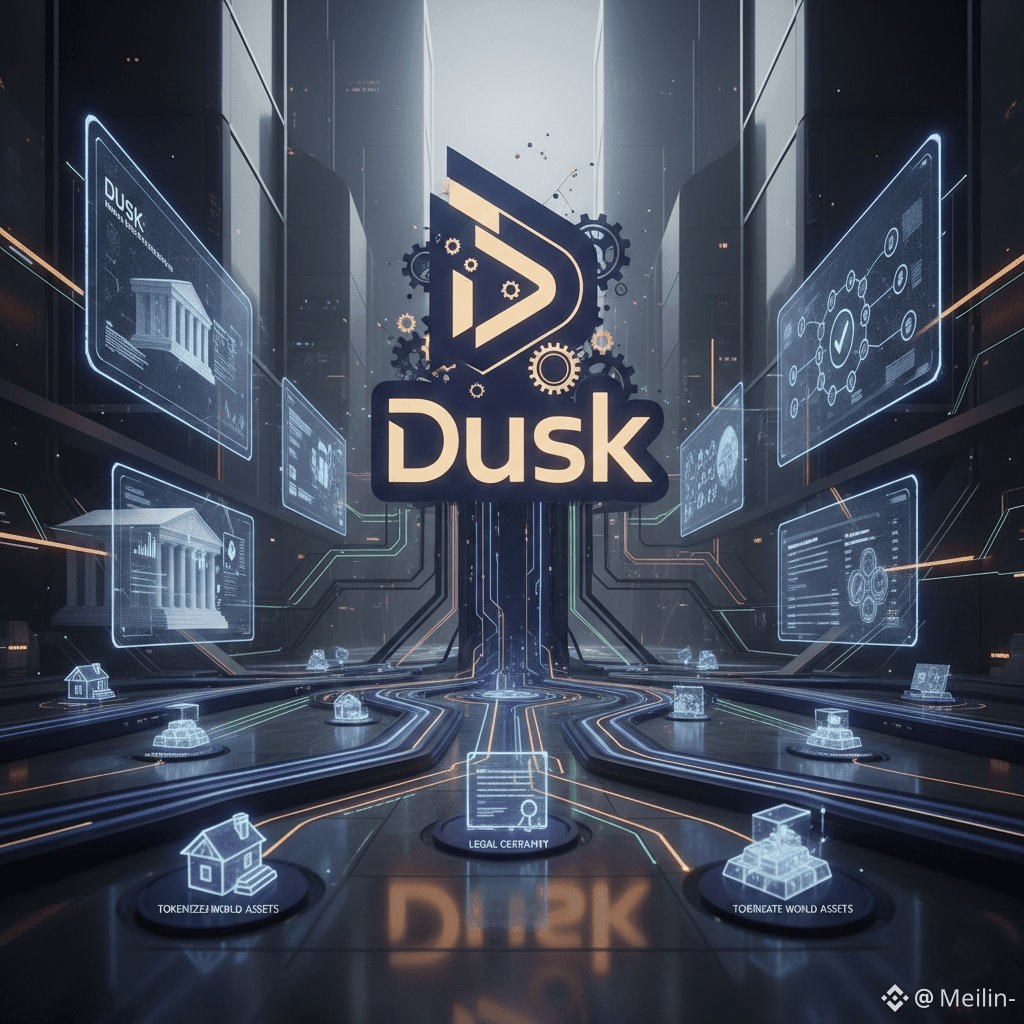
In an era where digital finance is often defined by noise, speculation, and relentless exposure, Dusk stands apart like a quiet force moving beneath the surface, shaping something far more enduring than hype. Founded in 2018, when most blockchain projects were racing to promise instant riches or radical disruption, Dusk was conceived with a deeper and more demanding vision: to create a financial infrastructure that could actually serve the real world. Not a playground for unregulated experiments, but a foundation where banks, institutions, and individuals could interact with confidence, privacy, and legal certainty.
The genius of Dusk lies in its refusal to accept the old trade-offs that have haunted blockchain since the beginning. In traditional public blockchains, transparency often becomes a liability. Every transaction, every balance, every movement of capital is laid bare for anyone to observe. While this may suit speculative trading, it is unacceptable for institutions, corporations, and investors who rely on confidentiality to operate competitively and responsibly. On the other hand, closed financial systems hide too much, making trust dependent on centralized authorities. Dusk was designed to bridge this divide by offering privacy that does not undermine accountability.
At its core, Dusk is a layer one blockchain built specifically for regulated and privacy-focused financial infrastructure. This is not a marketing slogan but a structural reality. Its modular architecture allows developers and institutions to build financial applications that comply with existing laws while benefiting from decentralized technology. This means that regulatory frameworks are not bolted on after the fact but woven directly into how the network functions. The result is a system where compliance and innovation no longer fight each other but move forward together.
One of the most powerful expressions of this vision is Dusk’s approach to tokenized real-world assets. For decades, financial markets have struggled with inefficiencies in how assets like shares, bonds, and real estate are issued, transferred, and settled. These processes are slow, expensive, and burdened by intermediaries. By bringing these assets onto Dusk as digital tokens, they become more fluid, more transparent to regulators, and far more efficient to manage. Yet, unlike many experimental tokenization platforms, Dusk ensures that these digital assets remain legally meaningful. Ownership, rights, and compliance are preserved, just delivered through a more advanced technological medium.
What makes this especially compelling is the way Dusk treats privacy not as secrecy but as respect. In modern finance, privacy is essential for protecting competitive strategies, investor positions, and personal financial security. Dusk uses cryptographic techniques that allow transactions to remain confidential while still being verifiable. Regulators and auditors can confirm that rules are being followed without requiring every detail to be publicly exposed. This creates a new standard of financial transparency, one that reveals what must be seen while shielding what deserves to remain private.
Compliant decentralized finance is another arena where Dusk’s philosophy shines. Most DeFi platforms operate in a regulatory gray zone, which limits their usefulness to serious financial players. Dusk changes this by enabling decentralized financial applications that can enforce identity checks, reporting standards, and legal obligations directly on-chain. This opens the door for institutional capital to enter decentralized markets without violating the laws that govern them. It is a crucial step toward making blockchain finance not just innovative, but sustainable and globally accepted.
What makes Dusk truly remarkable is that it achieves all of this without surrendering to centralization. The network remains decentralized, governed by cryptographic rules rather than corporate control. Yet within that decentralized framework, it provides the structure needed for trust, compliance, and long-term stability. This balance is incredibly difficult to achieve, and it is precisely what gives Dusk its quiet power.
While many blockchains chase attention, Dusk builds relevance. It is designed not for short-term excitement but for decades of financial evolution. As governments, institutions, and markets gradually move toward digital assets and blockchain-based systems, the need for infrastructure that respects both innovation and regulation will become unavoidable. Dusk is already prepared for that future. It does not shout. It does not rush. It simply grows, layer by layer, creating a world where privacy and compliance no longer cancel each other out, but work together to redefine what modern finance can be.