

There is a widening gap in how blockchain systems are being built. Some are designed to push boundaries and explore what might be possible. Others are designed to survive contact with the real world. Dusk clearly sits in the second category. Its progress is not driven by speed, experimentation, or narrative dominance. It shows up in quieter ways. Architectural decisions that are hard to reverse. A consistent awareness of regulation. A sense that if blockchain infrastructure is going to support real financial activity, it has to grow up in certain areas. Dusk does not appear to be trying to impress the market. It seems more concerned with fitting into it.
The core problem Dusk is dealing with is not performance on its own. It is trust. Financial systems need privacy, but they also need to prove things when required. Ownership. Compliance. Legitimacy. Most public blockchains solve this by exposing everything. Others go in the opposite direction and hide too much, which creates different problems. Dusk does not frame this as a tradeoff. It treats privacy and compliance as things that have to exist together, even if that makes the design harder.
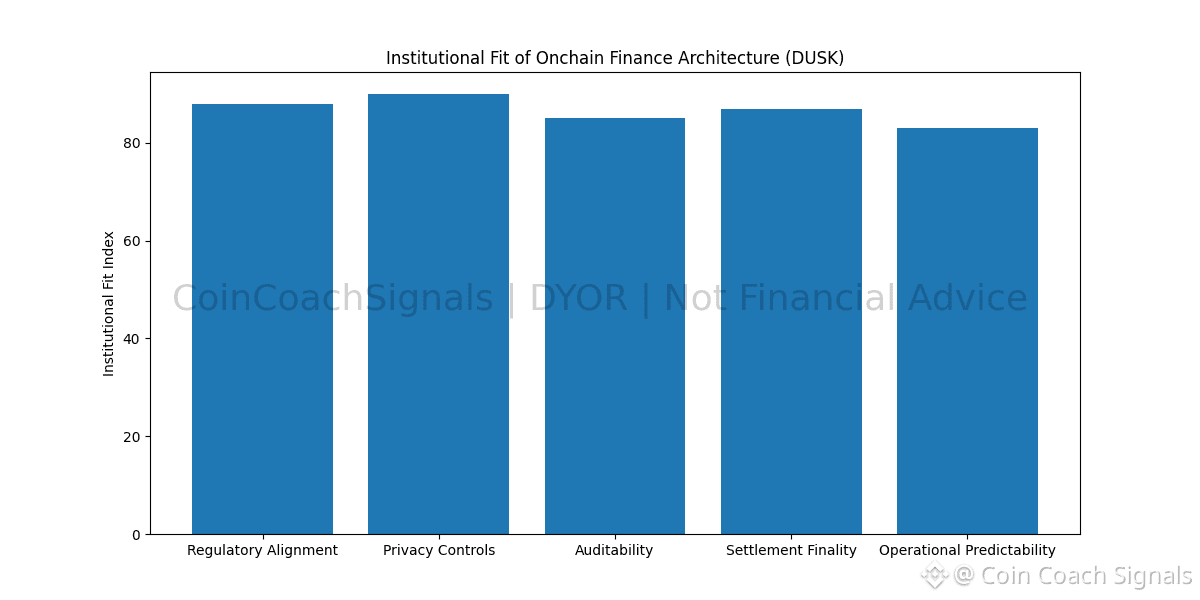
This thinking is built directly into the protocol. Transaction details are private by default, but that privacy is not absolute. There are mechanisms for controlled disclosure when authorized parties need to verify something. Financial activity does not have to be broadcast to everyone, yet it does not become unverifiable either. This may sound like a small distinction, but it is not. It reflects how real financial systems already work, and it highlights why many blockchain designs struggle when they move beyond experimentation.
The network’s modular structure reinforces this approach. Applications are not forced into a single execution model. Developers can decide how confidentiality, permissions, and verification should work based on the requirements of each use case. That flexibility matters in regulated environments, where rules change depending on the asset, the jurisdiction, and the participants involved. Tokenized securities, compliant lending systems, and institutional settlement layers all demand precision. Dusk treats that precision as a baseline, not as an edge case.
The ecosystem forming around Dusk reflects the same mindset. Builders are not chasing short-term attention or incentive-driven growth. They are working on issuance frameworks, compliance-aware DeFi structures, and financial primitives that assume long-term use. These teams tend to think about governance, legal clarity, and operational continuity. As a result, the network feels more methodical than experimental. More infrastructure-focused than consumer-oriented.
Regulation plays a similar role in shaping Dusk’s direction. Many blockchain projects treat regulation as something to avoid or delay. Dusk does not. It treats regulation as a permanent part of the environment and designs accordingly. This does not mean centralization. It means acknowledging reality. Decentralized systems that aim to interact with institutions and capital markets cannot ignore legal frameworks forever. Dusk’s approach assumes compliance and decentralization can coexist, but only if they are addressed at the protocol level.
This long-term thinking also affects how liquidity and usage are expected to develop. Dusk is not built to attract speculative capital through aggressive incentives. It appears to be preparing for capital that values predictability, privacy guarantees, and legal alignment. That kind of capital moves slowly. It also tends to stay once it arrives. It is connected to real economic activity rather than temporary yield opportunities. Over time, this leads to a network dynamic that prioritizes durability over volatility.
From a technical standpoint, Dusk’s use of zero-knowledge cryptography feels intentional rather than experimental. The goal is not to showcase complexity. The goal is to make privacy usable within real financial workflows. Privacy needs to integrate with smart contracts without breaking verification or auditability. That balance is difficult, and it helps explain why Dusk’s progress feels measured. Shortcuts would undermine the system being built.
As the broader blockchain market matures, this approach becomes easier to appreciate. Fully transparent ledgers are increasingly seen as unsuitable for many financial use cases. Enterprises and institutions exploring tokenization and onchain settlement need systems that respect confidentiality while still being trustworthy. Dusk aligns with this need because it was designed for it from the start. Privacy and compliance are not additions. They are part of the foundation.
Dusk feels like it’s operating on a different clock than most of the market. Its progress doesn’t seem pulled forward by hype cycles or pushed around by whatever story is trending that week. The roadmap follows practical needs instead of market moods. Each upgrade adds another layer to the same foundation rather than trying to reinvent the project’s identity. Over time, that steadiness adds up. Credibility doesn’t arrive all at once here. It forms gradually, through a consistent link between what is said and what actually shows up in the code.
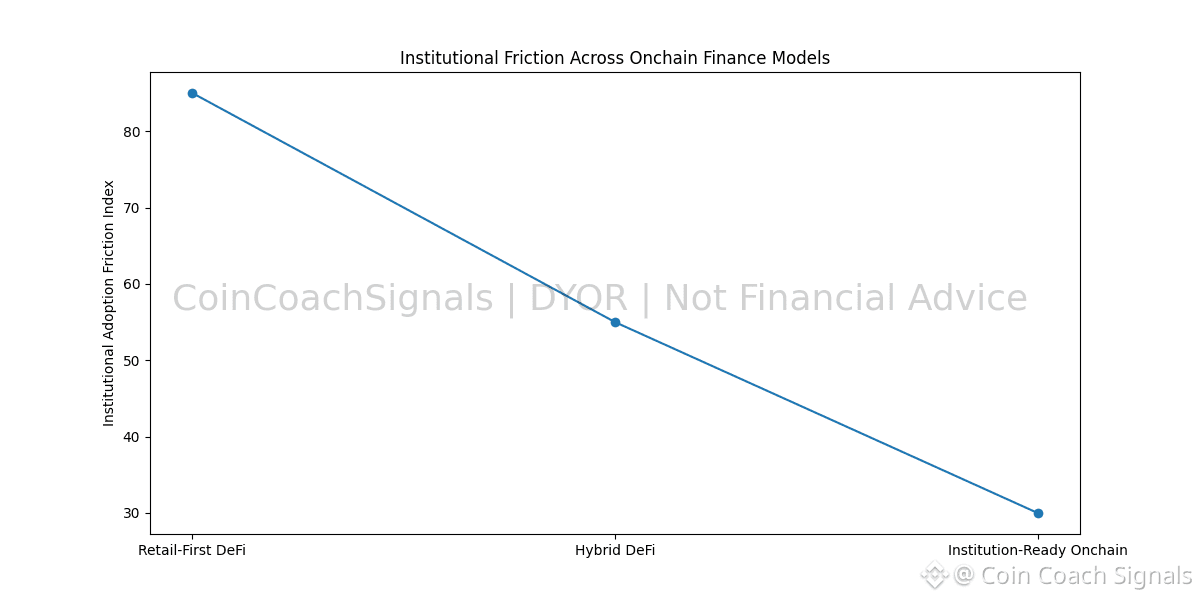
What really separates Dusk isn’t a headline feature or a flashy technical moment. It’s the way the project frames its purpose. The network treats blockchain as something meant to last, as financial infrastructure that has to work quietly and reliably over long horizons, not as a playground built for speculation or short-lived experiments. It asks how decentralized systems can support regulated markets responsibly, without giving up privacy or decentralization. That question does not have fast answers. Dusk’s evolution suggests an understanding of that.
As onchain finance continues to move beyond experimentation, systems like Dusk are likely to matter more. They are not chasing attention. They are building environments where serious financial activity can take place with confidence. In a space often dominated by noise, Dusk is quietly working on something meant to last.
For educational purposes only. Not financial advice. Do your own research.
@Dusk $DUSK #dusk #Dusk
