

I keep thinking about Dusk Network in a way that feels different from how I think about most blockchains. Not because it is louder or faster, but because it seems willing to accept limits that others spend their time trying to escape. That choice shows up everywhere once you start looking for it.
A lot of blockchain development is built around possibility. What can be done. What could be pushed further. Dusk feels like it starts from a different place. It keeps coming back to questions that do not have clean answers. What privacy actually looks like when regulation is not optional. What decentralization means when someone still has to be accountable. How financial systems function when transparency cannot be total. These are not abstract ideas. They are constraints that exist whether designers like them or not. Dusk builds as if those constraints are real.
That mindset affects how the network moves forward. Dusk does not give the impression of being in a hurry. Its pace feels shaped by the understanding that financial infrastructure is unforgiving. When systems deal with real value, legal obligations, and long-term settlement, mistakes tend to stay visible. They do not disappear with the next release. Progress, as a result, feels careful. Decisions stack on top of each other instead of branching outward.
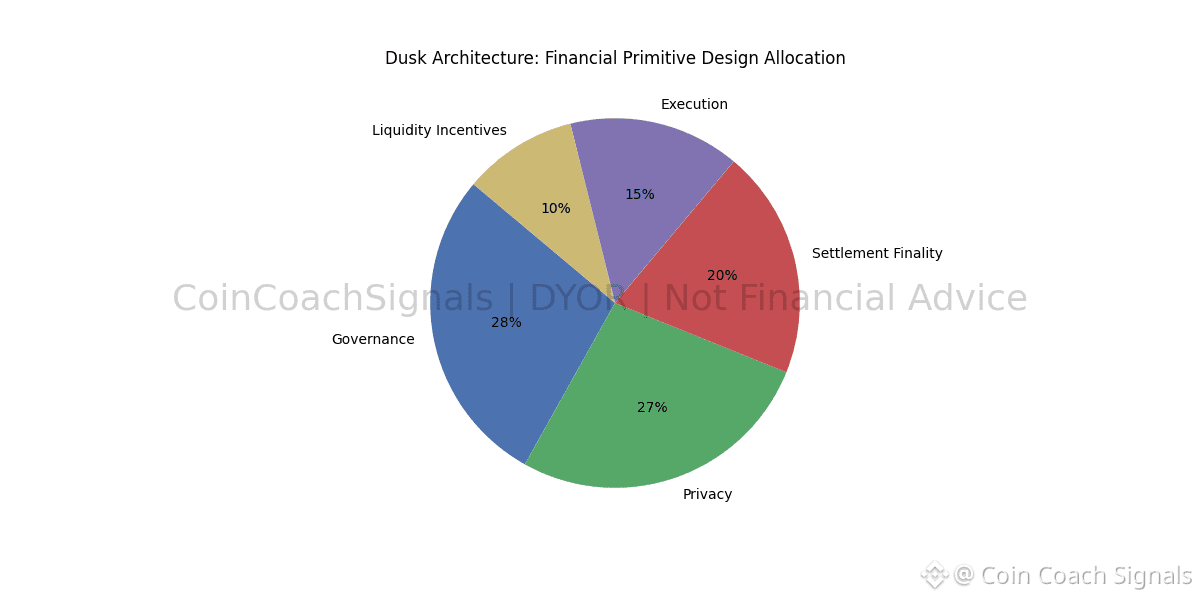
Privacy is where this becomes most obvious. In many blockchain conversations, privacy is treated as a switch. On or off. Public or hidden. Real financial systems do not work that way. Some information needs to stay confidential, while other information needs to be provable under specific conditions. Dusk is built around that in-between space. Transactions and asset states can remain private most of the time, but verification is still possible when law or authority requires it. This looks a lot like traditional compliance, except the trust is placed in cryptography instead of institutions.
This way of thinking shapes what can actually be built on the network. Tokenized assets, regulated instruments, and institutional settlement systems all rely on enforcement that is predictable. Rules cannot be optional. Permissions cannot be vague. Dusk treats those requirements as non-negotiable. Smart contracts are not just flexible pieces of code. They are designed to handle confidential state while remaining verifiable. That balance is difficult, and it explains why correctness often takes priority over speed.
The builder ecosystem reflects this tone. Teams working on Dusk are not usually chasing attention or quick deployment. They are focused on systems that assume scrutiny from the start. Issuance logic. Compliance-aware transfers. Lifecycle management. Auditability. These themes come up repeatedly. They are not exciting problems, but they are necessary if onchain finance is meant to last. The ecosystem feels quieter because of that, but also more deliberate.
Regulation fits into this picture in much the same way. Where many projects see regulation as an external pressure to avoid, postpone, or quietly route around, Dusk treats it as part of the environment it has to operate in. Not an inconvenience, but a fact. That approach doesn’t require giving up decentralization. It requires acknowledging that systems dealing with real-world value will eventually intersect with legal limits and expectations.
Instead of pushing those concerns offchain, Dusk pulls them into the protocol itself. Compliance logic is embedded directly into how the network functions. That reduces reliance on manual oversight, external controls, or opaque intermediaries. Rules aren’t enforced after the fact. They are enforced at execution. Regulation stops being something layered on top and becomes something the system understands and applies on its own.
This perspective also shapes how adoption is likely to happen. Dusk is not designed for rapid retail onboarding or speculative surges. Its architecture seems better suited to capital that values stability, privacy guarantees, and legal clarity. That kind of adoption moves slowly. It also tends to stay. Instead of sharp inflows and outflows, usage grows through integration and alignment with existing financial processes. Over time, this creates a different form of resilience.
As the wider market starts to grow up, this way of thinking becomes easier to appreciate. Early blockchains thrived on radical openness and very few constraints. That made sense at the time. It encouraged experimentation and helped the space find its footing. But as the technology moves closer to real-world use, those same traits begin to show their limits.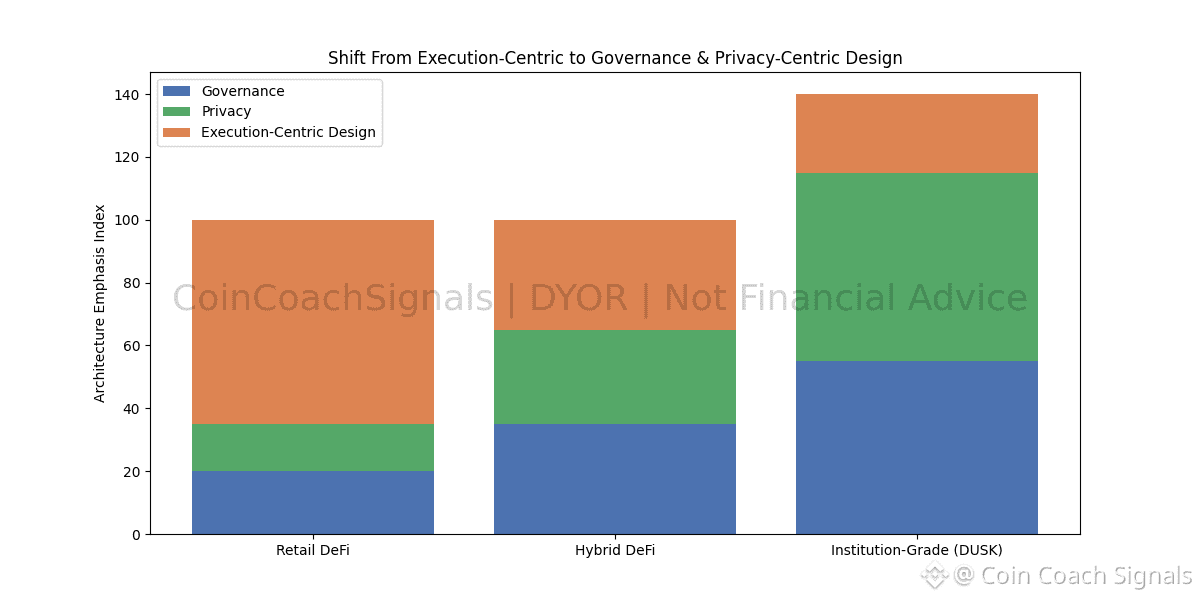
Enterprises and regulated organizations cannot function in systems where every action is permanently visible. They still need accountability, but they also need discretion. When data carries legal, financial, or competitive consequences, confidentiality matters. The real challenge is building infrastructure that can protect sensitive information without becoming opaque or untrustworthy.
That is where Dusk fits naturally. It was built with this tension in mind from the start. Instead of trying to retrofit privacy and compliance later, it treats them as core requirements. As the industry shifts from experimentation toward practical deployment, that early design choice becomes less abstract and more relevant.
What stands out is how little Dusk’s direction changes. It does not reinvent itself every cycle. Upgrades reinforce existing ideas instead of replacing them. Privacy stays selective. Compliance stays native. Architecture stays modular. Over time, that consistency matters. It suggests a network that understands what it is trying to be.
Dusk is not trying to cover every possible use case. It is narrowing its focus around a specific set of problems that few networks are willing to handle. That restraint feels intentional. By keeping its scope tight, Dusk improves its odds of being useful where it truly counts. Financial infrastructure does not need endless features. It needs reliability, clarity, and respect for real-world constraints.
As onchain finance moves closer to regulated markets, systems like Dusk stop feeling theoretical and start feeling necessary. They do not force a choice between privacy and accountability. They show that both can coexist when systems are designed around constraint rather than convenience. Dusk’s evolution points toward a future shaped not by what is easiest to build, but by what is hardest to ignore.
For educational purposes only. Not financial advice. Do your own research.
@Dusk $DUSK #dusk #Dusk
