

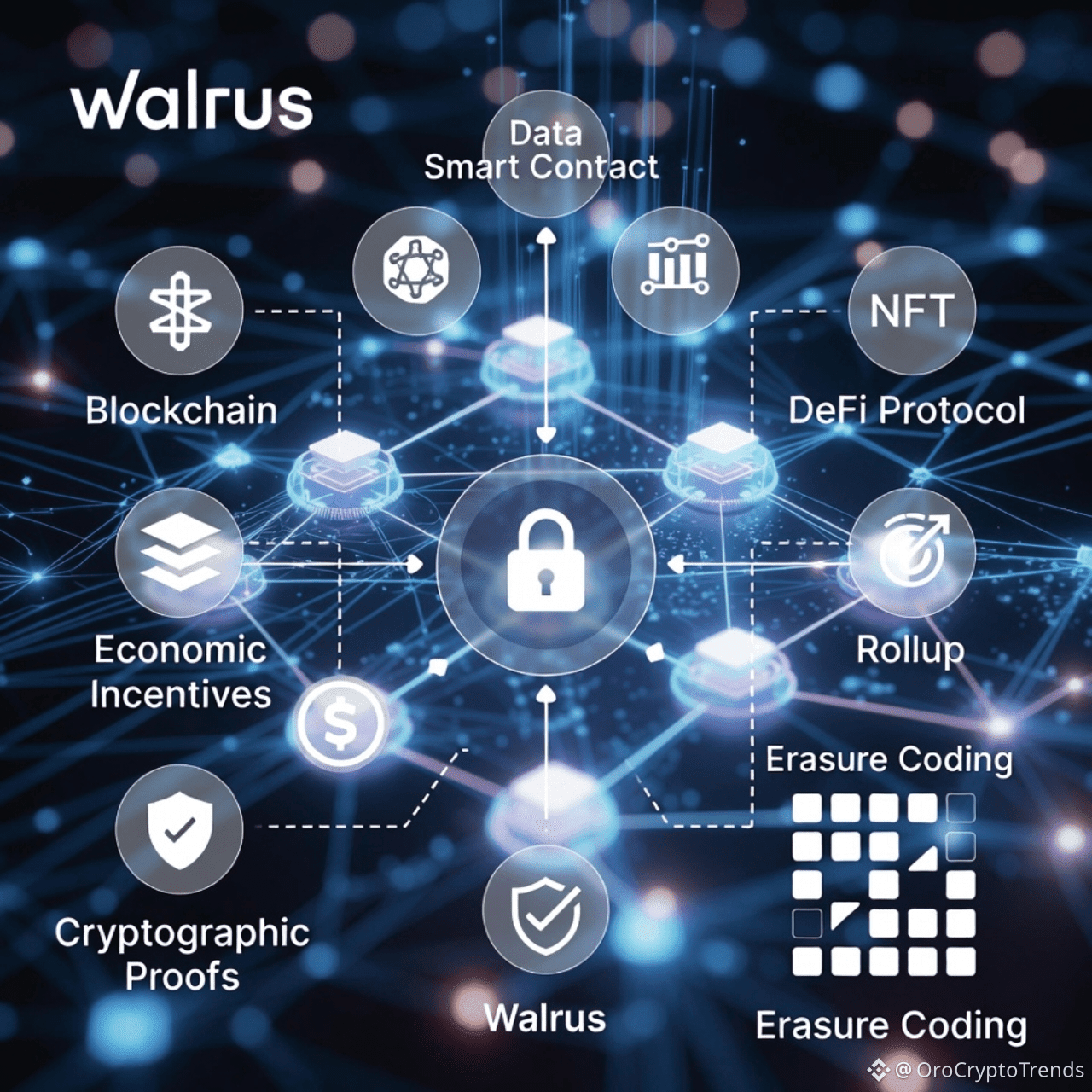
Let’s be real: We always hear that blockchains are “immutable,” but here’s the question most people never ask—what happens to that data five or ten years down the line? It’s not enough for a blockchain to just keep running. All those smart contracts, NFTs, DeFi protocols, and rollups need their data to stick around. If it goes missing, the tech might keep chugging along, but the meaning and trust behind it? Gone.
That’s where Walrus steps in. It’s a decentralized protocol designed to keep blockchain data available, verifiable, and affordable for the long run—especially for newer chains and Layer 2s. I’ll walk you through how it works, why it matters, and what it actually changes for everyone using Web3.
Why Should You Care About Data Availability?
Think of a blockchain like a giant public ledger. It keeps track of what happens, but the details—the data—tell the full story.
If that data disappears, here’s what breaks:
- Smart contracts can’t be checked
- NFTs lose their images or info
- Rollups can’t prove anything
- No one can audit the past
In short, when data vanishes, trust disappears too. Plenty of blockchains cut corners—they prune old data or rely on centralized services. That works for a while, but it’s risky if you care about the long term. Walrus was built to fix this problem.
So, What Is Walrus, Really?
Walrus is a decentralized network that stores huge amounts of blockchain data reliably, for years. Instead of dumping everything onto expensive blockchains, Walrus:
- Stores data off-chain
- Makes sure it’s cryptographically verifiable
- Keeps it easy to fetch, even years later
You can think of Walrus as the long-term memory of blockchains.
How Does Walrus Actually Keep Data Available?
1. Erasure Coding: Breaking Data Into Pieces
Walrus doesn’t stash data as one big file. Instead, it chops it into smaller pieces, adds redundancy with erasure coding, and spreads the pieces across a bunch of independent nodes. Even if some nodes disappear, you can still put the data back together.
Picture ripping a document into 100 pieces, scattering them worldwide, but only needing 60 of those pieces to rebuild the whole thing.
2. Economic Incentives: Storage Providers Get Paid to Stick Around
Walrus lines up the incentives so that storage providers get rewarded for actually keeping data available and serving it up when needed. They have to keep their nodes running, or they lose their rewards. That means data availability isn’t just a wish—it’s something people are paid to guarantee.
3. Cryptographic Proofs: No Blind Trust Required
Nobody has to just believe storage providers are doing their job. Walrus uses cryptographic proofs to show the data is still there, hasn’t changed, and is retrievable. Anyone can check this—no need to download the whole dataset. This matters a lot for rollups, validators, and auditors.
4. Built for Modern Chains and Rollups
Walrus is made for Layer 2s, high-throughput chains, and apps that generate tons of data. Instead of shoving all that info onto crowded base layers, Walrus gives them a scalable, external way to keep data available—saving money and space while keeping security tight.
What Does Walrus Unlock, Day to Day?
For Rollups: Off-chain data stays reliable, fraud proofs get stronger, and costs drop.
For NFT Projects: Metadata sticks around, so broken images and missing files become rare.
For DeFi Protocols: Historical data stays verifiable, and audits get a lot easier.
For Users and Traders: You get more confidence that everything you’re using won’t fall apart because of “data rot.”
Walrus vs. The Usual Storage Options
Here’s how Walrus stacks up:
- Traditional Cloud: Centralized, cheap, but not decentralized or guaranteed forever.
- On-Chain Storage: Decentralized and strong guarantees, but expensive and not scalable for big data.
- Walrus: Decentralized, cost-effective, strong long-term guarantees, cryptographic proofs, and built to scale.
Walrus basically gives you decentralization and efficiency without making you choose just one.
Blockchains don’t just need everyone to agree—they need a memory that lasts. Walrus makes sure that memory doesn’t fade.
Disclaimer:Not Financial Advice

