
Most storage protocols try to win by being cheaper than the cloud or more permanent than the cloud. Walrus is taking a different bet that is easy to miss if you only skim the usual “decentralized storage” comparisons. It is trying to make availability itself composable, provable, and economically routable in the same way blockchains made value transfer composable. The moment that matters right now is that Walrus is not positioning “blob storage” as a peripheral utility. It is wiring storage commitments into Sui objects so that applications can reason about data lifetime, extend it, transfer it, and treat it like a first class programmable primitive rather than an external service contract you hope stays up. That is a sharper ambition than “store files on chain” narratives, and it pushes Walrus into a category where its real competitors are not only Filecoin or Arweave but also the cloud’s implicit guarantee that developers can ignore storage as a design constraint.
Technically, the cleanest way to understand Walrus is that it is not trying to replicate full files across many nodes. It encodes each blob into fragments and spreads encoded parts across all storage nodes, with the protocol designed to keep data retrievable even when a large fraction of nodes are unavailable or malicious. The Walrus docs describe the practical consequence in plain terms, that the system targets storage costs at roughly five times the original blob size because of erasure coding overhead, and that encoded parts are stored on each storage node rather than selecting a small subset of nodes for each blob. The deeper differentiator is not “erasure coding exists” since many systems use it, but how Walrus engineers around the two problems that usually make erasure coded systems feel less permissionless in practice. First, churn. Second, proving that nodes actually stored what they were paid to store without assuming the network is synchronous and well behaved. Walrus’ academic and protocol materials center this on Red Stuff, a two dimensional encoding design that targets a 4.5x replication factor while enabling self healing recovery bandwidth proportional to the lost data rather than the full blob.
That distinction becomes concrete when you compare Walrus to the most common “mental models” people import from other networks. Filecoin and Arweave are typically treated as “replicate and prove” networks, where the protocol incentives revolve around storage providers proving replication and time. Walrus flips the axis. It is built for high integrity availability proofs and ongoing retrievability for arbitrary retention periods, with the blockchain used for coordination, attesting availability, and payments, and with blobs represented as on chain objects. This matters because the painful part of decentralized storage for many builders is not “can I store it,” it is “can I keep designing my product while the storage layer changes committees, nodes come and go, and I still need reads and writes to behave predictably.” Red Stuff and Walrus’ epoch mechanics are engineered around uninterrupted availability during committee transitions, which is where a lot of erasure coded designs become operationally brittle.
Economically, Walrus is interesting because it is not just “cheap storage,” it is time priced storage with on chain receipts. You pay to have data stored for a fixed amount of time, and Walrus aims to keep storage costs stable in fiat terms while users pay in WAL, distributing the paid WAL across time to storage nodes and stakers as compensation. That is a subtle but important stance. It is implicitly admitting that volatility is the enemy of developer adoption more than absolute price, and it is choosing predictability even if it means the protocol has to actively manage the WAL denominated cost of resources. If you want a concrete anchor, Walrus’ public pricing surfaces show storage priced per GB per epoch in WAL with an implied USD equivalent, for example one display shows 0.0113 WAL per 1 GB per epoch with an associated USD estimate. The exact number will move, but the mechanism is the point. Walrus is trying to sell developers a mental model that feels closer to “prepay for a retention window and get a verifiable promise” than “negotiate a deal with a provider and hope retrieval economics work out.”
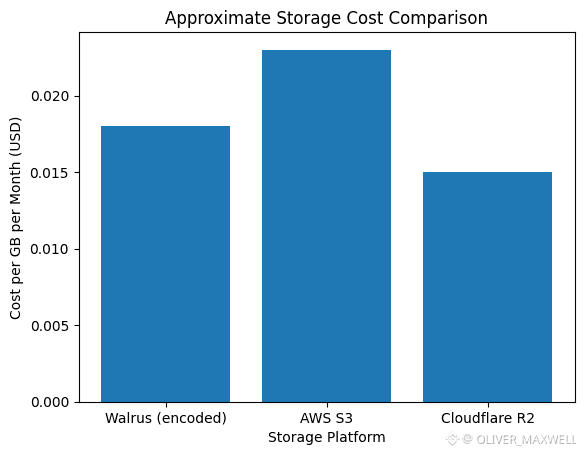
Now compare that to the pricing pressure from traditional cloud storage, because this is where Walrus’ positioning gets counterintuitive. AWS S3 Standard storage is commonly priced around $0.023 per GB month in major regions for the first tiers, and Cloudflare R2 lists storage around $0.015 per GB month. If you only compare raw $ per GB month, decentralized networks often look uncompetitive or at best roughly similar depending on token prices and subsidies. Walrus is not likely to win on raw storage alone, especially once you account for encoding overhead and any integration costs. Walrus is trying to win on what the cloud cannot productize without becoming something else, a public verifiable availability layer whose receipts are directly legible to smart contracts on Sui. In other words, it is monetizing a property that cloud providers deliberately hide behind private SLAs and legal terms. The economic question then becomes less “is it cheaper than S3” and more “what is the value of making storage guarantees machine verifiable and composable,” because that is what enables entirely different application designs.
This is where the architecture of “storage space as a resource on Sui” becomes more than a cute integration detail. Walrus describes storage space as a resource that can be owned, split, merged, and transferred on chain, and blobs as objects on Sui that smart contracts can inspect for availability and lifetime, extend, or delete. That changes incentive design. A developer can build escrow like flows where an asset transfer is conditional on a blob’s point of availability event, or subscription flows where extending content lifetime is a transaction the user signs rather than a backend cron job. Walrus even formalizes an operational boundary with the point of availability concept, where before PoA the uploader is responsible for ensuring availability, and after PoA Walrus is responsible for maintaining availability for the storage period, with PoA observable through an event on Sui. This is the kind of detail that can quietly unlock “institutional grade” behavior, not because it is a compliance feature, but because it makes responsibility boundaries explicit and machine verifiable
Privacy is the layer where a lot of coverage becomes sloppy, so it is worth being precise. Walrus does not provide native encryption for data, and by default blobs are public and discoverable. That is not a weakness, it is a design choice that separates availability and integrity from confidentiality. Walrus then recommends encryption and access control overlays for use cases that need secrecy, specifically pointing to Seal for on chain access policies and threshold encryption, and to Nautilus for secure off chain computation environments with on chain verification. The tradeoff is clear. Walrus can be a neutral availability layer without forcing every blob into a confidential compute path, while still enabling confidentiality for the applications that need it. The hidden advantage is that this keeps Walrus aligned with public verifiability, which is where its strongest differentiation lives. If Walrus tried to be natively private storage at the protocol layer, it would inherit heavy key management complexity and likely reduce the transparency that makes on chain “storage receipts” useful
Security and censorship resistance in Walrus also needs to be understood in its own terms. The common trope is that decentralization equals censorship resistance, but storage systems fail users in more mundane ways, churn, under provisioned nodes, and inconsistent reads during network transitions. Walrus’ data availability targets are spelled out clearly in its docs, stating that correctly written blobs remain available so long as two thirds of shards are operated honestly, and that reads are possible even if as few as one third of the nodes are available. That is a strong claim, and it is inseparable from Walrus’ coding design and its discipline around epochs. It is also why Walrus focuses so much on availability proofs and inconsistency proofs at the protocol boundary, because if a blob is incorrectly encoded, nodes can produce an inconsistency proof and reads return None for that blob id. That is not marketing. It is a safety valve that makes the failure mode explicit instead of silently corrupting content.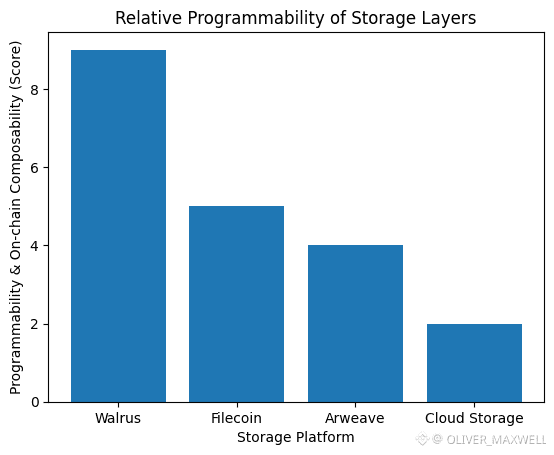
Institutional adoption is where decentralized storage has historically stalled, and the barrier is rarely ideology. It is reliability, integration complexity, and cost predictability. Walrus’ answer is pragmatic. It supports Web2 HTTP interfaces, SDKs, and is designed to work with caches and CDNs while still allowing fully local operation for decentralization. It also emphasizes operational tooling like TLS support for storage nodes so browser based clients can interact directly, JWT authentication for publisher services to control costs per user, plus extensive metrics and logging to build dashboards. That combination is not glamorous, but it is exactly what enterprises and serious consumer apps need. A decentralized network that cannot be monitored, authenticated, and cost scoped is not “more free,” it is simply ungovernable at scale.
On the question of whether Walrus has real world adoption signals beyond theory, the most useful evidence is not “announcements,” it is integration behavior where storage becomes embedded into an app’s core workflow. One example is Baselight’s reported integration with Walrus and Sui, positioning Walrus as decentralized storage for the Baselight ecosystem. Another signal is tooling maturity around on chain observability and discovery. Space and Time announced integrating Walrus Explorer capabilities, positioning it as an infrastructure layer for exploring and understanding Walrus data. Walrus’ own ecosystem communications also point to substantial early usage, for example a mid 2025 SDK and upgrade post cites over 758 TB of data stored and “hundreds” of projects building on Walrus. None of this proves product market fit by itself, but it does suggest Walrus is not stuck in a purely experimental lane. It is being treated as storage that other products can safely depend on
The most defensible use cases for Walrus are the ones where “data is an input to on chain logic” rather than just a payload you want hosted somewhere. NFT and game asset storage is the obvious category, but the stronger framing is “assets whose value depends on continued retrievability.” If a protocol, marketplace, or game can programmatically verify that a blob is available and for how long, that changes how it can price, insure, and transfer assets. Another category is decentralized frontends and app distribution. Walrus Sites is explicitly positioned to serve decentralized frontends, and the mainnet release notes highlight updates and operational improvements around Walrus Sites hosting and capital efficiency. A third category that feels under discussed is AI data provenance and data markets, because Walrus frames itself as enabling data markets for the AI era and as a storage layer that supports authenticity, traceability, and governability. In that world, the value is not only storing bytes, it is being able to prove which exact dataset version was used, that it remained available over a defined window, and that the commitment is legible to on chain systems that can settle payments or licensing.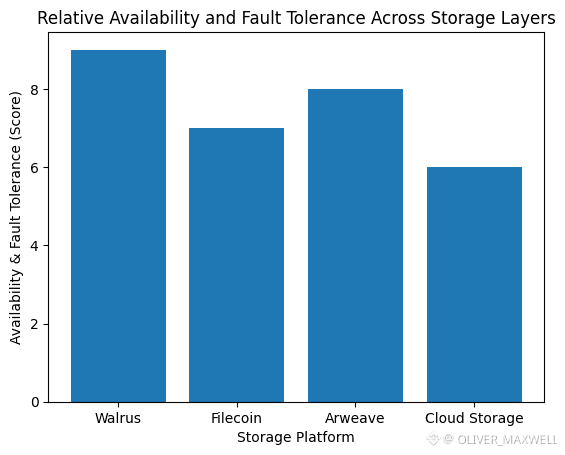
Tokenomics and network health are where Walrus’ design becomes unusually “storage native.” WAL is positioned as payment for storage, as delegated staking security, and as governance weight, and the distribution is heavily community weighted on paper. The Walrus token page states max supply at 5,000,000,000 WAL with an initial circulating supply of 1,250,000,000 WAL, and it describes over 60 percent allocated to the community through airdrops, subsidies, and the community reserve, with explicit percentages like 43 percent community reserve, 10 percent user drop, 10 percent subsidies, 30 percent core contributors, and 7 percent investors. Two details matter more than the headline allocations. First, the protocol explicitly calls out a 10 percent subsidies allocation to support early adoption while keeping node business models viable, which is effectively acknowledging that bootstrapping storage supply is a market making problem, not just a tech problem. Second, Walrus is planning for deflationary pressure through burn mechanisms tied to behavior, including penalties on short term stake shifts due to the negative externality of migration costs, and future slashing tied to low performance nodes with partial burns. That is an unusually coherent attempt to price the hidden cost of churn into the staking layer itself, which is exactly where a storage network feels pain. If you believe the hardest long term threat to erasure coded storage is not “someone copies your code” but “your economics incentivize instability,” then Walrus is at least trying to put the tax where the damage occurs.
Governance in Walrus is also framed in a way that aligns with operator reality. It is not presenting governance as vague community sentiment. It describes governance as adjusting system parameters through WAL, with nodes collectively determining penalty levels with votes equivalent to their WAL stakes, motivated because they bear the cost of other nodes’ underperformance. That is a practical governance story, but it carries a risk that is easy to overlook. If large operators or aligned delegations become dominant, they can tune penalties and incentive parameters in ways that protect incumbents, especially in a system where churn and migration cost are real. Walrus’ long term decentralization will depend on whether stake delegation remains competitive and whether smaller operators can still win enough stake to justify running storage services.
Finally, Walrus’ strategic positioning inside Sui is not just “built on Sui,” it is “enabled by Sui’s object model.” Walrus leans on Sui for coordination, availability attestation, and payments, and it represents storage resources and blobs as on chain objects that can be manipulated by smart contracts. That creates an advantage that competitors cannot trivially replicate without similar object semantics and throughput characteristics, because the whole “programmable availability” thesis depends on cheap, frequent, composable interactions with storage receipts. The flip side is dependency risk. If Sui adoption stalls, Walrus still has a strong storage protocol, but it loses the growth flywheel of being the default “large data substrate” for an expanding smart contract ecosystem. Walrus seems to be leaning into that dependency as a feature rather than hiding it, and the best forward looking reading is that Walrus wants to become the place where Sui applications put everything too large to be state, while still keeping it inside the logic boundary of the chain.
The forward looking bet, then, is not that Walrus becomes the cheapest place to store files. It is that it becomes the most natural place to store data that applications need to treat as part of their trust surface. If Walrus succeeds, the adoption catalyst will look less like users deciding to “move off S3” and more like developers building Sui applications where storage commitments, availability windows, and access control policies are first class design elements. The competitive threats will come from two directions. One is cloud providers offering stronger integrity and provenance tooling, but they will still struggle to make those guarantees publicly verifiable and composable without undermining their own centralized control. The other is decentralized competitors pushing either permanence narratives or bargain pricing narratives. Walrus can survive those if it stays disciplined about what it is selling, predictable time priced storage, explicit availability boundaries like PoA, and storage receipts that contracts can reason about. The real inflection point will be whether builders continue to choose Walrus because it lets them design products that would otherwise require trusting a private backend, and whether the WAL incentive system keeps supply stable as usage scales. If those two things hold, Walrus’ trajectory is less “storage protocol” and more “the reliability layer that makes Sui applications comfortable living in the real world.”

