
What I noticed you didn't notice and The thing that drew attention wasn’t speed. Nor was it scale. It was subtle the way a single Walrus blob behaved under a Sui contract. Not missing, not broken just slightly off from expectation. Timing existed, but hesitation crept in. A faint ripple of friction, enough to make someone notice.
Fragments drifted across nodes, each carrying responsibility silently. No alarms. No announcements. @Walrus 🦭/acc WAL didn’t broadcast. Yet every tick, every nudge, felt deliberate. A metronome keeping someone accountable without applause.
A slight delay surfaced in one of the contracts. Nothing failed. Nothing broke. Yet the lingering question hung: “Is this fragment really where it should be?” On Sui, contracts are decisive. They demand exactness. Walrus blobs don’t flinch. They respond quietly, persistently. Availability hadn’t disappeared. Responsiveness had thinned. That was the pressure.
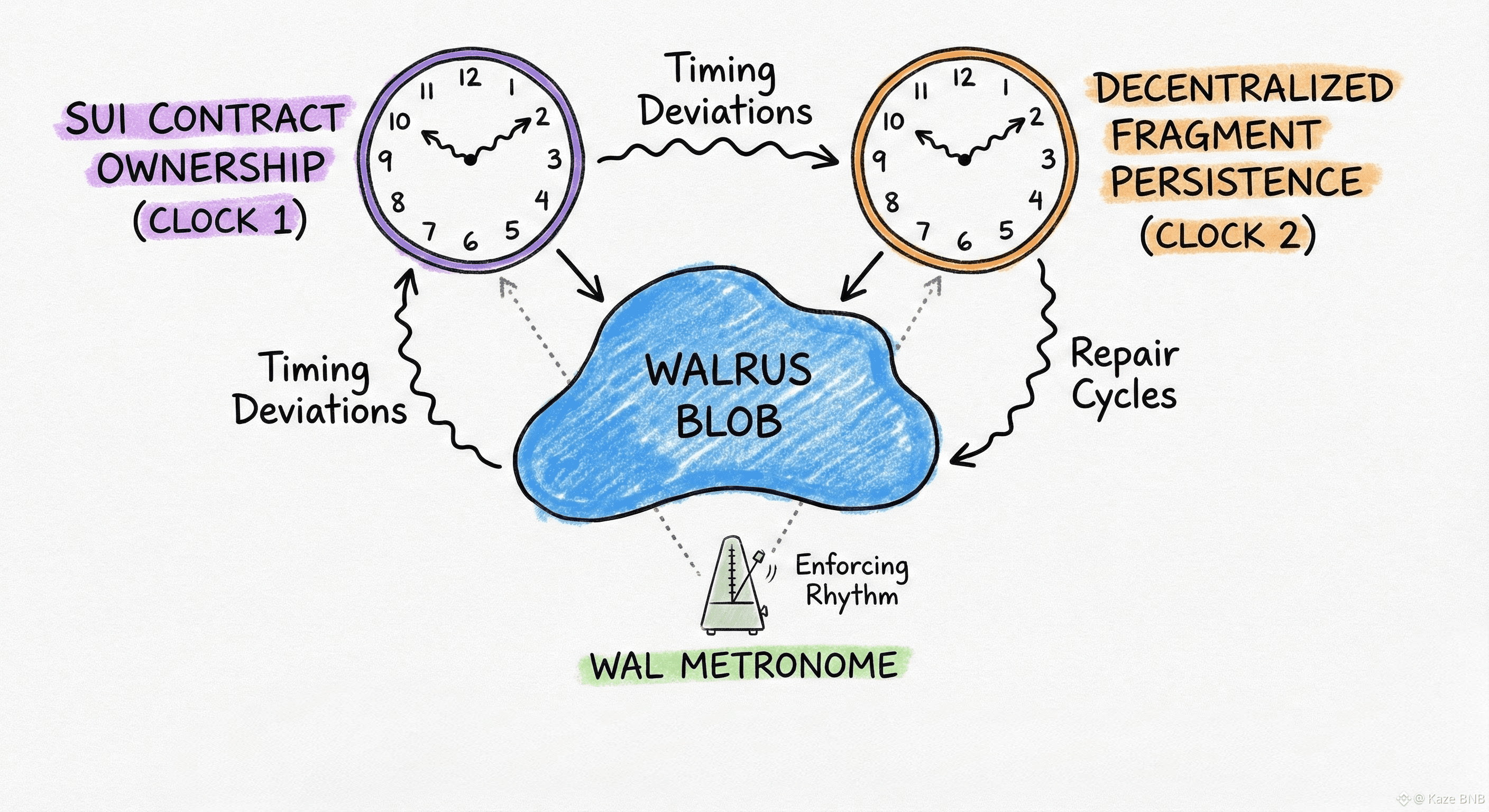
Across the network, nodes coordinated without anyone noticing coordination. Shards repaired themselves, sometimes late, sometimes just in time. That rhythm, encoded in erasure-coded fragments, only shows its weight when observed. One misplaced sliver stretches seconds into questions, minutes into tension.
“The data is there,” a colleague murmured casually once. But the thought persisted: is it there when it counts?
Interactions under load revealed the human layer. Contracts stacked. Reads collided. Fragments crossed paths. $WAL nudged silently, incentivizing action without ceremony. Responsibility felt like gravity invisible, constant, unavoidable.
Some fragments lagged. Some contracts hesitated. And in the stillness, one could sense the network thinking, balancing, enduring. There’s no tutorial for patience. No alert for friction. Just the unfolding tension, the subtle choreography of accountability.
“What happens if one fragment refuses to appear?” someone whispered. No answer came. The tension itself shaped behavior. WAL acted less like a token, more like a metronome. Less like currency, more like a pulse everyone eventually felt, a rhythm that demanded attention without explanation.
Each interaction unveiled layers of subtle responsibility. Decentralized storage wasn’t passive. Blobs didn’t obey intentions; they enforced conditions. Fragments reconstructed, repairs ran silently, nodes held duty across the network, unnoticed yet essential. And all the while, Walrus (WAL) presence wasn’t loud; it was felt in time, in the weight of latency, in the invisible push toward reliability.
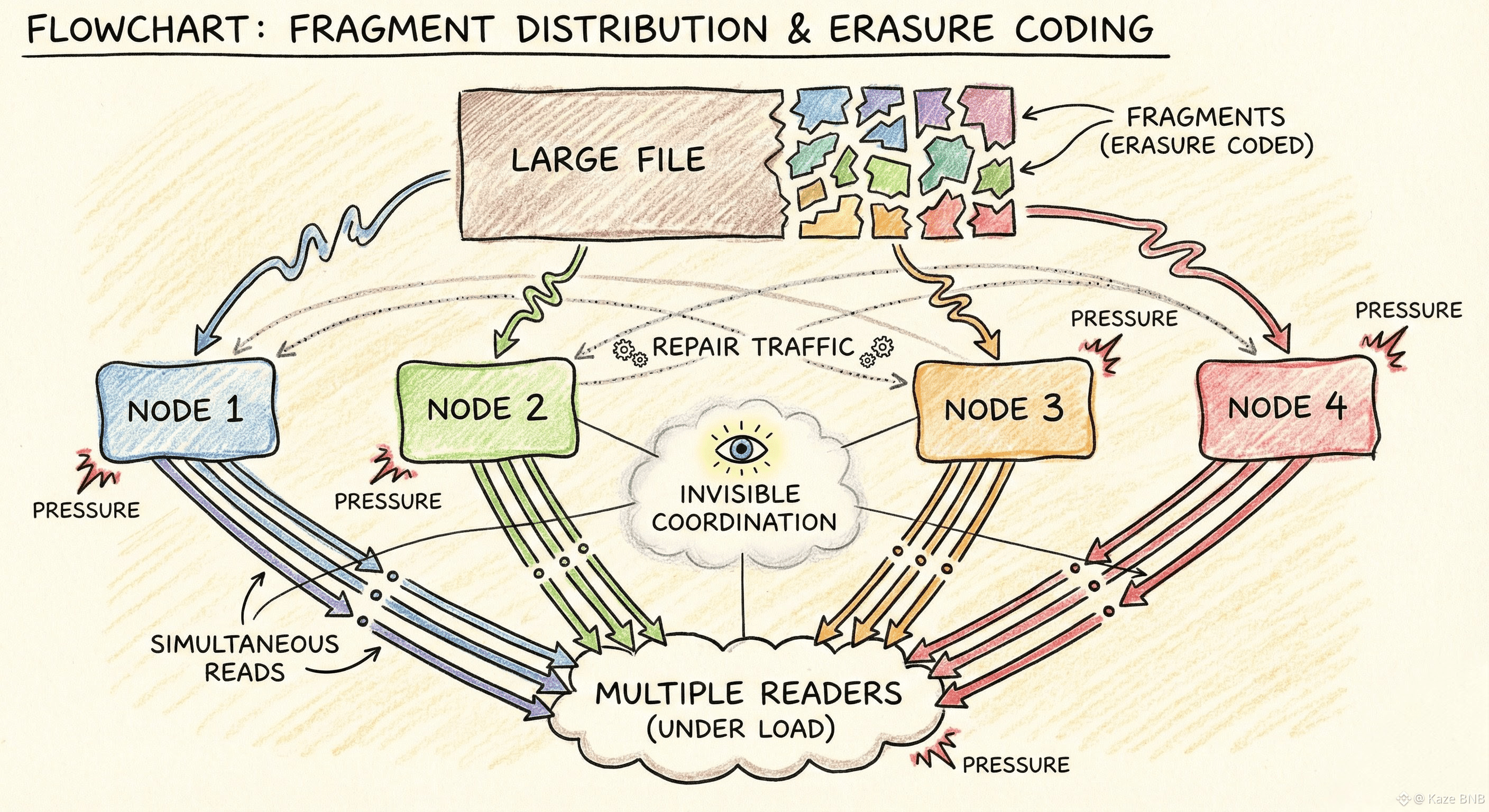
There were moments where multiple contracts reached for the same blobs at once. Reads stacked. Fragments were pulled in different directions. The network absorbed the pressure. It didn’t fail. It didn’t complain. It let tension show itself. Not as an error. As friction. As weight.
A late fragment returned. A contract paused, waiting. A subtle change in the pulse of the network. Responsibility surfaced like water through cracks. Every tick, every fragment, every nudge revealed the stakes quietly. The network didn’t explain itself. It demanded presence.
Time became palpable. Each contract wait, each fragment lag, each Walrus (WAL) nudge made the system feel alive. Availability had character. Latency had texture. Responsibility had weight. And somewhere, in that tension, a question hovered: “Should this blob exist like this?”
Not a technical question. Not a suggestion for action. Just a persistent, unanswered inquiry. And that is where the pressure resides. Blobs became accountable. WAL became rhythm. Storage became a conversation without words.
Even the smallest shards held lessons. A fragment slightly delayed revealed the network’s discipline. No warnings. No banners. Just behavior. “The network isn’t broken,” a developer remarked. “It’s asking something of us.”
Under heavier load, these moments became harder to ignore. Multiple contracts reached for blobs. Reads stacked. Repairs didn’t pause. The friction surfaced in human terms. Walrus (WAL) kept nudging, and someone, somewhere, noticed the subtle tension of responsibility pressing against their assumptions of storage as passive.
Blobs don’t shout. Walrus (WAL) doesn’t lecture. But they speak in a rhythm that can’t be ignored. Timing, availability, reconstruction all reveal the cost of inattention without ever naming it. Every tick whispers accountability.
At some point, the question shifted. Not can the blob be fetched? but should it exist like this? And the network waited, silent. Fragments drifted. Responsibility pressed. Time weighed. Walrus (WAL) measured. The pulse of decentralized storage became unmistakable.
It’s not a lesson. It’s not a conclusion. There’s no takeaway. Just the tension, the rhythm, the human recognition of a network that quietly enforces responsibility without words, without alerts, without applause.


