
The network doesn’t speak. It moves. Quietly, like air pressing through a vent, it carries transactions that exist, but only partially visible. Blocks arrive in their own cadence. Privacy is a shadow, stretching over everything, and compliance is its twin, silently ensuring each step obeys rules no one really names out loud.
A node stalled for a beat. Not dead. Not failing. Just paused in a space between validation and acknowledgment. “Did it lock?” someone muttered. The question hung. No answer arrived. Only the ledger’s slow tick, measuring responsibility across unseen distances.
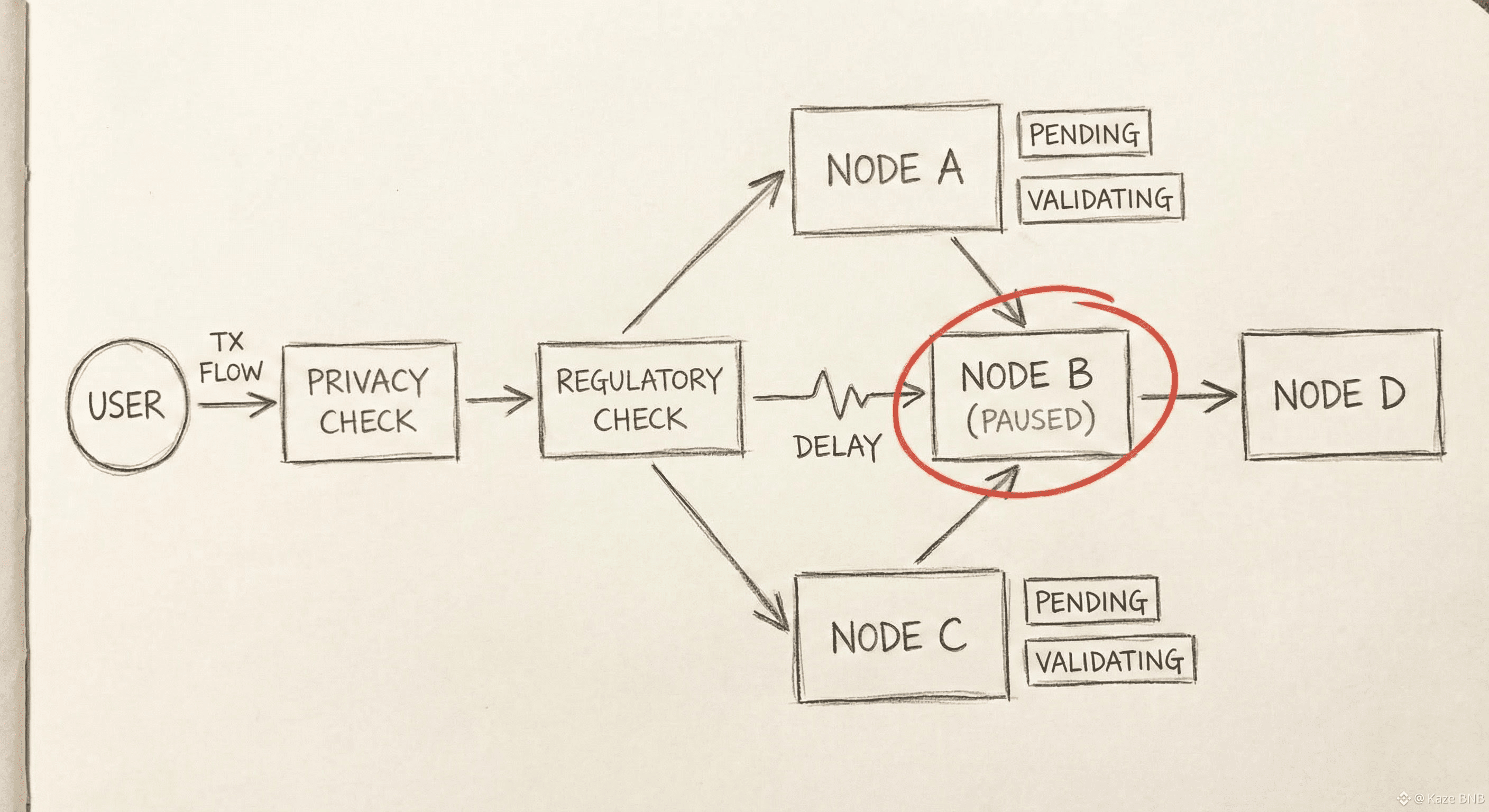
Dusk Foundation (@Dusk ) wasn’t designed to comfort. It measured what could be observed, and what had to remain hidden. Identity verification, regulatory compliance, sensitive flows they weren’t banners on a dashboard. They were friction. Each transaction carried its own small questions: Can it be seen? Can it be challenged? Will it settle? The ledger didn’t explain, it waited.
Across the network, modular components hummed like separate instruments in a quiet orchestra. Some modules paused. Others pushed forward. The rhythm wasn’t uniform. Flexibility had a price. Some financial operations slipped, suspended for just long enough to make observers feel their absence. “It doesn’t break, it just tests patience,” a developer whispered. And the Dusk Foundation network responded only by ticking onward, impartial, exact.
Friction emerged naturally. Privacy and regulatory rules intersected unpredictably. Transactions that should have moved smoothly lingered. Observers noticed patterns in these pauses. Not errors, not warnings just an insistence that human oversight mattered, even when code enforced what it could. Timing became a lens for responsibility, a subtle measure of whether the right conditions were met.
The modular architecture stretched and contracted under load. Components could be swapped, delayed, or rerouted. The network tolerated uneven pressure, but each adjustment left traces. Logs thickened quietly. Engineers noticed tension rising in microseconds, small delays cascading across modules. It wasn’t catastrophic, yet it demanded attention.
Quotes surfaced in whispers. “It feels alive,” someone said, staring at pending transactions. “Like it’s aware of what’s supposed to happen but doesn’t care enough to rush it.” Another observed, “You can’t tell if it’s privacy, regulation, or just the architecture slowing things down. All you know is the effect.” These were not complaints. They were reflections on friction that emerged naturally, uninvited.
Nodes reconciled themselves. Privacy shields obscured identities. Regulatory checks hovered in the background. Each module acted autonomously yet in concert, producing subtle conflicts and occasional tension. The Dusk Foundation ledger revealed limits not as errors but as pressure points: moments when choices became visible, and responsibility was unavoidable.
Under high transaction loads, the ledger’s invisible scaffolding became more apparent. Some modules struggled to process instructions without leaking traces. Others paused silently, letting the pressure propagate. Dusk Foundation didn’t intervene, it just measured. Each micro-second was a ledger of decision, a reminder that compliance and privacy weren’t features they were conditions to live with.
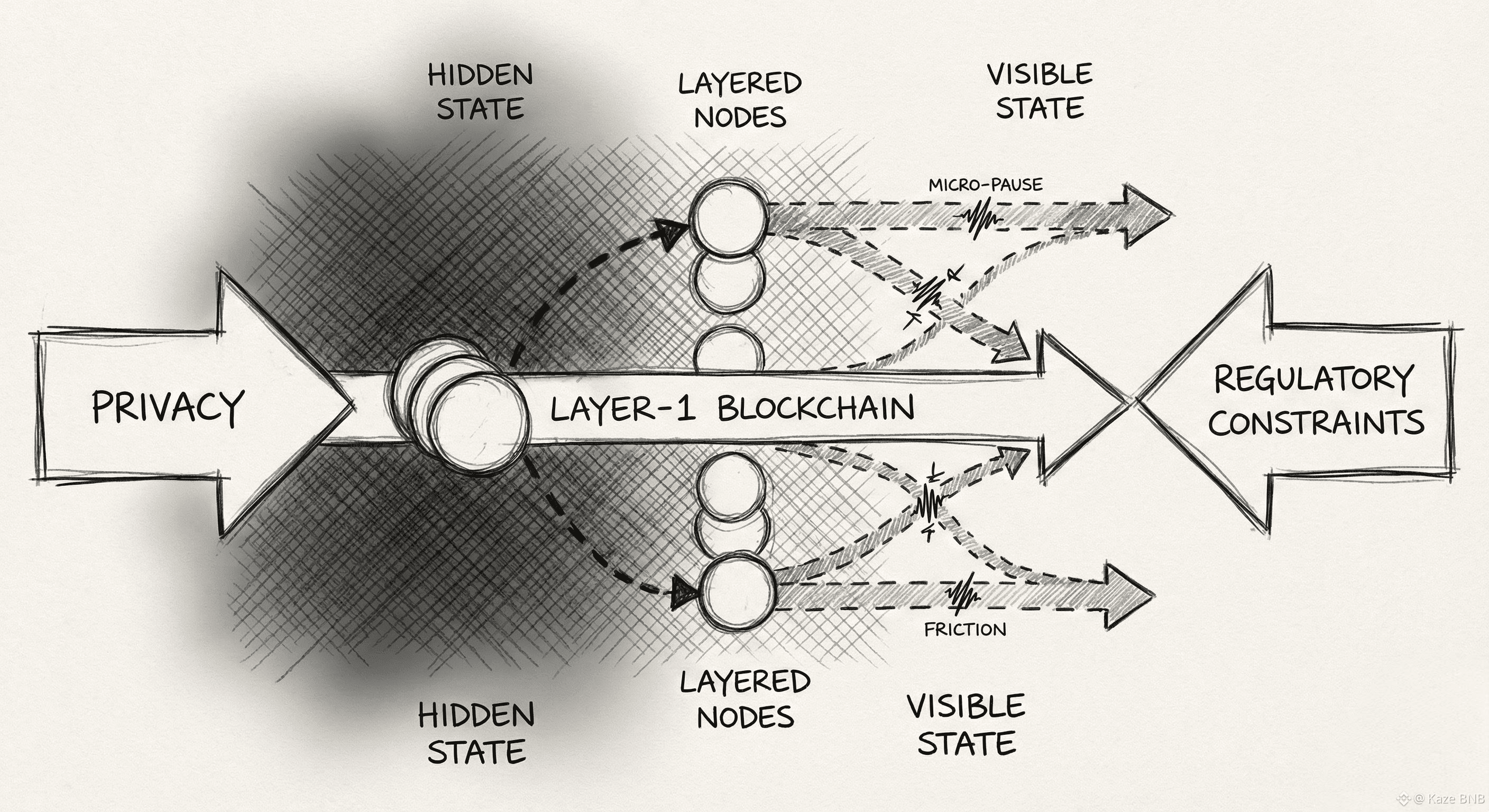
Questions lingered. Could a transaction ever be fully “settled” when privacy obscures it? Could modular adjustments hide unintended gaps? Observers, auditors, and developers all sensed incompleteness, yet the system persisted. It enforced limits quietly, and human actors were left to wonder how much control they truly had.
A block finalized. Nothing remarkable. No banner, no popup. Just timing, friction, and the faint hum of autonomy. Dusk Foundation ($DUSK ) didn’t explain. It didn’t reassure. It demanded awareness, patience, and judgment. Responsibility revealed itself not through error but through subtle constraint, the quiet pulse of a chain insisting that privacy, regulation, and flexibility were inseparable.
And as transactions kept layering, the question remained: what survives, and what yields, when friction is the point of the system rather than its problem? No one answered. The ledger only moved, silently marking what could and could not be observed.
