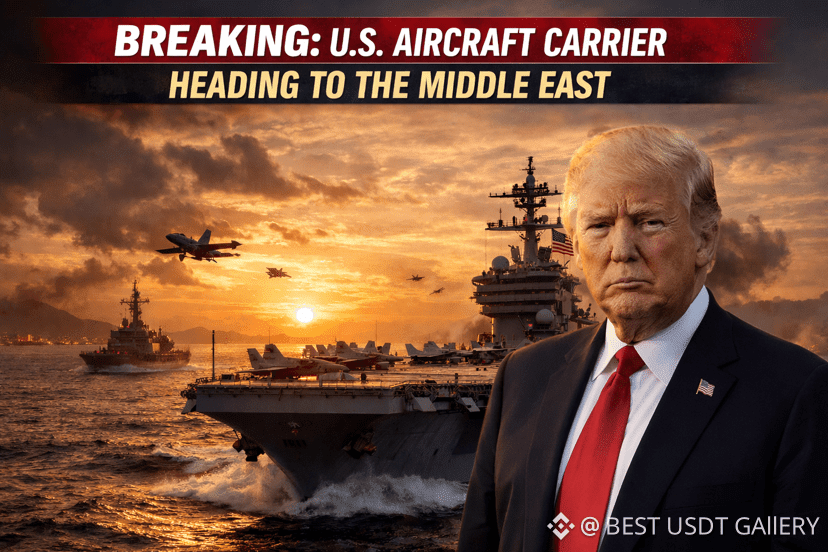
The United States has ordered an aircraft carrier strike group to deploy toward the Middle East, marking a significant escalation in military posture amid rapidly rising regional tensions.
An aircraft carrier is not just a warship — it is a floating military base. Equipped with dozens of fighter jets, surveillance aircraft, missile defense systems, and thousands of personnel, its movement sends a powerful strategic signal to both allies and adversaries.
🔍 What This Move Signals
• Deterrence: The U.S. is reinforcing its ability to respond instantly to threats against its interests or allies.
• Force Projection: Carrier strike groups allow the U.S. to conduct sustained air operations without relying on regional bases.
• Escalation Control: While officially defensive, such deployments can either prevent wider conflict or precede direct military action — depending on how events unfold.
🌍 Why This Matters Now
This deployment comes amid:
• Heightened tensions involving Iran and regional proxy forces
• Ongoing disruptions to critical shipping lanes and energy routes
• Growing intelligence and diplomatic warnings
• Increasing risks of miscalculation escalating into open conflict
Governments, militaries, and global markets are watching closely.
📉 Market & Global Impact
• Oil prices: Likely to remain volatile with every escalation headline
• Defense stocks: Often rise during periods of increased military activity
• Risk assets: Crypto and equities may experience sharp swings
• Safe havens: Gold and the U.S. dollar typically strengthen during geopolitical stress
⚠️ The Bigger Picture
Historically, aircraft carrier movements have often preceded:
• Diplomatic pressure campaigns
• Strong military warnings without immediate strikes
• Rapid-response readiness if strategic red lines are crossed
At the same time, carriers can also help prevent conflict by signaling overwhelming capability and preparedness.
⚠️ Stay alert. Developments may move fast from here.