
A useful way to judge a blockchain is not how it behaves when nobody is watching, but how it is designed to behave once oversight becomes unavoidable. As onchain finance moves closer to regulated markets, scrutiny is no longer theoretical. It is expected. Dusk stands out because its design seems to assume that reality from the start instead of treating it as something to work around later.
Most blockchains were created in environments with few rules and anonymous participants. That shaped their assumptions around transparency, permissionlessness, and governance. As these systems try to support real financial activity, those assumptions start to crack. Dusk takes a different route. It treats regulation, compliance, and auditability as constraints that must be engineered into the system, not philosophical compromises to be avoided.
At the protocol level, this shows up as selective privacy. Transactions and asset states can in practice, remain confidential by default, while still being verifiable when required. This is not about hiding activity. It is about controlling who can see what. In real financial systems, visibility is contextual. What matters is that outcomes can be proven correct under defined conditions. Dusk encodes this directly into the protocol using cryptographic proofs instead of discretionary trust.
Accountability works differently under this model. Rather than relying on public exposure to enforce behavior, Dusk relies on rules that execute deterministically. Smart contracts can operate on confidential state without breaking correctness. Compliance logic can live inside financial primitives themselves. Rules are applied automatically, without revealing more information than necessary.
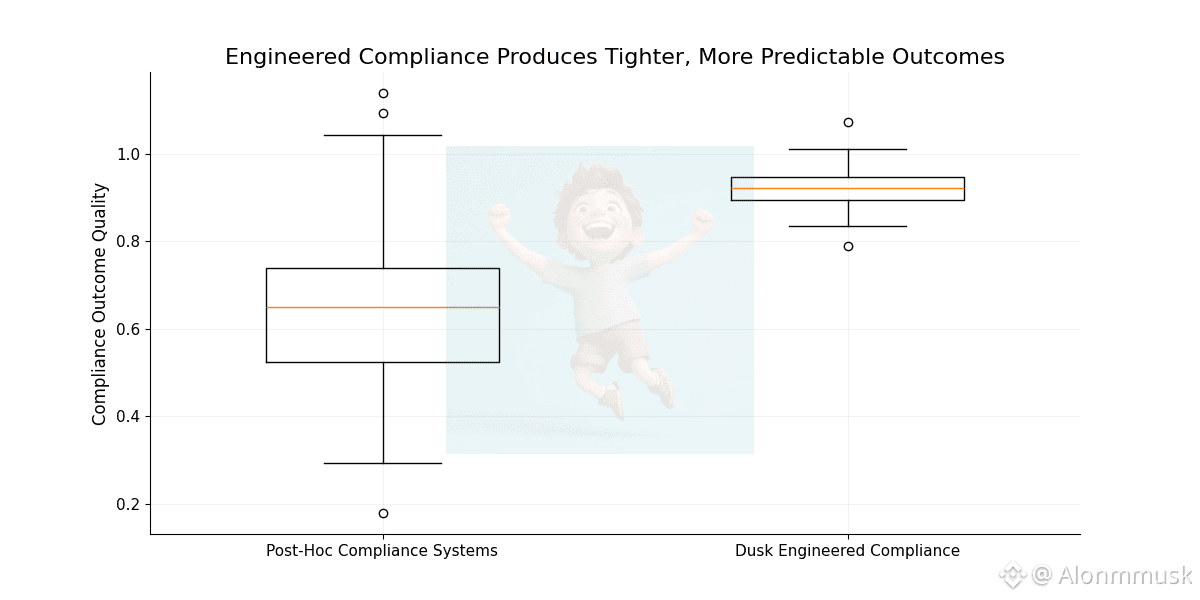
For developers, this changes priorities. Applications built on Dusk are not optimized for visibility or rapid traction. They are built to function under constraint. Builders can assume audits, regulatory interaction, and long-term operation from day one. That matters for tokenized assets, regulated DeFi in practice, structures, and institutional settlement systems where rules evolve and must remain enforceable over time.
The ecosystem around Dusk reflects this mindset. Teams are not experimenting for novelty’s sake. They are building systems meant to hold up under examination. Issuance frameworks, compliance-aware lending, and privacy-preserving settlement tools are common focus areas. These builders care less about short-term growth and more about whether their systems will still work years later.
Dusk also takes a more grounded view of decentralization. Decentralization is often equated with removing all constraints. Dusk challenges that idea. Removing discretionary control matters more than removing structure. Rules enforced by code are more decentralized than rules enforced by intermediaries, even if those rules limit visibility.
This perspective lowers the barrier for real-world adoption. Many institutions are open to onchain systems, but they cannot operate in environments where every action is public. Dusk allows participation without forcing a tradeoff between confidentiality and compliance. The protocol handles that balance directly.
Growth on a network like this looks different. Dusk is not designed for speculative inflows driven by hype. It appeals to participants who value predictability, privacy, and legal clarity. That kind of usage grows slowly through integration, but it tends to be more stable because it is tied to real activity.
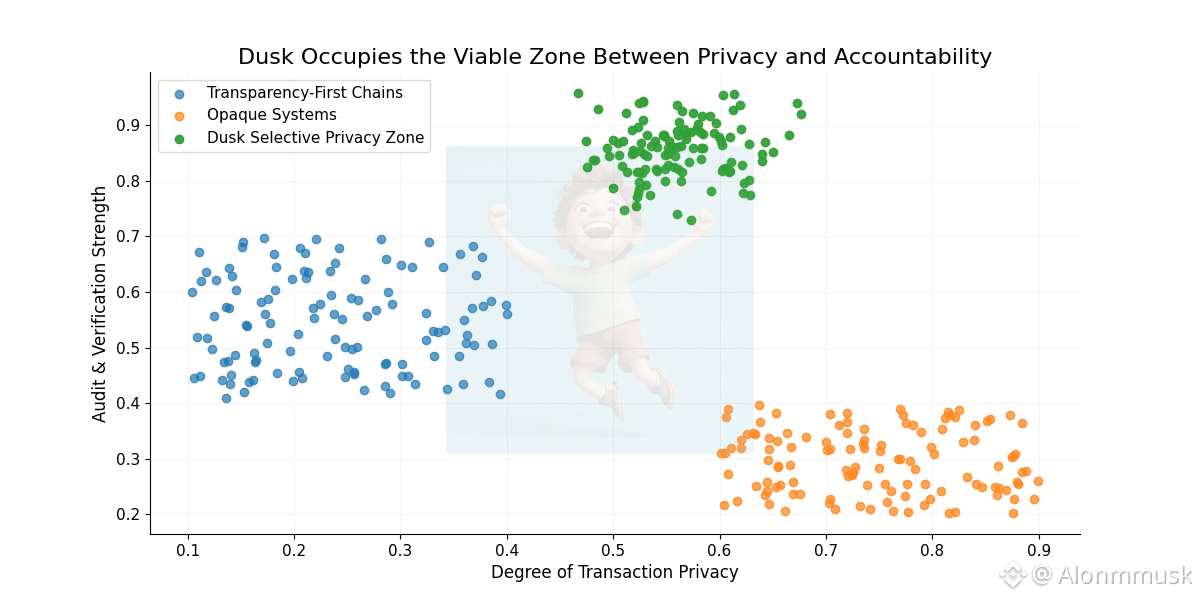
From a technical standpoint, Dusk applies zero-knowledge cryptography with restraint. The goal is not complexity for its own sake. It is to reduce risk where it matters. Financial infrastructure rewards correctness far more than novelty, and the design reflects that.
As the industry matures, the limits of transparency-first systems become harder to ignore. Enterprises and regulated markets run into confidentiality requirements immediately. Dusk Network is built around those realities instead of patching them later.
Dusk is not trying to replace existing systems overnight. It is building infrastructure that can integrate with them responsibly. That path is slower and less visible, but it is the one required for real adoption.
In an ecosystem often driven by speed and attention, Dusk is building for endurance. Systems that can operate under scrutiny, remain private where needed, and still be accountable over time. That focus rarely looks exciting early on, but it is often what defines what lasts.
For educational purposes only. Not financial advice. Do your own research.
@Dusk $DUSK #Dusk #dusk
