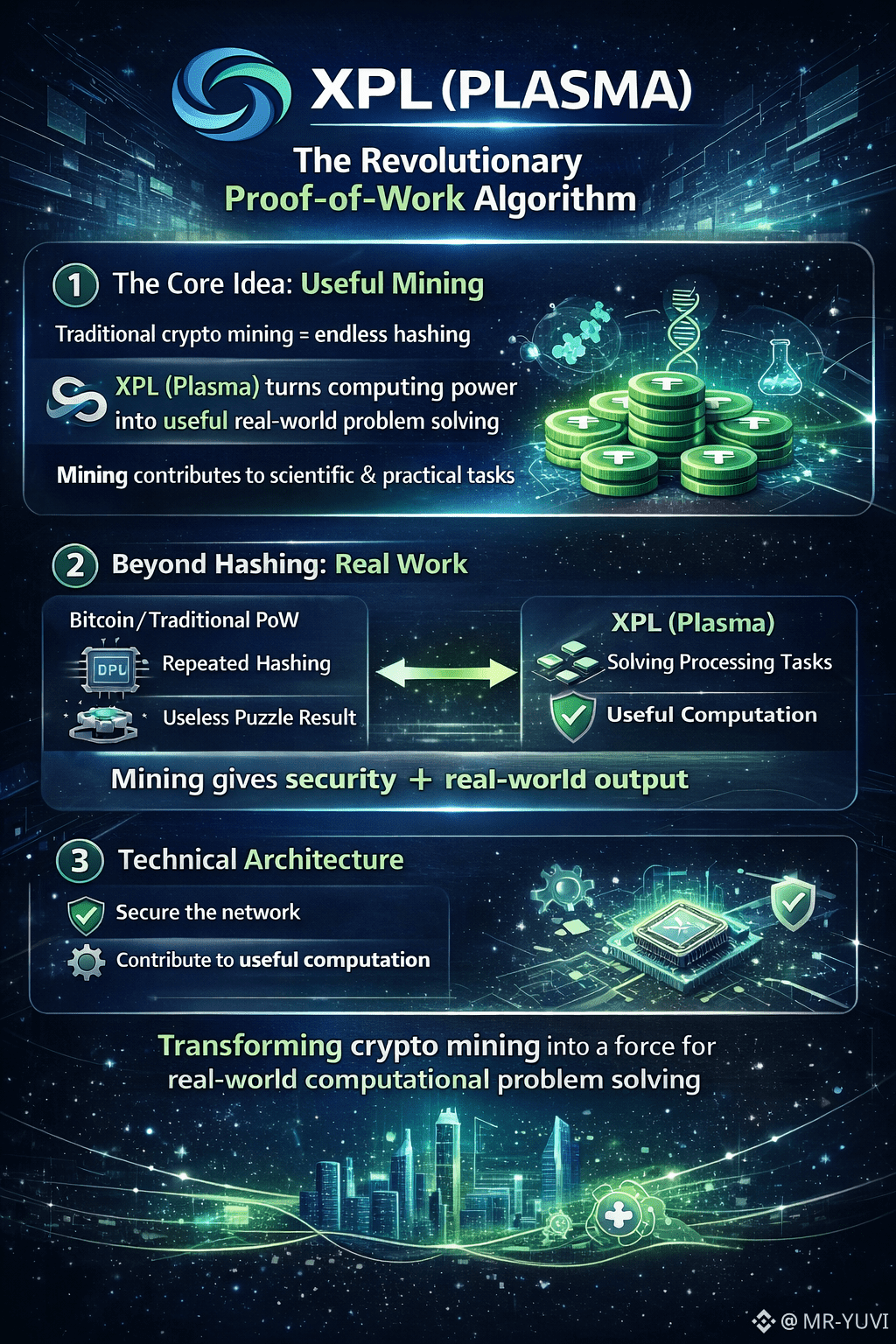
In the ever-evolving landscape of cryptocurrency and blockchain technology, XPL, commonly known as PLASMA, has emerged as a fascinating innovation that challenges conventional approaches to proof-of-work mining. This unique algorithm represents a significant departure from traditional cryptocurrency mining methods, offering a fresh perspective on how blockchain networks can achieve consensus while serving a greater computational purpose.
Understanding XPL: Beyond Simple Hashing
XPL distinguishes itself fundamentally from cryptocurrencies like Bitcoin or Ethereum by reimagining what proof-of-work actually means. While most cryptocurrencies require miners to perform repetitive hash calculations that serve no purpose beyond securing the network, XPL takes a different approach. The algorithm is designed around the concept of useful computation, where the mining process itself contributes to solving real-world computational problems rather than simply burning electricity for arbitrary mathematical puzzles.
The PLASMA algorithm leverages a computational model that transforms mining from a purely competitive exercise into something with inherent utility. Miners participating in the XPL network aren't just competing to find the next block—they're contributing processing power toward distributed computational tasks that have actual scientific or practical value. This philosophical shift addresses one of the most common criticisms of proof-of-work systems: the apparent waste of computational resources.
Technical Architecture of PLASMA
The technical foundation of XPL relies on a sophisticated framework that maintains blockchain security while enabling useful computation. The algorithm incorporates mathematical problems that are difficult to solve but easy to verify—a fundamental requirement for any proof-of-work system. However, unlike traditional mining algorithms, PLASMA's computational tasks are designed to be modular and adaptable, allowing the network to pivot toward different types of computational problems as needed.
The verification mechanism in XPL ensures that miners cannot cheat the system while simultaneously validating that their computational work contributes to the intended problem-solving objectives. This dual-layer verification represents a significant technical achievement, balancing network security with computational utility. The algorithm maintains the cryptographic integrity necessary for a secure blockchain while enabling the flexibility required for diverse computational applications.
Mining Dynamics and Network Participation
Mining XPL presents unique characteristics compared to traditional cryptocurrencies. The hardware requirements and optimization strategies differ significantly because the computational tasks involved aren't purely focused on SHA-256 or similar hashing algorithms. This creates a more level playing field in some respects, as specialized ASIC miners designed for specific hash functions may not dominate the network as completely as they do in Bitcoin mining.
The reward structure in XPL incentivizes not just finding blocks quickly, but contributing meaningful computational work to the network. This creates an interesting economic dynamic where miners must balance efficiency with the quality and validity of their computational contributions. The tokenomics of XPL reflect this dual-purpose nature, with rewards distributed based on both traditional proof-of-work metrics and the value of computational work contributed.
The Vision Behind PLASMA
What truly sets XPL apart is its underlying philosophy. The creators of PLASMA recognized that the massive computational power directed toward cryptocurrency mining could serve dual purposes. By designing an algorithm where mining operations contribute to scientific research, data analysis, or other computationally intensive tasks, XPL attempts to transform what critics view as wasted energy into productive output.
This approach positions XPL within a broader movement toward more sustainable and purposeful blockchain technologies. As environmental concerns surrounding cryptocurrency mining intensify, projects like XPL that attempt to derive additional value from proof-of-work computations represent an important evolutionary step in blockchain design.
The PLASMA algorithm demonstrates that innovation in cryptocurrency extends beyond transaction speeds or smart contract capabilities—it encompasses reimagining the fundamental mechanisms by which blockchain networks operate and secure themselves.