

@Walrus 🦭/acc (WAL) continues to gain attention because it focuses on real operational needs rather than just concepts. One important reason Walrus is being discussed more in recent times is its strong approach to data safety. In decentralized storage, protecting data is not optional. If storage nodes fail or face technical issues, users still expect their data to remain safe and recoverable. Walrus addresses this concern through a clear backup and restore system designed for storage nodes.As adoption grows and more data flows into decentralized networks, reliability becomes a key deciding factor. Walrus understands this and provides tools that help node operators protect stored data while maintaining smooth network operations. This focus on reliability adds long term value to the WAL ecosystem.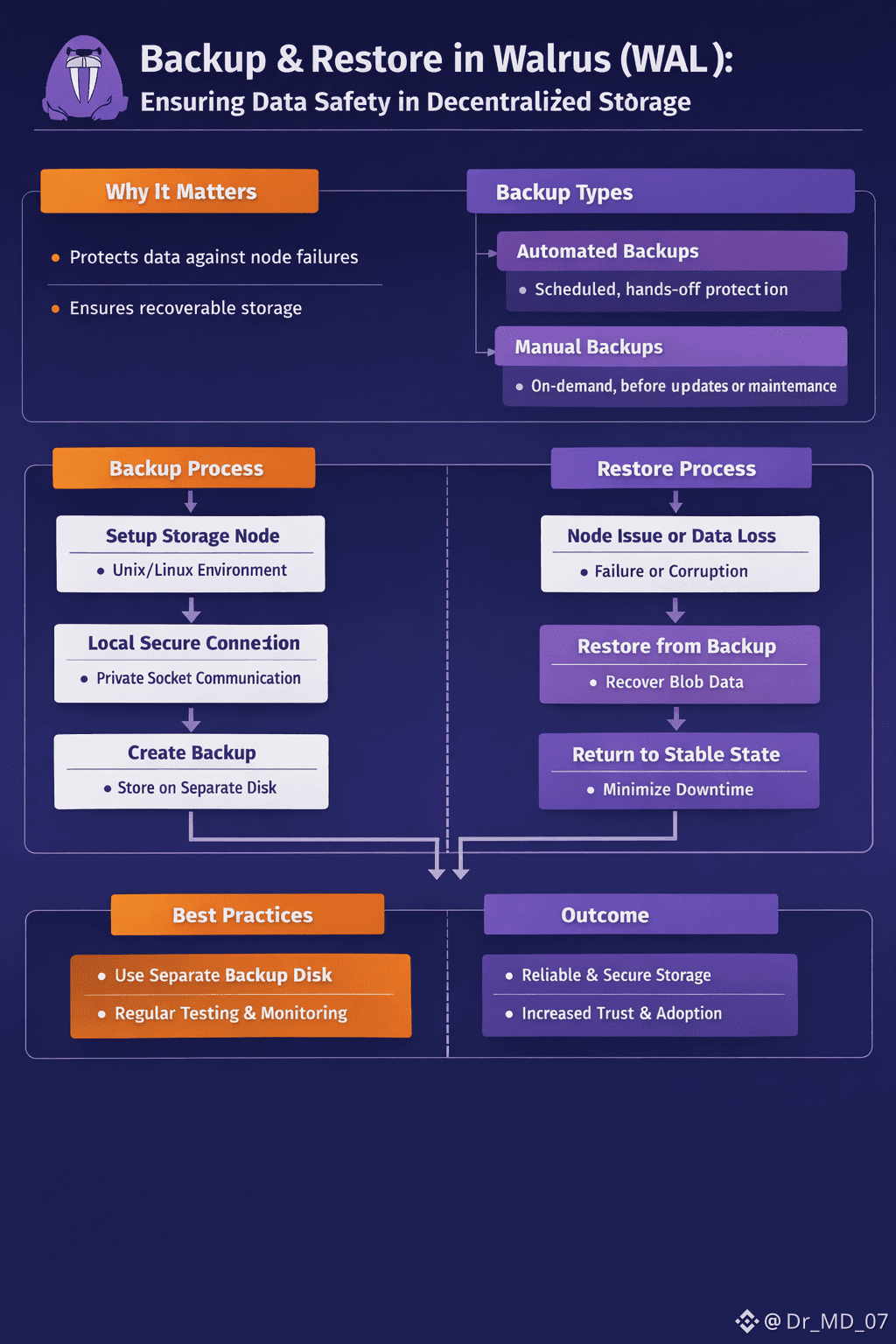
Why Backup and Restore Matter in Walrus:
In simple terms, a backup is a secure copy of stored data. Restore means bringing that data back if something goes wrong. For Walrus storage nodes, backups protect the main database that holds blob data. Blobs are simply files or pieces of data stored on the network.Without proper backups, hardware failure or system errors could lead to data loss. Walrus reduces this risk by allowing node operators to create both automated and manual backups. This makes the network more dependable for applications and users who rely on it daily.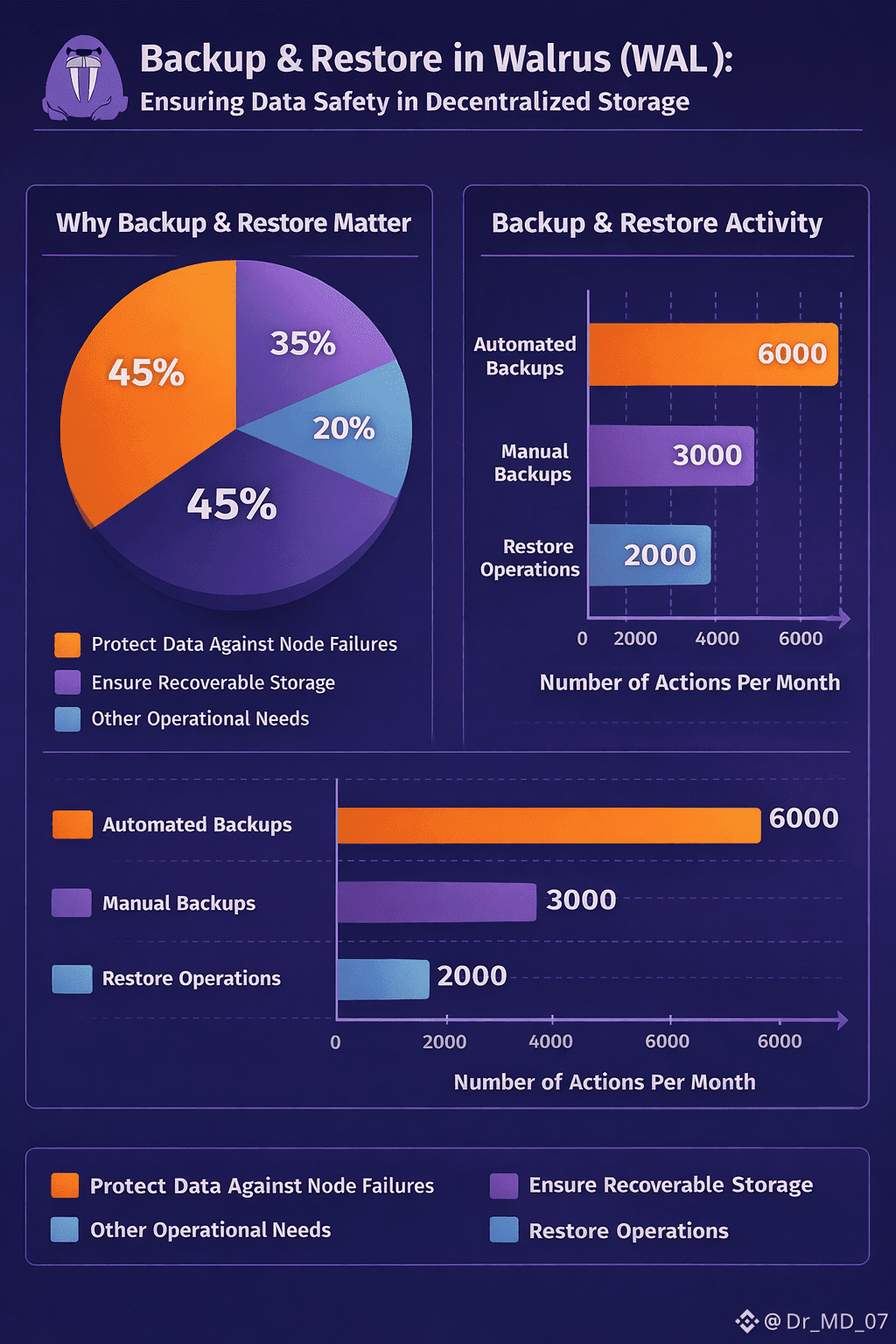
Basic Requirements for Running Backups:
Walrus does not overcomplicate the process. Storage nodes need to be running properly and must have permission to create backups. Adequate disk space is also required, and using a separate physical disk is strongly recommended. This ensures that backups remain safe even if the main storage drive encounters problems.The system works on Unix or Linux environments that support local communication between processes. This setup is common for professional server environments, making Walrus suitable for serious infrastructure operators.
How Walrus Connects to Storage Nodes Securely:
To manage backups, Walrus uses a local communication channel between the backup system and the running storage node. This communication happens through a secure local socket. In simple words, this allows backup commands to talk directly to the node without exposing access over the internet.This design improves security and keeps backup operations isolated from external threats. It also ensures faster and more reliable communication between components.
Automated Backups for Peace of Mind:
One of the strongest features of Walrus is automated periodic backups. Once configured, storage nodes can create backups on a regular schedule without manual effort. This is especially useful for operators managing multiple nodes or handling large amounts of data.Automated backups reduce human error. Operators do not need to remember to create backups manually. The system handles it in the background while the node continues serving the network. This makes Walrus storage more professional and production ready.
Manual Backups for Extra Control:
In addition to automation, Walrus also allows manual backups. This is helpful before performing maintenance, updates, or any major changes. Operators can create a backup whenever they feel it is necessary.Manual backups offer flexibility. If an operator wants to secure the current state of data before making adjustments, they can do so easily. This combination of automated and manual options shows that Walrus is designed for real world operations.
Restore Operations and Recovery Confidence:
Backing up data is only half the story. The ability to restore data is equally important. Walrus provides restore functionality that allows node operators to recover data from backups when needed.If a node experiences failure, corruption, or accidental data loss, the restore process helps bring the system back to a stable state. This reduces downtime and protects user trust. For decentralized storage, fast recovery is a major advantage.
Best Practices for Reliable Backups:
Walrus encourages operators to follow good operational habits. Using a separate disk for backups adds protection. Monitoring available storage space ensures backups do not fail silently. Testing restore procedures from time to time helps confirm that backups actually work.These practices may sound basic, but they are often overlooked. Walrus promotes discipline in node operations, which benefits the entire network.
Why This Matters for WAL Today:
Walrus is trending because it shows maturity. Many projects talk about decentralization but ignore operational reliability. Walrus takes a different path by supporting the people who run the infrastructure.Backup and restore features make Walrus more attractive to developers and businesses. When applications choose a storage network, they look for safety and predictability. WAL benefits from being part of a system that prioritizes these qualities.
Personal Perspective on Walrus Reliability:
From a practical viewpoint, this focus on backups builds confidence. Data is valuable. Knowing that Walrus provides structured tools to protect it makes the network feel dependable rather than experimental.This also signals that Walrus is thinking long term. Short lived projects often skip operational details. Walrus embraces them, which suggests serious intent and responsible growth.
How Backup Support Helps Network Growth:
Reliable storage encourages more use cases. Enterprises, content platforms, and applications handling important data are more likely to trust a network with proven safety measures. Backup and restore support reduces risk and increases adoption potential.As more nodes join, consistent backup practices help maintain network stability. This benefits users, operators, and token holders alike.
Conclusion:
Backup and restore functionality in Walrus (WAL) highlights the project’s commitment to reliability and trust. By supporting both automated and manual backups, Walrus empowers node operators to protect data effectively.
This approach strengthens confidence in decentralized storage and supports real world usage. As Walrus continues to grow, its focus on data safety positions WAL as part of a network built not just for innovation, but for long term stability and responsible operation.

