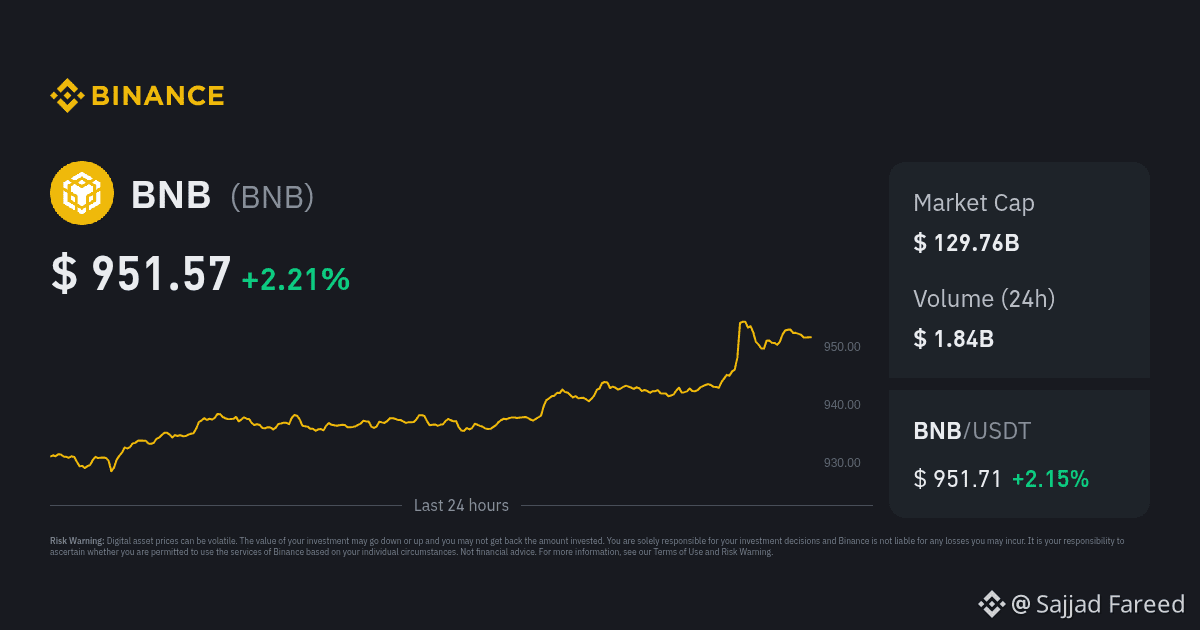
$BNB Here’s the latest BNB (Binance Coin) price + future projections based on current market data and multiple forecasts:
📈 Short-Term Price Outlook (2025–2026)
2025 Predictions
Some models see moderate growth to around $900–$1,000 by end of 2025. �
Zephyr
More optimistic forecasts expect $1,000–$1,300+ if market sentiment stays bullish. �
Flitpay.com
Expert panels have predicted an average year-end $1,100–$1,200 range. �
finder.com.au
2026 Predictions
Some analysts forecast possible continuation of growth toward $1,400–$2,000 in a strongly bullish scenario. �
CoinLore
Other models remain cautious and expect sideways movement or consolidation. �
LiteFinance
Summary (2025–2026)
✅ Bullish view: $1,000–$2,000+
⚠️ Neutral view: $900–$1,300
❗ Bearish scenarios (market downturn): price could stay flat or dip lower
📊 Long-Term Forecasts (2030 and Beyond)
2030 Predictions
Moderate forecasts: ~$1,600–$3,000 by 2030. �
Axi
Bullish analysts: up to $4,000–$7,500+ in a strong adoption case. �
LiteFinance
Some long-range models forecast upside into ~$3,000–$4,000 or beyond if blockchain ecosystems expand significantly. �
CoinLore
Very Long Term (2035–2040)
Some projections extend all the way past $4,000–$10,000+ by 2035–2040 in aggressive crypto adoption environments. �
CoinLore +1
📌 What Influences BNB’s Price?
Bullish factors
Core utility within Binance for trading discounts & fees
Growing use of BNB Chain (DeFi, NFTs, apps)
Token burns reducing supply over time
Institutional and global adoption trends �
LiteFinance
Risks / bearish factors
Regulatory pressure and uncertainties
Market volatility and broad crypto cycles
Competition from other smart-contract networks �
finder.com.au
🧠 Quick Summary Table
Timeframe
Conservative
Moderate
Bullish
2025
$850–$1,050
$1,100–$1,300
$1,300+
2026
$900–$1,200
$1,200–$1,800
$2,000+
2030
$1,600–$2,500
$2,500–$4,000
$5,000+
These are forecasts based on aggregated analyst models, not financial advice.
📌 Important Reminder
Crypto price predictions are highly speculative and depend on market conditions, adoption trends, regulation, macroeconomics, and investor sentiment. Always do your own research and consider risk management.