

 @Walrus 🦭/acc (WAL) is gaining attention because it focuses not only on decentralized storage but also on how that storage is managed responsibly. As blockchain projects mature, strong governance and fair commission handling become just as important as technology itself. Walrus addresses this by separating daily node operations from sensitive actions like upgrades and commission withdrawals. This design choice reflects a clear focus on security, transparency, and long term sustainability.
In recent months, Walrus has been discussed more often because node participation is growing and governance processes are becoming more visible. This shows progress beyond theory and into real network management. Understanding how commission and governance work helps users and node operators see why WAL is built for stability.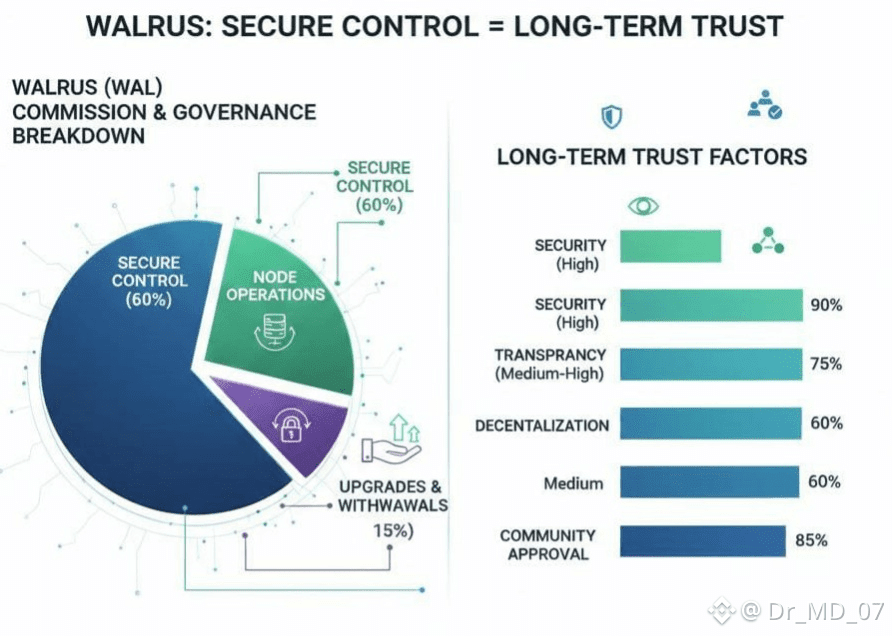
Why Commission and Governance Matter in Walrus:
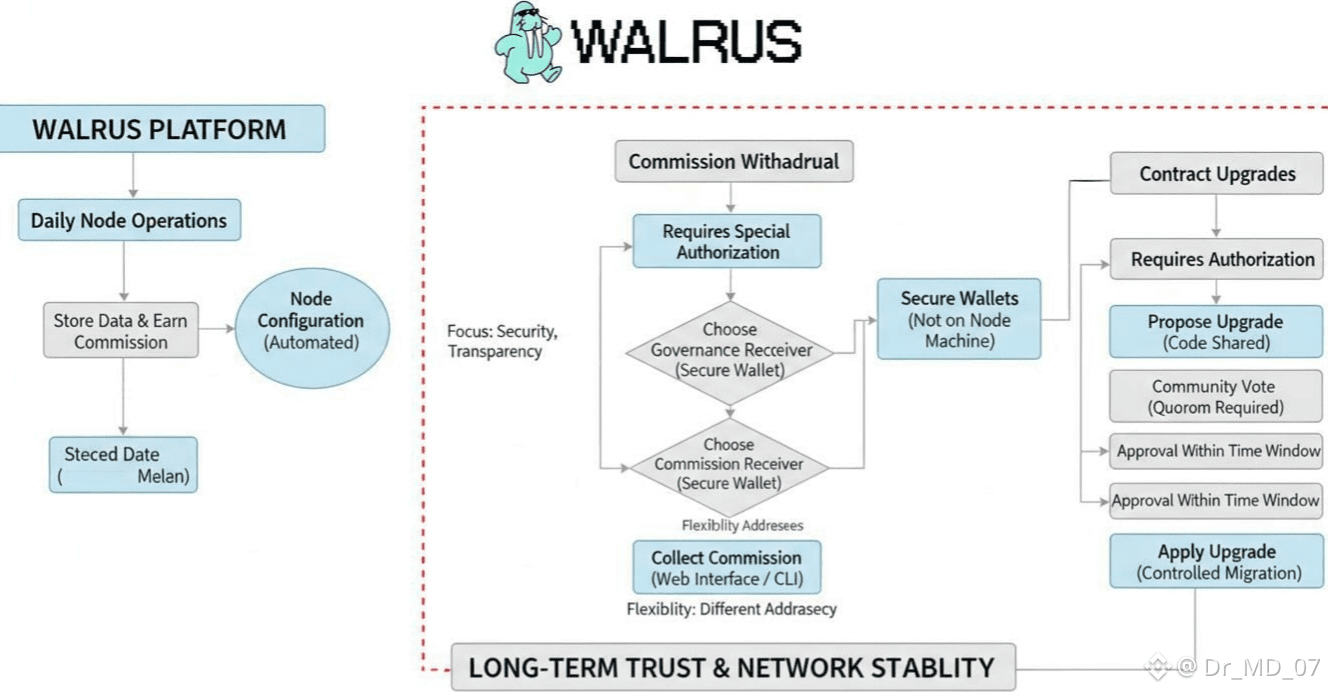
In Walrus, storage nodes earn commission for the services they provide. At the same time, the network needs a safe way to approve upgrades to its core contracts. If both powers were kept in a single wallet on a live node machine, risks would increase. A compromised node could lead to financial loss or unauthorized changes.Walrus solves this by handling commission withdrawal and governance authorization separately from normal node configuration. This keeps sensitive permissions away from hot wallets that are always online. It is a practical approach that aligns with real world security practices.
Separation of Roles for Better Security:
Most node settings can be adjusted automatically through node configuration. However, withdrawing commission and approving upgrades require special authorization. Walrus strongly encourages operators to use secure wallets that are not stored on node machines for these actions.This separation means that even if a node faces technical issues, the funds and governance rights remain protected. For operators, it reduces stress and improves confidence in running infrastructure on Walrus.
Choosing Who Controls Commission and Governance:
Walrus gives node operators flexibility in deciding who can receive commission and who can vote on governance matters. These roles can be assigned to different addresses or objects. They do not need to be the same.Operators can update these settings either through the Walrus command line tool or through the official web interface provided in the staking application. This flexibility allows both technical and non technical operators to manage their nodes comfortably.
Using the Web Interface for Simplicity:
For many operators, the web interface is the easiest option. By connecting a wallet and selecting a node, operators can set the commission receiver or governance authority with clear guided steps. This removes the need for deep technical knowledge.The same interface can also be used to collect commission. With a few clicks, earnings can be transferred securely to the authorized wallet. This user friendly design helps attract more participants to the network.
Collecting Commission in a Controlled Way:
Commission collection is intentionally limited to authorized wallets. This ensures that rewards cannot be redirected by mistake or misuse. Operators maintain full control over where earnings go.This design also makes financial planning easier. Operators can use cold wallets or multi signature setups for commission, adding another layer of protection. For a network handling valuable data storage, this level of care is essential.
How Governance and Contract Upgrades Work:
Walrus uses a voting based system for contract upgrades. No single operator can push changes alone. Instead, upgrades require approval from a quorum of node operators. This protects the network from rushed or harmful updates.When an upgrade is proposed, the proposer shares the exact code version with other operators. Everyone votes based on the same version, ensuring fairness and clarity. Voting must be completed within a defined time window so decisions stay aligned with the current network state.
Why This Governance Model Builds Trust:
This approach ensures that upgrades reflect collective agreement rather than centralized control. Operators are encouraged to review changes carefully before voting. This makes governance more thoughtful and accountable.From a broader perspective, this model increases trust among users and builders. Knowing that WAL upgrades require community approval makes the network more credible and stable.
Completing an Upgrade Safely:
Once enough votes are collected, the upgrade is finalized and applied. The process includes migrating system components to the new version in a controlled manner. This avoids sudden disruptions.Upgrades can take effect immediately or at the start of a new cycle depending on their nature. This flexibility helps maintain smooth operations while still allowing progress.
Why This Is Important for WAL Today:
Walrus is trending because it is demonstrating real operational maturity. Commission handling and governance are not afterthoughts. They are built into the system with clear rules and strong safeguards.As more storage nodes join and more value flows through the network, these systems become even more important. WAL benefits from being part of a network that prioritizes careful growth rather than shortcuts.
Personal Perspective on Walrus Governance:
From a practical point of view, this structure feels realistic and responsible. Many blockchain projects struggle with governance chaos or security lapses. Walrus avoids this by clearly defining roles and limiting risk.For anyone looking at WAL as more than a short term asset, these details matter. They show that the project is thinking about long term operation and trust.
Conclusion:
Commission and governance in Walrus (WAL) highlight a thoughtful approach to decentralized infrastructure. By separating sensitive permissions from daily operations, Walrus protects both operators and the network.The use of secure authorization, voting based upgrades, and user friendly tools creates a balanced system that supports growth without sacrificing safety. As Walrus continues to evolve, these governance foundations position WAL as a serious and reliable player in decentralized storage.

