@Walrus 🦭/acc (WAL) is gaining attention because it focuses on one of the most important challenges in Web3 today which is secure and controlled data storage. As more applications move toward real world usage, open and unrestricted publishing is not always practical. On Walrus Mainnet, storing data consumes both SUI and WAL, which makes unrestricted access risky and costly. This is where the Authenticated Publisher becomes highly relevant and valuable.
Instead of allowing anyone to publish data freely, the Authenticated Publisher introduces a permission based approach that balances security, cost control, and usability. It is designed for serious applications that want predictable usage, protected resources, and a smooth experience for everyday users.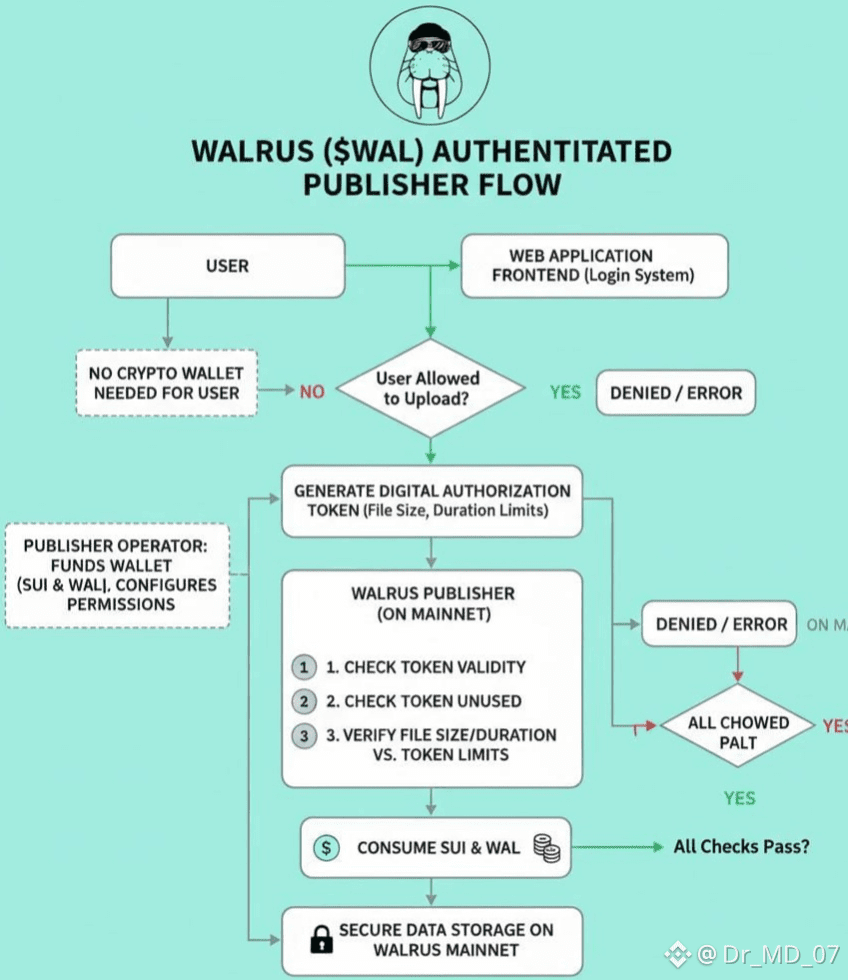
What Is the Authenticated Publisher in Walrus:
The Authenticated Publisher is a Walrus publishing setup that requires identity verification before data can be stored. Every storage request must be approved using a digital authorization token. This ensures that only trusted users or applications can upload data to Walrus Mainnet.
This model is especially important on Mainnet because publishing data uses real economic value in SUI and WAL. By requiring authentication, publishers can avoid abuse, spam uploads, and unexpected costs while still offering storage services over standard web connections.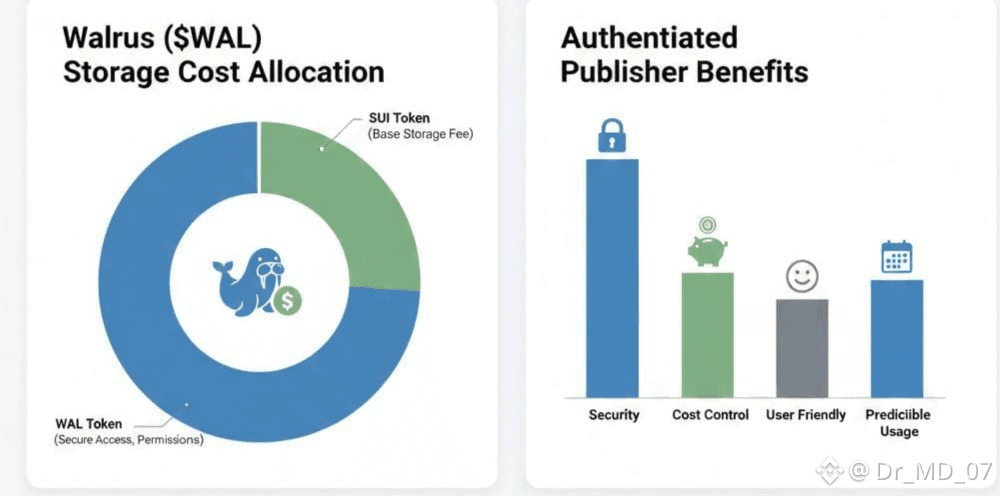
Why Authentication Matters on Walrus Mainnet:
On Testnet, public access is common and useful for experimentation. On Mainnet, however, unrestricted publishing can quickly become expensive. The Authenticated Publisher solves this problem by making sure that each upload follows predefined rules.
This allows operators to decide who can upload data, how large the files can be, and how long they should be stored. It turns Walrus into a reliable infrastructure layer rather than an open cost risk.
How the Authenticated Publishing Flow Works:
The process is structured but still simple from a user perspective. First, the publisher operator prepares the system by funding a wallet with enough SUI and WAL. The publisher is then configured to accept only verified requests.
Next, users authenticate through a normal application login system such as a username and password. They do not need a crypto wallet. This is a key reason Walrus is attractive for web based apps. After login, the application backend checks whether the user is allowed to upload a file of a certain size and duration.
If approved, the backend creates a digital authorization token that includes clear limits such as file size and storage duration. The user then uploads the file using this token. The publisher checks the token, confirms it is valid, unused, and within limits, and then stores the data on Walrus.
Why This Is Friendly for Non Crypto Users:
One of the strongest advantages of the Authenticated Publisher is that it removes the need for users to interact directly with blockchain wallets. Users can upload files just like they would on a traditional website.
Behind the scenes, Walrus handles verification and storage while the application manages permissions and costs. This makes Walrus suitable for platforms that want blockchain level security without forcing users to learn complex tools.
Security and Control Without Complexity:
The Authenticated Publisher includes strong protections against misuse. Each authorization token can only be used once, which prevents repeated uploads using the same permission. Tokens can expire automatically, reducing long term risk.
Publishers can also strictly enforce limits. If a file is larger than allowed or the storage duration does not match the approved rules, the upload is rejected. This ensures predictable costs and fair usage.
At the same time, operators can adjust strictness. If the system is trusted internally, some checks can be relaxed while still maintaining identity verification.
How This Supports Real Applications:
This setup is ideal for web apps, content platforms, enterprise tools, and data services that want decentralized storage with centralized control. Applications can manage user quotas, budgets, and permissions while Walrus ensures the data is stored securely.
It also opens the door for subscription based models where users pay for storage plans without touching crypto directly. The backend handles WAL and SUI usage while users enjoy a familiar experience.
Why This Is Relevant for $WAL Today:
Walrus is trending because it is moving beyond theory and focusing on practical deployment. The Authenticated Publisher shows that the project understands real business needs. Cost control, security, and usability are essential for adoption.
As more apps look for decentralized storage that behaves like traditional infrastructure, Walrus stands out by offering flexibility instead of forcing a one size fits all approach.
Personal Perspective on Walrus Progress:
From a usability standpoint, this is a smart direction. Many Web3 projects struggle because they expect users to adapt to complex systems. Walrus does the opposite by adapting blockchain storage to familiar workflows.
This approach makes $WAL more than just a utility token. It becomes part of a system that supports real services, real users, and sustainable growth.
Conclusion:
The Authenticated Publisher is a strong example of how Walrus is building for real world use. By combining permission based access, cost awareness, and simple user experiences, Walrus creates a storage model that works for Mainnet conditions.
For developers, it offers control and predictability. For users, it removes friction. And for the $WAL ecosystem, it represents meaningful progress toward long term adoption and relevance.