
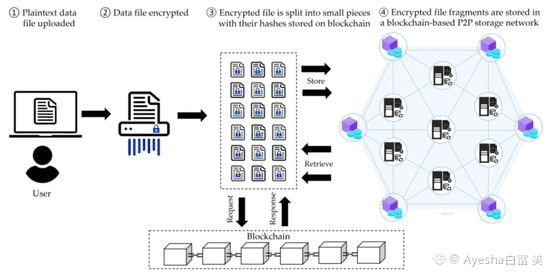
Decentralized storage networks face a persistent challenge: ensuring long-term data availability in an environment where participants are rational economic actors. Nodes stake tokens to store erasure-coded shards of user blobs, earning rewards for serving reads and maintaining availability. However, the temptation to delete data—reducing operational costs while attempting to pass verification checks—threatens the system's integrity. Proof-of-storage mechanisms, particularly challenge protocols, address this by requiring nodes to demonstrate possession of specific data fragments on demand.
Walrus, built on Sui's delegated Proof-of-Stake framework and employing Red Stuff (a 2D erasure coding scheme derived from RapTorQ), implements a fully asynchronous challenge protocol designed for robustness in adversarial conditions. This protocol not only verifies storage but incorporates cryptoeconomic safeguards to align incentives over extended periods.
Secure Randomness as the Foundation
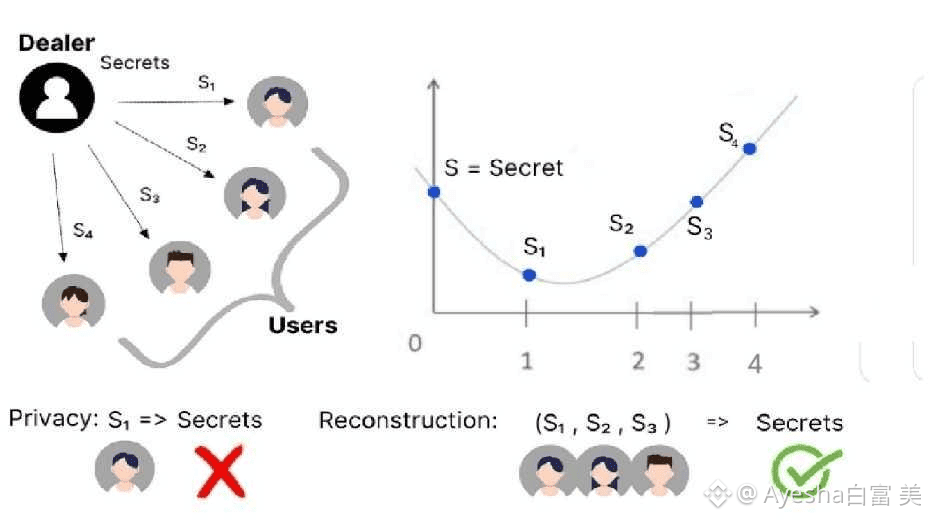
The process begins with unbiased challenge selection. Walrus uses a distributed key generation (DKG) protocol to create a threshold-signed random beacon at the epoch's outset. This requires participation from a supermajority (2f+1 honest nodes under Byzantine assumptions) to reconstruct the random value, ensuring no single party or minority coalition can bias outcomes.
Once reconstructed on-chain, this randomness seeds a pseudo-random function that determines which blobs are challenged across the network. The design targets high statistical coverage: while the network probes a substantial number of blobs overall, the per-blob probability remains extremely low (on the order of 10⁻³⁰ for properly stored data), avoiding overload on honest nodes. Crucially, the unpredictability prevents selective deletion—nodes cannot anticipate and retain only "safe" data.
Challenge Execution and Accountability
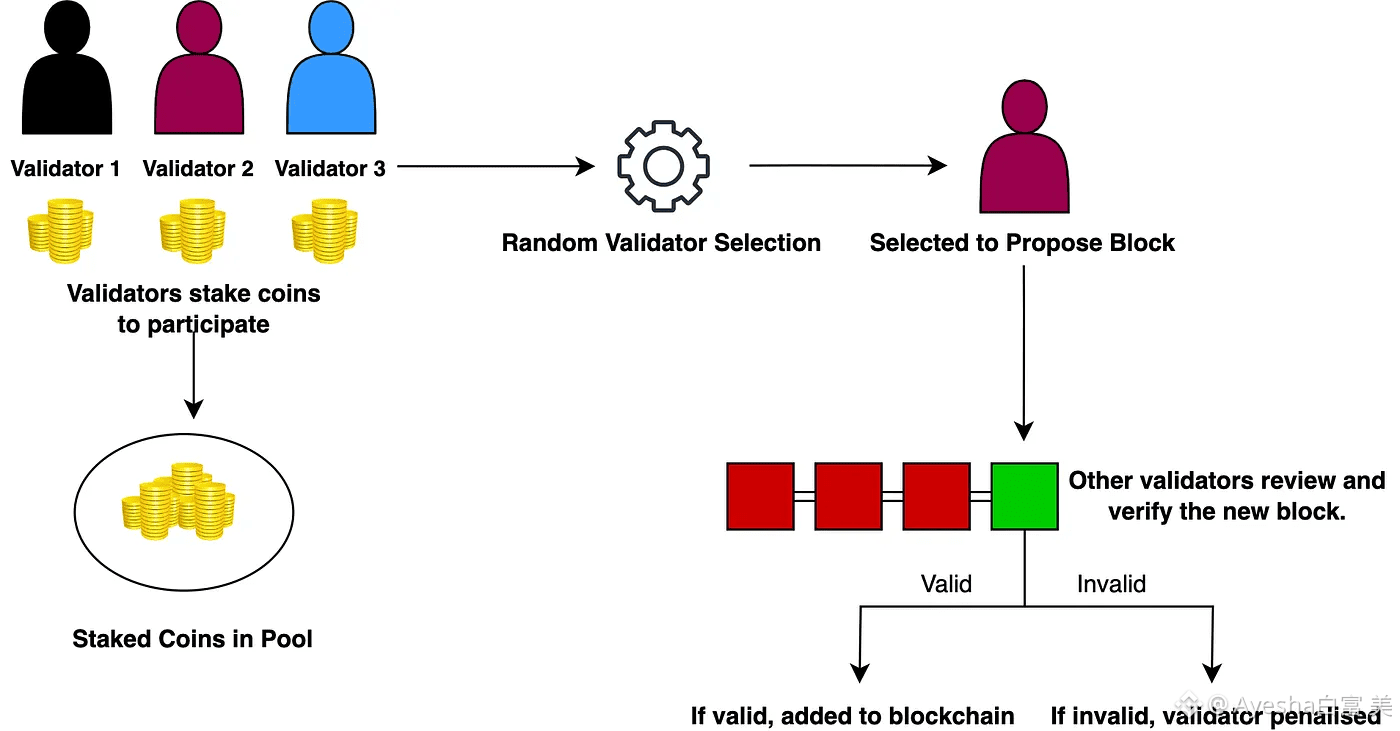
Near epoch closure, a designated block height triggers the challenge phase. Nodes broadcast their shares of the randomness, enabling on-chain reconstruction. Challenged nodes must then collate threshold signatures (typically 2f+1) into certificates proving access to the required symbols, leveraging the efficiency of RapTorQ coding for minimal data transfer.
Accountability extends to participation in the randomness beacon itself. Nodes that contribute shares but later fail to issue challenges or respond appropriately face penalties. This closes loopholes where adversaries might withhold engagement to obscure faults.
The Penalty Mechanism: Burning for Irreversibility
A defining feature of Walrus's design is the treatment of these penalties: they are burned rather than redistributed. This approach mirrors Ethereum's EIP-1559, where base fees are destroyed to introduce deflationary dynamics and eliminate miner discretion in fee allocation.
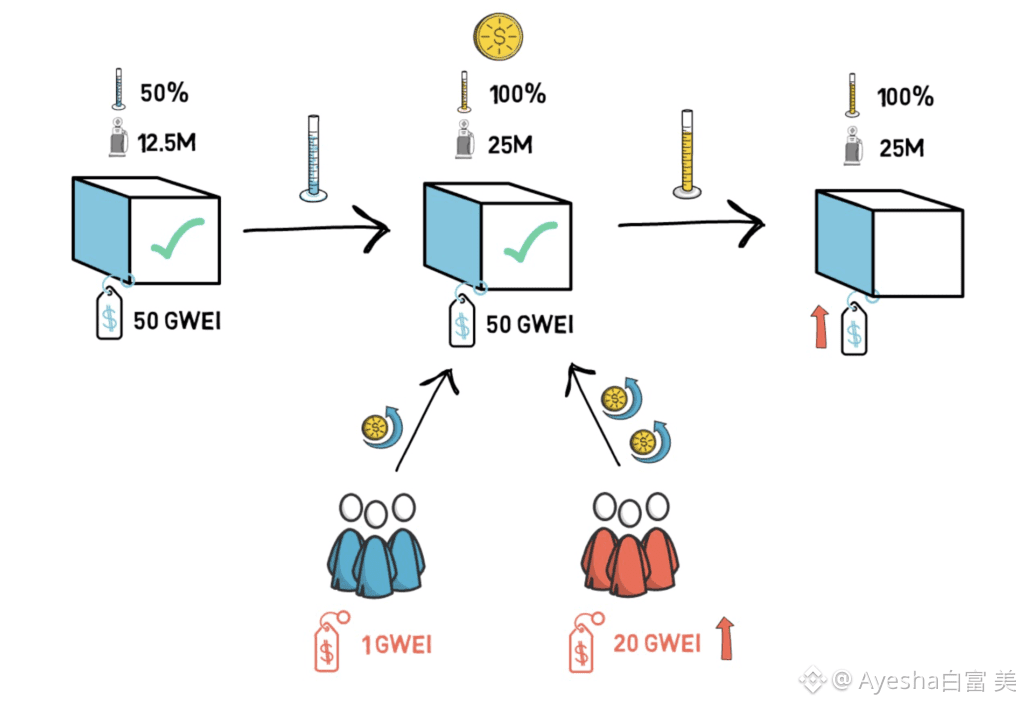
In traditional Proof-of-Stake systems, redistribution of slashed stake creates a potential attack vector. Off-chain collusion becomes viable: a coordinated group could engineer faults or misreports to direct penalties toward themselves, effectively transferring value without net loss to the coalition. Even partial success introduces extractable value, weakening deterrence.
Burning removes this vector entirely. Penalties dilute the total stake supply without enriching any participant, rendering misbehavior a pure loss for the system and the perpetrators. No party benefits from inducing, concealing, or falsely reporting faults, achieving a form of economic finality analogous to irreversible transactions in monetary networks.
Threshold Reporting for Fault Tolerance
To balance accountability with resilience, Walrus incorporates a 50% stake-weighted reporting threshold. Nodes submit reports on challenge issuance and response validity. A node avoids penalties if its reports align with at least 50% of total stake on both dimensions.
This mechanism tolerates up to approximately one-third adversarial stake without mass slashing, preventing denial-of-service via false reporting. It also discourages subtle coordination: any attempt to skew consensus requires dominating stake weight, which the randomness and burning layers further complicate.
Broader Implications for Cryptoeconomic Security
These elements—secure DKG randomness, asynchronous challenges, threshold reporting, and penalty burning—form a cohesive defense against both individual rationality and coordinated attacks. In decentralized physical infrastructure networks (DePIN) handling large blobs for AI training, media archiving, or Web3 applications, such durability is essential. Walrus's model prioritizes long-term incentive compatibility over short-term reward distribution, reducing reliance on assumptions of perpetual honesty.
This design reflects an evolving understanding in protocol engineering: security emerges not only from cryptographic primitives but from incentive structures that withstand adaptive, profit-seeking adversaries. By achieving collusion resistance through economic irreversibility, Walrus advances a paradigm where storage proofs attain robustness comparable to consensus finality.
In the context of growing DePIN ecosystems, these choices underscore the value of minimalism in reward flows. Protocols that avoid discretionary allocation mitigate hidden risks, fostering environments where participation remains viable under varying stake concentrations and network conditions.

