
Dusk Foundation tightens hardest right after an upgrade, when execution context changes but operators still expect continuity.
The code switches.
New constraints activate at the consensus layer.
DuskDS finality keeps landing on schedule.
What breaks is the assumption that state should glide across the boundary.
On Dusk, upgrades don’t sit above execution. They alter it. Confidential state transitions after the upgrade are evaluated under a different rule set than the ones before. Moonlight checks change. Phoenix verification paths shift. The protocol doesn’t preserve sympathy for transactions assembled under conditions that no longer exist.
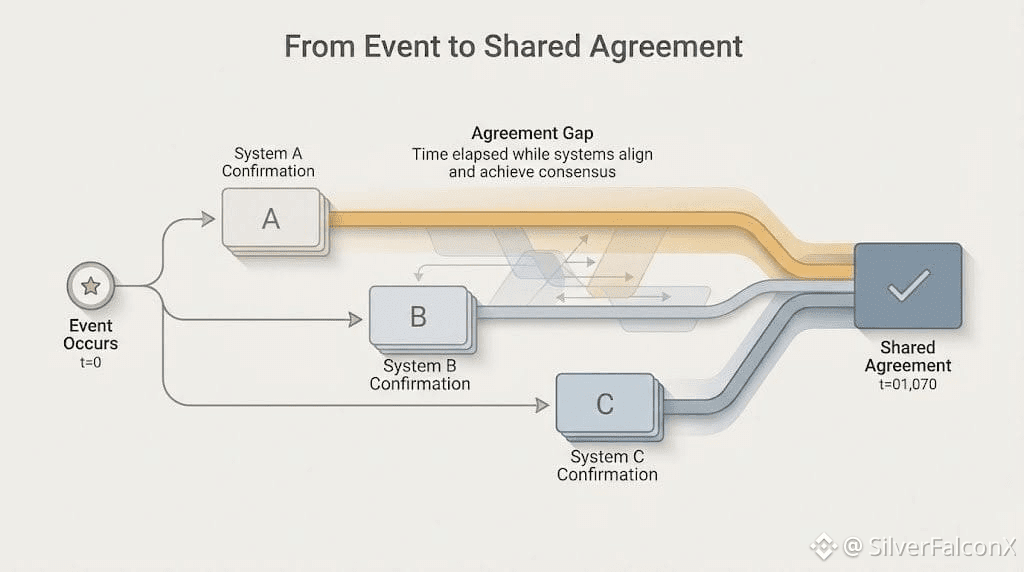
That’s where the pressure lives.
A transfer prepared under the previous execution logic reaches settlement under the new one. Balances are still encrypted. Proofs are still valid in isolation. The execution path now demands something slightly different. Disclosure scope. Credential format. Constraint ordering. The state fails to qualify and nothing advances.
Not a fork.
Not a revert storm.
Just a refusal to finalize.
Most chains blur this moment on purpose. They rely on coordination to soften it. Grace windows. Informal carryover. A shared understanding that “close enough” counts during upgrades because stopping the system would be worse.
Dusk doesn’t accept that trade.
Deterministic finality on Dusk means the rule set at execution time is the only one that matters. Consensus attests to outcomes, not intentions. If the state transition doesn’t satisfy the active constraints, it doesn’t become valid later because everyone agrees it should have.
Privacy removes the usual escape routes.
There’s no mempool signal to read. No public trace to reinterpret. Operators can’t point to activity and argue that progress was happening. Silence means the checks didn’t clear. Nothing else.
This turns upgrades into an execution discipline problem.
Builders learn quickly that “prepared before” carries no weight. Flows that assume continuity across upgrades fail cleanly. Anything that depends on implicit grace has to be redesigned so state can re-qualify under new logic, not drift into it.
The cost shows up immediately.
Confidential settlements stall. Regulated asset transfers miss their window. Operators lose the ability to treat upgrades as background maintenance. Alignment has to be explicit because the protocol won’t absorb it.
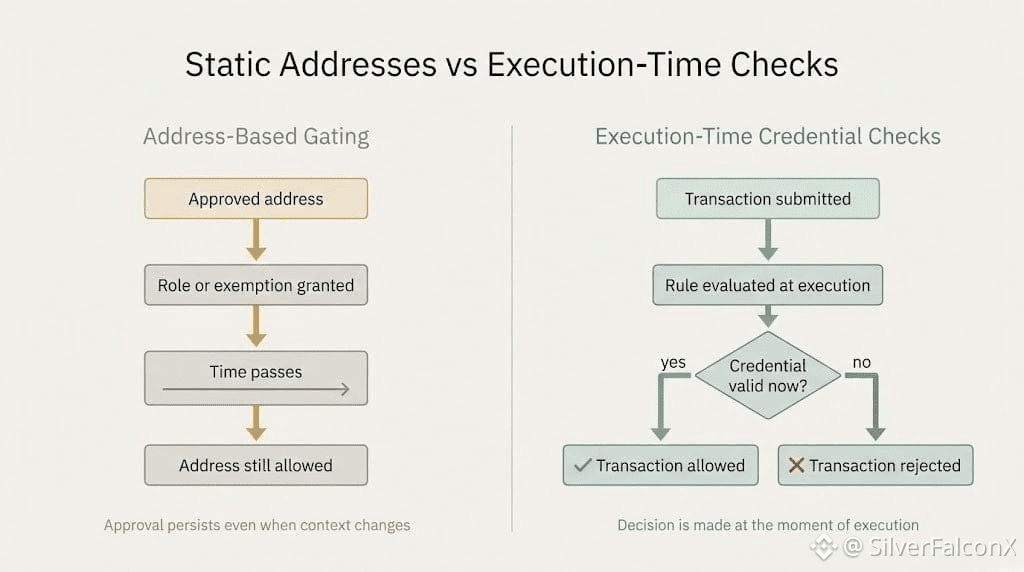
The alternative cost hides longer.
Chains that smear upgrade boundaries accumulate state that technically shouldn’t exist under the new execution rules. It sits there until audit pressure or dispute resolution forces the question. At that point, the system has to explain which rules actually applied, and the answer depends on timing narratives instead of state.
Dusk avoids that conversation by forcing it early.
Upgrades on Dusk don’t promise continuity.
They reset execution context.
State either qualifies again or it waits.
For regulated financial infrastructure, that trade is deliberate. Early friction instead of late explanation. Finality that means the same thing before and after the change.
Anything that needs forgiveness across upgrades is already out of bounds. #Dusk
