
When I watch @Plasma operate, it's never just about the speed of transactions. What fascinates me is how it behaves under real conditions... when multiple actions collide, when timing isn't perfect, and when participants act independently. Each transaction becomes a small experiment, revealing how coordination, reliability, and trust unfold in practice. Observing it closely, I notice patterns that numbers alone could never show.
From my perspective, the system’s boundaries are not limitations–they are guides. How state updates are timed, how commitments are sequenced, and how interactions are bounded communicate what the network can safely handle. Ignoring these signals risks hidden weaknesses; respecting them allows the network to expand predictably. These boundaries feel less like restrictions and more like a blueprint for disciplined design.
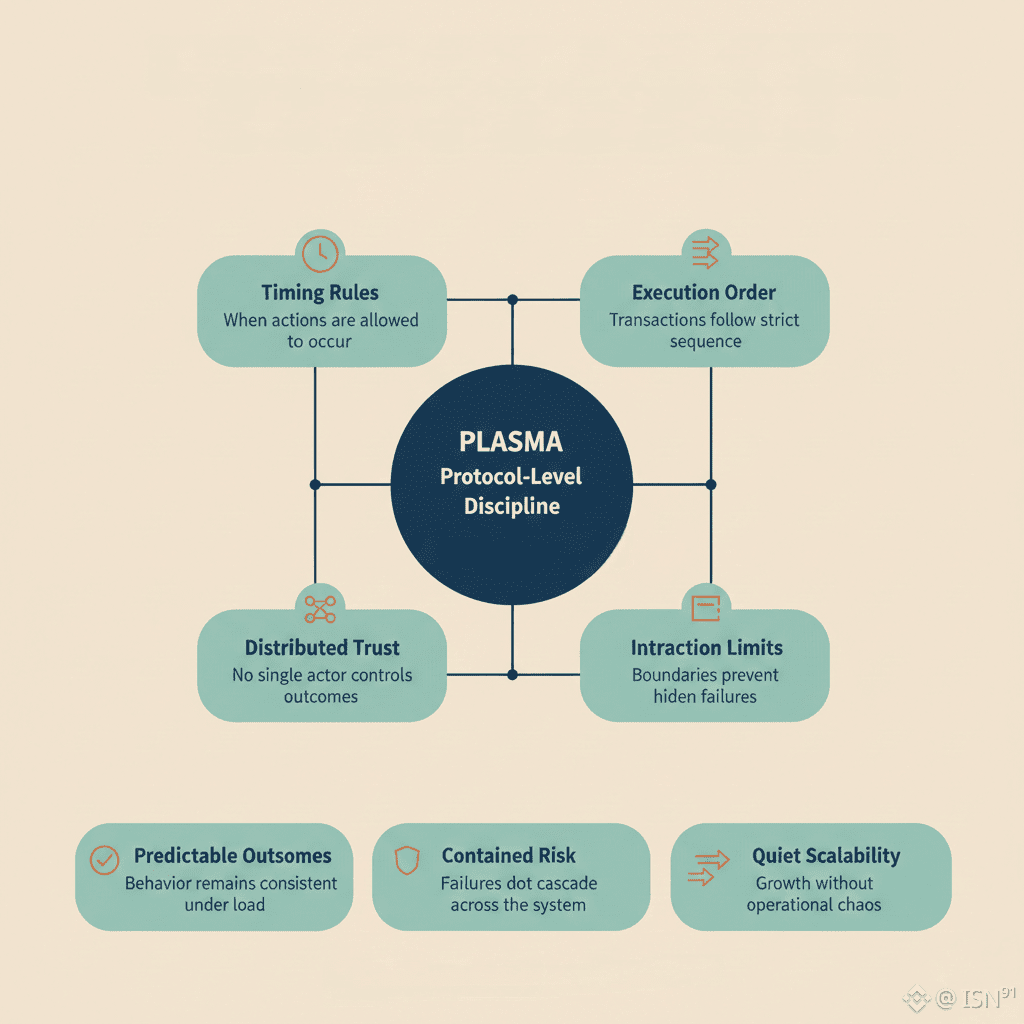 Operating within these parameters, subtle behaviors emerge. They aren't failures, just natural adjustments and alignments that appear when independent actors interact under shared rules. I’ve seen that consistent results arise not from raw speed or volume, but from how those rules are structured and observed in practice. Watching the network in motion, these small interactions ripple outward, quietly reinforcing reliability.
Even a well-thought-out design surfaces tension points. Off-chain processes assume participants act in certain ways, yet in practice they vary. Small delays, overlaps, or misalignments are not failures; they are signals of where attention or safeguards are needed. Modern Layer 2 networks have learned from such signals, smoothing fragility before it becomes systemic.
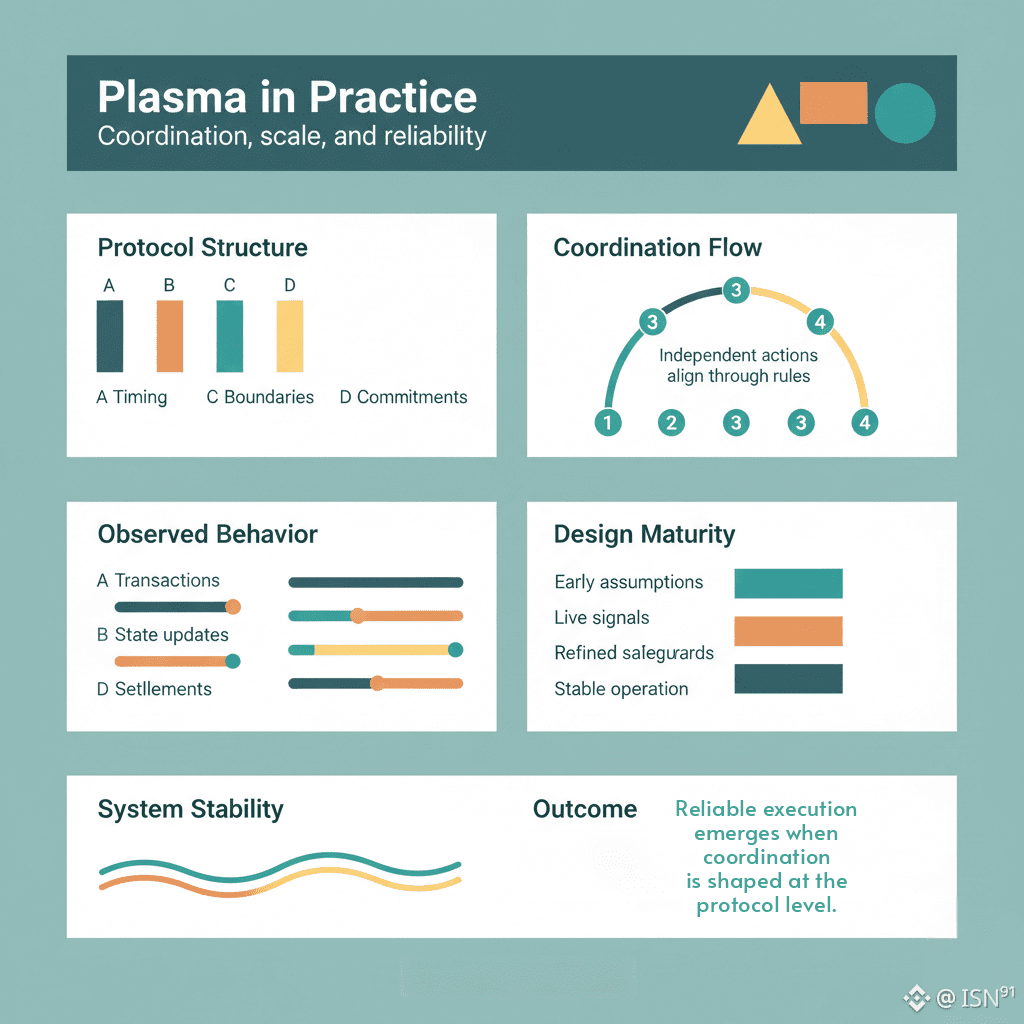 Plasma guides behavior through structure itself. Execution order, transaction boundaries, and interaction rules are not merely policies—they define direction. Participants follow them because deviation is naturally constrained by design, not because external enforcement is required. This allows high-volume operations to run smoothly while maintaining reliability across the network.
What stands out most is Plasma’s quiet influence. How trust is distributed, how irregularities are contained, and how outcomes remain predictable ¦ these lessons permeate modern Layer 2 networks. Applications ranging from microtransactions to cross-chain interactions benefit indirectly, without flashy metrics or headlines. True scale emerges from structured guidance and thoughtful execution, not from superficial measures.
Reflecting on what I’ve seen, scaling is deliberate. Plasma shows that reliability isn't added later; it is shaped into the system itself, grounded in an understanding of real participant behavior. The network succeeds quietly and predictably, not because it boasts about speed, but because its design channels each interaction toward balance and consistency. That quiet logic is the enduring insight I take from observing Plasma in practice.

